

Watch Jonas in Action
About Jonas Nahm
Jonas Nahm, Ph.D. is a political economist who explains what comes after globalization. He brings something rare: academic depth plus firsthand knowledge of how the U.S. government operates behind the scenes.
"The political and economic moment we're in, where we're basically moving past globalization, is really disorienting to people," Nahm says. He helps executives, particularly those running complex global supply chains, understand how political forces and market logic now determine the worldwide flow of goods, capital and technology. His frameworks for scenario planning cover the weaponization of trade, the reshaping of the semiconductor industry and the impact of U.S.-China tensions on everything from finance to manufacturing.
Jonas's Keynote Topics
In the last few years, there’s been much talk among corporate leaders about strategies for implementing AI. However, not much attention has been given to the bigger picture of how economic and political policies around the world can profoundly affect everything from AI development to the technology’s impact on sustainability. According to Johns Hopkins School of Advanced International Studies professor and political economist Jonas Nahm, Ph.D., trade policies such as export controls and tariffs are reshaping the global semiconductor and microchip industries. In this revealing presentation, Nahm uncovers how emerging technologies, their development, deployment and environmental impact are tightly intertwined with the geopolitical maneuverings of countries like the U.S. and China. Audiences will leave with a more focused lens into the true power of AI’s influence on politics, economics and global sustainability efforts – well beyond boardroom debates and marketing buzzwords.
As the climate crisis grows more urgent, globalization has fostered collaboration between countries. But, as tensions grow between superpowers, how will sustainability initiatives be impacted? According to Johns Hopkins School of Advanced International Studies professor and political economist Jonas Nahm, Ph.D., while global collaboration has led to the cost of green technologies rapidly decreasing, rising geopolitical tensions, especially between the U.S. and China, are threatening to derail clean energy progress. In this timely presentation, Nahm draws on his award-winning book “Collaborative Advantage: Forging Green Industries in the New Global Economy,” to take a deeper look at how economic policies – from climate change initiatives and manufacturing priorities to tariffs and supply chains – can either supercharge or stymie green energy advancement around the world. Audiences will learn how sustainability and economic policy are intimately entwined, leaving with a working knowledge of the true value of globalization and cooperation in fighting climate change.
The international trade landscape continues to be unsettled as tariffs come and go seemingly by the day. How can business leaders, especially those in manufacturing, in the U.S., Europe and beyond, reassure stakeholders in today’s uncertain global marketplace? According to Johns Hopkins School of Advanced International Studies professor and political economist Jonas Nahm, Ph.D., to understand the current state of worldwide trade, it’s important to look back on the conditions that got us here in the first place. In this exceptionally relevant presentation, Nahm frames our current moment in a broader context, addressing questions such as “how did we get to this moment where trade deficits are seen as such a problem?” “What is the dissatisfaction with the makeup of the global economy when it has worked successfully for so long?” and more. Audiences will leave with immediately applicable tactics for making sense of the current state of the global marketplace. Leaders will be newly equipped with frameworks for responding strategically to the evolving trade landscape in the next six weeks, six months and six years.
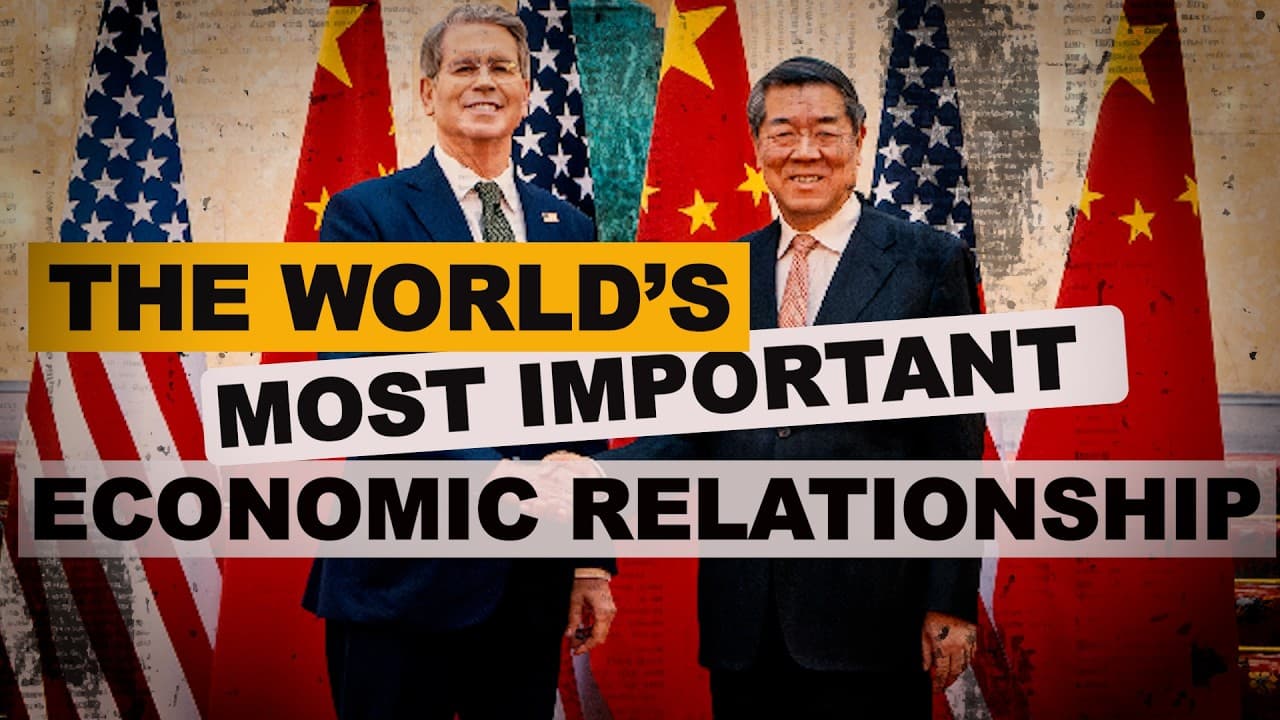
With today’s unprecedented globalization, world economies are more reactive to disruption than ever, especially to the policy whims of the U.S. and China. As the U.S. pulls back from global trade with tariffs and export controls, countries are increasingly turning to China as their main trade partner. In this eye-opening presentation, Johns Hopkins School of Advanced International Studies professor and former White House Council of Economic Advisors senior economist Jonas Nahm, Ph.D., recounts how China’s entry into the global marketplace has streamlined supply chains and lowered costs, while clarifying how firms should understand the Chinese government’s intervention into its economy. Nahm draws on his experience both living in China and serving as a top White House economic advisor to help leaders, especially those in Europe, understand the trade relationship between the U.S. and China, the American government’s policy goals, and why this moment in the global economy is so disorienting. Attendees will leave with clear strategies for scenario planning in response to a variety of trajectories that worldwide commerce may take in the years to come.
Books by Jonas Nahm

Articles by Jonas Nahm
Europe’s Hidden Trade Advantage
September 2026New Energy Industrial Strategy (NEIS) CenterGreen Industrial Strategy: What a Year Has Taught Us
August 2026Cambridge University PressStrategies of Green Industrial Policy: How States Position Firms in Global Supply Chains
February 2025The Review of International Political EconomyGreen macrofinancial bargains: how economic interests enable and limit climate action
January 2025Nature Climate ChangeModelling the Impacts of Policy Sequencing on Energy Decarbonization
2025Cambridge University PressThe Decarbonization Bargain: How the Decarbonizable Sector Shapes Climate Politics
August 2024ScienceRisks of decoupling from China on low-carbon technologies
September 2022Jonas in the Media

Argentina’s critical-minerals boom comes with a choice

America Has an Edge Over China. Why Won’t We Use It?

What the Supreme Court’s Tariff Ruling Means for the Energy Transition
The Trump Administration’s New Critical Mineral Strategy

Tariffs Can’t Stop China’s Clean Energy From Winning the Future
The Problem With “Overcapacity” in China’s Automotive Industry
Johns Hopkins Economist Jonas Nahm Joins White House Council of Economic Advisers
Why Undoing Globalization is Going to Be a Painful Affair

Can the U.S. Fight Climate Change — and Shift Industrial Policy?

COVID Stimulus Spending Failed to Deliver on Climate Promises

G20's US$14-Trillion Economic Stimulus Reneges on Emissions Pledges
Bring Jonas to your next event
Tell us about your event and we will be in touch right away.


