

Watch Murali in Action
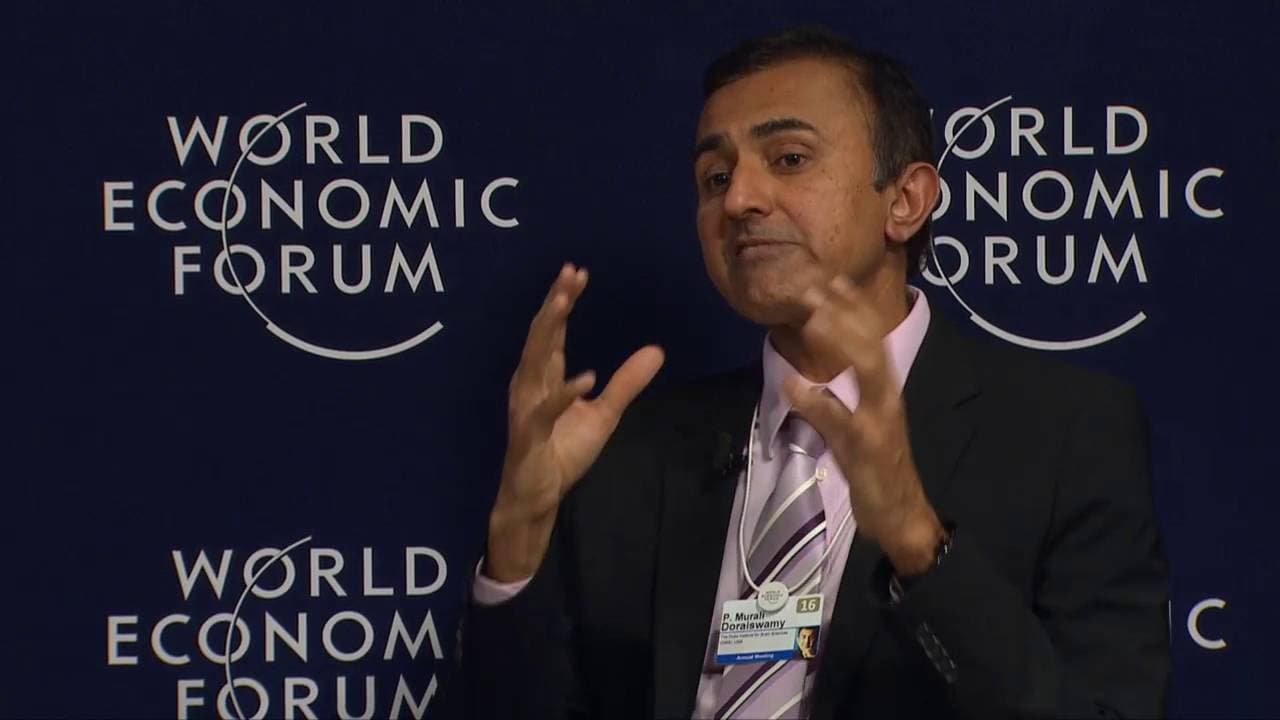
About Murali Doraiswamy
Brains are not failing us because people are living longer, argues Murali Doraiswamy. They are failing because modern organizations still treat brain health as a late-life issue rather than a leadership issue. Doraiswamy is one of the world's leading physician-scientists studying brain health, cognitive resilience and the future of human performance.
His research on neurocognitive disorders and Alzheimer's disease has helped shape many of the diagnostic tools, clinical trials and therapeutics used in modern medicine, and his co-authored book The Alzheimer's Action Plan translated that science into a practical roadmap for patients and families. His work has been featured by the BBC, The New York Times, TIME, PBS and Oprah. Today he helps healthcare systems, financial institutions, technology companies and global employers think more broadly about protecting human capability in a world where people will work longer and think alongside machines.
Murali's Keynote Topics
As AI absorbs more of the analytical work that once defined leadership, a critical question emerges: what should humans be doing with their brains now? Dr. P. Murali Doraiswamy, a Duke University professor of psychiatry, neurology and former Chair of the World Economic Forum’s Global Council on Brain Research, whose career spans neuroscience and the application of AI in healthcare, argues that the AI revolution makes investing in human cognitive fitness more urgent, not less. In this presentation, he examines how AI will augment — and in some cases compete with — human cognition, and shares insights from his pioneering work on “digital cognitive twins” and precision psychiatry, which may soon predict stress and burnout before they become organizational crises. Audiences leave understanding how to protect and sharpen distinctly human capabilities in a world where people will work longer and think alongside machines.
Can a machine truly think the way a human does? According to Dr. P. Murali Doraiswamy—a Duke University professor who has spent decades studying the brain while simultaneously pioneering the use of AI in psychiatry and neurology—the answer is far more nuanced than most technology conversations allow, and understanding the difference is essential for any leader deploying AI. In this presentation, he takes audiences inside the architecture of the human brain—its capacity for intuition, emotional reasoning, and adaptability—and compares it with the pattern-recognition power and inherent limitations of today’s AI systems. Audiences leave understanding what machines do well, what only humans can do, and how leaders can build organizations that harness the best of both.
People are living and working longer than ever, but our understanding of how to sustain the mind across an extended career has not kept pace. Dr. P. Murali Doraiswamy, director of Duke University’s Neurocognitive Disorders Program and one of the world’s foremost Alzheimer’s researchers, has spent his career at this frontier. In this visionary presentation, he explores how advances in AI, precision psychiatry, and digital biomarkers are transforming our ability to detect cognitive decline years before symptoms appear—and how his emerging work on “digital cognitive twins” may soon allow organizations to monitor and protect cognitive health in real time. Audiences leave with a clear picture of where longevity science is headed and what leaders can do now to protect human capability in a world of longer careers and unprecedented cognitive demands.
Most organizations still treat employee wellbeing as a perk rather than a performance strategy. But according to Dr. P. Murali Doraiswamy, a leading physician-scientist at Duke University School of Medicine and former Co-Chair of the World Economic Forum’s Global Future Council on Mental Health, the science tells a different story: constant cognitive overload, longer careers, and rising burnout are silently eroding the decision-making and resilience organizations depend on most. Drawing on decades of clinical experience and neuroscience research and his advisory work with multiple government agencies, businesses and advocacy groups, Dr. Doraiswamy reveals why brain health is not a personal issue but a strategic priority — and why the organizations that invest in cognitive resilience will consistently outperform those that don’t. Audiences leave with a science-backed framework for building workplaces that sustain peak mental performance at every level.
Books by Murali Doraiswamy

Articles by Murali Doraiswamy
AI-enabled clinical trials
September 2026Nature CommunicationsIndividual bioenergetic capacity as a potential source of resilience to Alzheimer’s disease
2025NEJM CatalystIndependent Care Navigators for the Mental Health Maze
2023Frontiers in PsychiatryDigital therapeutics for mental health: Is attrition the Achilles heel?
2022PubMedArtificial intelligence and the future of psychiatry: Insights from a global physician survey
2020NatureDetecting neurodegenerative disorders from web search signals
2018NatureMobile and pervasive computing technologies and the future of Alzheimer’s clinical trials
2018NatureIdentification of clusters of rapid and slow decliners among subjects at risk for Alzheimer’s disease
2017Thrive Global7 Well-Being Tips From Around the World… and the Surprising Science Behind Them
November 2016Frontiers in NeuroscienceNeuroimaging assessment of early and late neurobiological sequelae of traumatic brain injury: implications for CTE
2015Frontiers in NeurologyPET Imaging of Tau Pathology in Alzheimer's Disease and Tauopathies
2015PubMedComplex biomarker discovery in neuroimaging data: Finding a needle in a haystack
2013Murali in the Media

Survey: Neurologists split on prescribing new Alzheimer’s treatments
Could AI-powered Robot “Companions” Combat Human Loneliness?

How the Pandemic Is Changing Mental Health

4 ways that yoga could improve your quality of life
Digital Medicine Can Diagnose and Treat What Ails You
In conversation with renowned scientist Dr Murali Doraiswamy on brain research
Humans of the future
An expert answers your questions on depression for World Health Day 2017
3 sexist myths about the brain, debunked
5 brain technologies that will shape our future

New Study Reveals Breakthrough For Alzheimer's Treatment
Bring Murali to your next event
Tell us about your event and we will be in touch right away.


