

Watch Ed in Action
About Ed Boyden
Whether you are a scientist or a CEO, solving seemingly intractable problems is central to innovation and leadership. Ed Boyden faced a problem for which there was no precedent: revealing the secrets of the human brain. He led a team that discovered a way to enlarge microscopic parts of the brain so they could be viewed and analyzed, a technique with implications far beyond his own field. He now advises leaders and teams across industries on generating innovation through collaboration across disciplines.
A solutions-driven scientist and entrepreneur, Boyden is co-founder of Cognito Therapeutics, which designs visual and auditory stimuli intended to treat Alzheimer's patients. In 2021, the company reported that its gamma frequency neuro-modulation methods significantly reduced brain atrophy in Alzheimer's patients. His work draws on his group's invention of expansion microscopy and the reverse process of shrinking objects to the nanoscale, advances that he treats as a template for tackling big problems from different angles.
Ed's Keynote Topics
Wrestling with incredibly complex problems is par for the course in most industries – from finance to health care, education to strategic management. But it is equally common for firms to approach innovation blindly, developing products and services without a roadmap or guide on how to do so. Ed Boyden is a scientific prodigy who pursued his life’s work in a field where breakthroughs are rare and much of the discipline remains a mystery: neuroscience. Yet, he’s succeeding. He built and led a team to develop radical new techniques for mapping and analyzing the brain, potentially ushering in a new era of medical advancement in treating incurable diseases like Alzheimer’s and depression. His team’s development of ways to expand microscopic objects – and subsequently to shrink objects – can have an impact in fields outside his own, potentially revolutionizing our ability to treat diseases like cancer or better understand the origins of human emotions. Often, the solutions were derived from connecting the dots between fields that don’t typically communicate or were figured out by systematic critical thinking methods. In a culture that is knowledge-rich and wisdom-poor, Boyden teaches methods of creativity and imagination that lead to innovative breakthroughs. The techniques learned by trial and error are applicable to every industry, says Boyden – not just science and medicine. In this bold, thought-provoking presentation, he reveals a set of rules for pioneering solutions where there are few rules or precedents to follow.
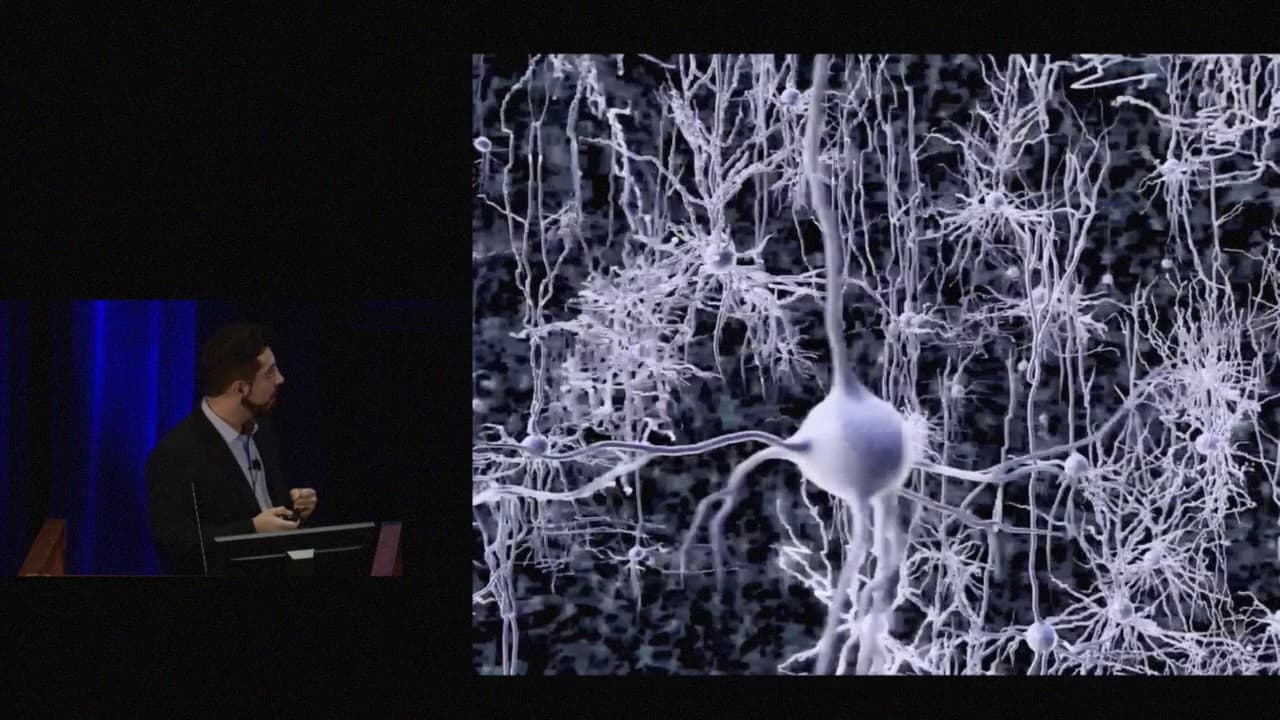
More than one billion people worldwide suffer from brain diseases like Alzheimer’s, depression, schizophrenia and stroke, often robbing them of their identity and changing how they interact with loved ones. But Ed Boyden believes there is reason to be optimistic about solving such global epidemics. By enlarging parts of the brain through expansion microscopy and controlling their dynamics through optogenetics, Boyden and his team at MIT have analyzed previously unseen details of the organ and prototyped new repair strategies. This work could trigger some of the most important breakthroughs in the history of medical science, extending beyond treating disease to reaching a greater philosophical understanding of how the human mind works, and potentially unlocking unknown mental capabilities that lie buried in our labyrinths of grey matter. In this presentation, Boyden explains how these technologies work, how far he is in the process of realizing his goals and the full impact that such achievements would have for humanity.
Ed in the Media

High-speed microscopy reveals electrical activity across the brain

Seeing More in Expansion Microscopy

‘Expansion Microscopy’ Turns Ten: How a Tissue-Swelling Method Brought Super-Resolution Imaging to the Masses
Can Flashing Lights Stall Alzheimer’s? What the Science Shows

Startup Helps People Fall Asleep by Aligning Audio Signals With Brainwaves
Self-assembling Proteins Can Store Cellular “Memories”
New Bionics Center Established At MIT With $24 Million Gift
Cognito Therapeutics Presents New Clinical Data Demonstrating Disease-Modifying Effects of Gamma Frequency Neuro-modulation on Cognitive Function and Brain Atrophy in Alzheimer’s Disease at AAIC 2021
Three from MIT Elected to the National Academy of Sciences for 2019
Blowing Up Brains
MIT Has Big Goals for Shrinking Technology
Team Invents Method to Shrink Objects to the Nanoscale
Bring Ed to your next event
Tell us about your event and we will be in touch right away.


