

Watch Jeremy in Action
About Jeremy Bailenson
Since 2003 Jeremy Bailenson has helped companies including Samsung, HP and Apple develop the underlying technology that fuels the metaverse. The data sets on virtual and augmented reality from his Stanford lab are recognized as the best in the academic world.
Through STRIVR, Bailenson works with Fortune 500 companies and professional sports teams to reinvent learning and training. The case studies are concrete: immersive training helped Walmart cut a training module from eight hours to 15 minutes, helped Verizon employees de-escalate tense customer conversations in less time, and helped Sprouts Farmers Market employees absorb the company's core values at a rate of 48 percent versus 3 percent with PowerPoint.
Jeremy's Keynote Topics
Even though virtual reality (VR) has been around for decades, most consider 2014 as the beginning of the consumer revolution of VR. Stanford University professor Jeremy Bailenson, a pioneer in the technology behind VR, observed a lot of early optimism that year, with billions of dollars flowing into the industry with the prediction that VR would shortly be in every living room. To the surprise of many, that hasn’t happened, and instead, there are only a handful of early commercial success cases. Most VR applications are still in the novelty phase, or what some forecasters call the “trough of disillusionment.”
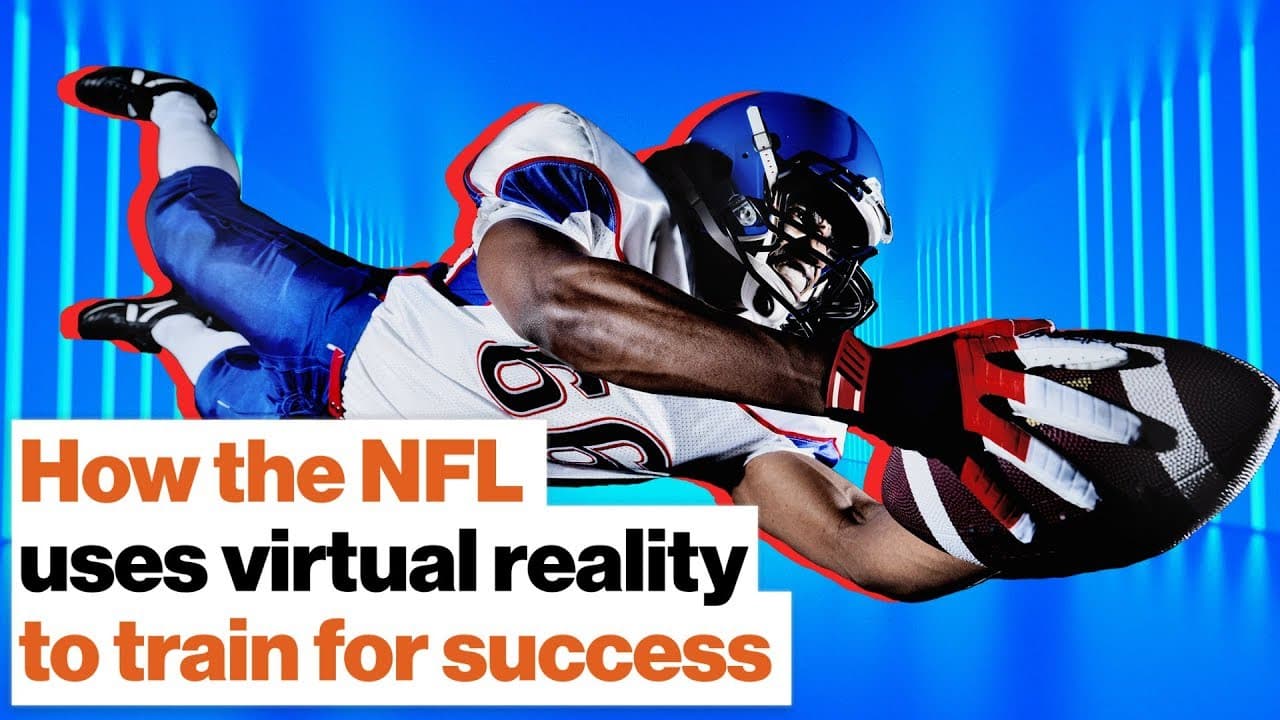
For adventurous audiences looking to better understand VR and the opportunities and challenges it presents for their businesses, this talk based on Bailenson’s book “Experience on Demand” will focus on practical applications of VR, such as training, healing and communication, as well as the early VR industry winners and the factors that enabled their success. Through vivid case studies of companies using VR in their business strategy today – such as Walmart which trained a million employees with VR in 2019, the NFL which is using VR to train players, referees and executives to do media interviews, and Fidelity which is using VR to increase empathy between call center employees and customers – Bailenson reveals how, when coupled with his strategic implementation blueprint, VR can significantly contribute to an organization’s bottom line, solve organizational and customer problems and distinguish a brand as an innovative industry leader.
The metaverse may be a new concept for some people, but not for Jeremy Bailenson, Stanford professor and founding director of the school’s Virtual Human Interaction Lab (VHIL). Since 2003, he has been helping companies, including Samsung, HP and Apple, develop the underlying technology that fuels the metaverse, as well as teaching and building on his “Virtual People” course. In November 2021, his class went completely virtual – among the first in the world to offer such an experience – allowing students to learn and engage in an immersive virtual classroom. In this talk, Bailenson explains how the technologies and tools VHIL continues to develop are transforming the way companies and schools teach, train and operate, how they build culture, and how they communicate in an environment that offers countless opportunities for experimentation and innovation. “Our class is the metaverse,” says Bailenson. “Nobody has tried to network 100 plus students via VR headsets for months at a time in the history of virtual reality, or even in the history of teaching. It’s VR at an incredible scale. It is the perfect example of how to build the infrastructure – hardware, software, content and people – and to build a persistent virtual world of avatars and scenes that people actually use.”
Given recent high-profile exposés of racism and sexual harassment, it is critical for organizations to educate employees at all levels about diversity, tolerance and empathy. By allowing people to experience life as people of different races or genders – along with all the hardships and injustices they face – VR is a uniquely impactful educational tool. One can walk a mile in the shoes of another, and – by taking this novel perspective – empathize in a way that can change attitudes. Dozens of academic experiments have shown that intense VR experiences change beliefs and behavior more than movies or role-playing exercises. In this presentation, VR expert Jeremy Bailenson discusses his research findings which have resulted in a set of best practices for using VR for empathy. With illustrative case studies from corporations using VR at scale, Bailenson reveals the technology’s ability to improve employee performance and sharpen communication skills in difficult situations and interpersonal interactions. While no technology will miraculously eliminate bias, virtual experiences can help people improve how they treat each other.
Over the last few years, while the world was learning about the uses and hype around virtual reality, VR pioneer Jeremy Bailenson shifted much of his work into the augmented reality (AR) domain. AR – which overlays digital images on top of what we see in the real world so that digital information appears to be integrated with the physical world – has been around for decades. But due to some recent large investments and a flurry of press, AR has become an incredibly hot tech trend. Yet, while everyone is talking about it, very few people have experienced “high end” AR in which the digital world is effortlessly assimilated into the physical one.
Unlike VR, which has received a lot of attention from a wide range of academics for almost three decades, AR research – in particular research about the use cases and implications of AR use – is in its infancy. At the forefront of the technology, Bailenson’s research lab at Stanford studies the perceptual, social and cognitive issues behind AR. He advises a number of major technology and AR-specific companies, such as Samsung, Avegant and Eyeway Vision, on developing viable technology strategies that fit their business models. In this talk, he explains AR technology, highlighting the opportunities it presents as well as some of its constraints. Participants come away with a better understanding of how to think more strategically when creating and building products in the AR space.
If people at your organization are suffering from Zoom fatigue, it may be time to have Stanford cognitive scientist Jeremy Bailenson give them a preview of better things to come. Bailenson, who runs the Virtual Human Interaction Lab at Stanford University, is the world’s leading expert on virtual reality (VR), augmented reality (AR) and related fields. His work with companies in almost every sector, from startups to large technology firms, keeps him at the forefront of the latest technology and products as well as new developments on the horizon.
Acknowledging, like many, that remote work has become an established part of our lives, Bailenson introduces audiences to virtual alternatives that are poised to make WFH feel more natural, bearable and manageable. He shows participants how the emerging technologies – VR, avatars and AR – will become commonly used to enhance the virtual experience and advises business professionals on how to set up, execute and manage a collaborative virtual workspace. His keynotes and workshops also provide insights into where these technologies are going, how much they can adapt to us, and what types of behaviors can be expected from people who interact with them. As a dynamic speaker and a leading expert in the field, Bailenson is uniquely positioned to give employees at all levels of your organization the information and tools they’ll need to better navigate the virtual work landscape going forward.
As people become more disconnected due to remote work and distributed teams, how do we preserve company culture? More importantly, as the virtual office becomes mainstream, how can we sustain productive virtual work environments? In this talk, Stanford University Virtual Human Interaction Lab founding director Jeremy Bailenson provides a broad overview of how the workplace is changing and how VR can help bring continuity. Using selected case studies, he demonstrates how immersive technologies helped employees at Walmart reduce the length of training from eight hours to 15 minutes, employees at Verizon successfully de-escalate tense customer conversations in much less time and employees at Sprouts Farmers Market understand the company’s core values at a rate of 48% versus only 3% with PowerPoint. With Bailenson at the helm, this interactive and engaging presentation will teach the basics of non-verbal communication and media psychology through VR to help audiences improve soft skills and better understand the management tools at their disposal.
While virtual and augmented reality (VR/AR) have been around for decades in university laboratories and military facilities, for the first time in history there are millions of affordable systems in the hands of businesses and consumers. The AR/VR market is projected to take off over the next five years with a compound average growth rate of over 75%, growing to over $120 billion by 2022. Leading companies are already deploying the technology to instruct workers – a million Walmart employees will be trained using VR in 2019 alone. In this presentation, Jeremy Bailenson maps out VR/AR’s huge potential for making companies smarter and better prepared for a multitude of tasks. He illustrates how training and virtual experiences have reduced instruction time and boosted learning capacity. For example, hundreds of studies have demonstrated the efficacy of VR/AR surgery training, and thousands of surgeries each year are performed by doctors who are either remotely located and use networked VR/AR to perform the surgery or who are in the room with the patient but use the technology to augment their vision. How can VR have the same transformative impact on your industry? And how can your company harness the enormous opportunities of this emerging technology?
Books by Jeremy Bailenson


Articles by Jeremy Bailenson
Lessons For/In Virtual Classrooms: Designing a Model for Classrooms Inside Virtual Reality
2024Computers & EducationA Novel Quantitative Assessment of Engagement in Virtual Reality: Task-Unrelated Thought Is Reduced Compared to 2D Videos
2023SSRNFrom 65 to 103, Older Adults Experience VR Differently Depending on Their Age: Evidence From a Large-Scale Field Study in Nursing Homes and Assisted Living Facilities
2023PsyArXivLinguistic Markers of AI-Generated Text Versus Human-Generated Text: Evidence from Hotel Reviews and News Headlines
2023Journal of Language and Social PsychologyLinguistic Markers of Inherently False AI Communication and Intentionally False Human Communication: Evidence From Hotel Reviews
2023Journal of Online Trust and SafetyMisinformation in Virtual Reality
2023Technology, Mind and BehaviorAccessibility of Educational Virtual Reality for Children during the COVID-19 Pandemic (Virtual Human Interaction Lab, January 2022)Accessibility of Educational Virtual Reality for Children during the COVID-19 Pandemic
2022XRDS: Crossroads, The ACM Magazine for StudentsLearning About VR in VR
2022Journal of Computer-Mediated CommunicationPeople, Places, And Time: A Large-Scale, Longitudinal Study Of Transformed Avatars And Environmental Context In Group Interaction In The Metaverse
2022Technology, Mind, and BehaviorPrerequisites for Learning in Networked Immersive Virtual Reality
202272nd Annual International Communication Association ConferenceUnderstanding Group Behavior in Virtual Reality: A Large-Scale, Longitudinal Study in the Metaverse
2022Computers & EducationUnintended Consequences of Spatial Presence on Learning in Virtual Reality
2022Jeremy in the Media

Enhancing Virtual Reality Education: Jeremy's Innovative Use of AI at Stanford

What Apple’s New Vision Pro Headset Might Do to Our Brain

Everyone is Using the Apple Vision Pro All Wrong

Virtual Reality Experience Aims To Raise Personal Awareness of Racism’s Effects

The Other DWI: Driving While Immersed

Ignore the Hype That We’ll All Live In the Metaverse. Let’s Use Virtual Reality, But Hardly At All

New Stanford Study Shows Choices of Virtual Environments and Avatars Can Promote Positive Psychological Outcomes in the Metaverse

Stepping Into the Metaverse

Faces
Jeremy Bailenson Talks About 1,000,000 Walmart Employees Training With VR, Presence, And the VR “Empathy Machine”
Does the Metaverse Need Blockchain to Ensure Widespread Adoption?
The Metaverse Isn’t a Destination. It’s a Metaphor
Jeremy Bailenson is a wonderfully engaging visionary whose passion for his cutting-edge scientific research is contagious! His insights into the power and possibilities of virtual environments will change the way you and your leaders look at the world. Jeremy brings an “A” game, and my company’s leaders find him to be an invaluable resource.
Ron LawrenceVice President, Organization Development, VF Corporation
Jeremy’s presentation was great and exceeded our expectations. Our objective of presenting cutting-edge research was certainly met.
Sandeep KhajuriaVice President, Mahindra Satyam Futurescapes Conference
Bring Jeremy to your next event
Tell us about your event and we will be in touch right away.


