

Watch Rosalind in Action
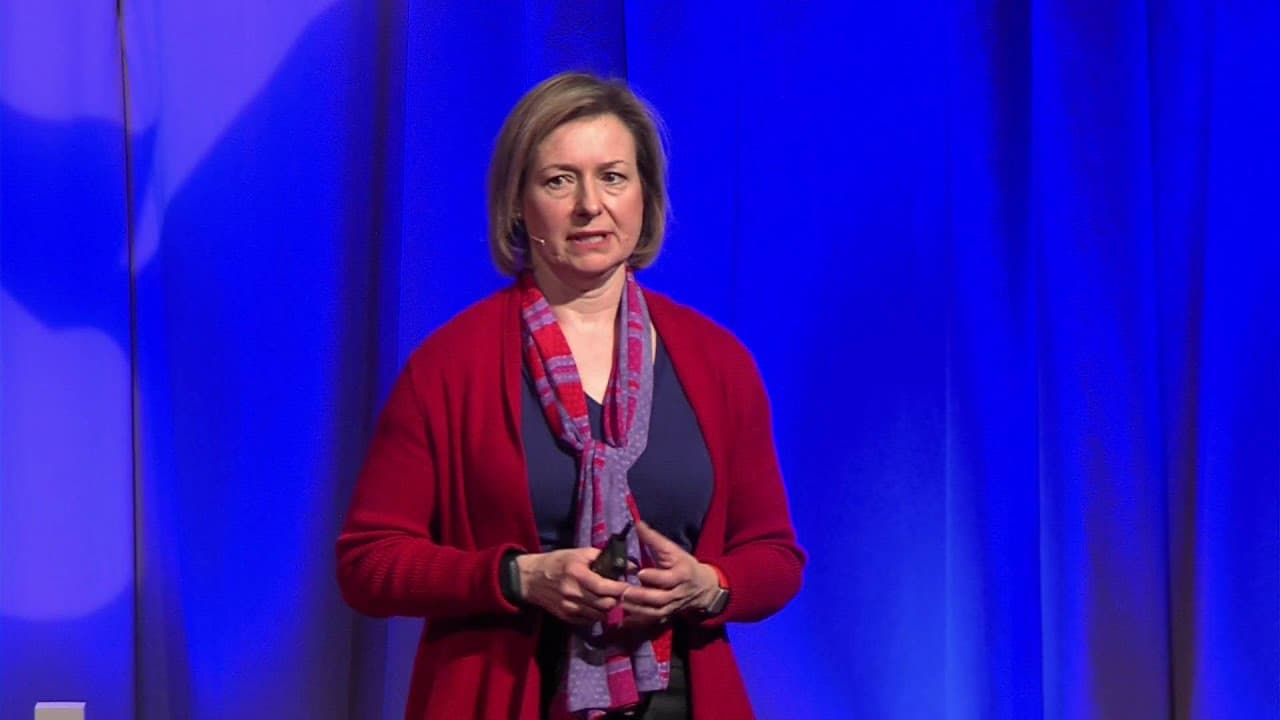


About Rosalind Picard
Rosalind Picard coined the term "affective computing" in her book Affective Computing, launching the now widely recognized field of technology that gives computers, robots and interactive systems the skills of emotional intelligence. She is one of the world's most cited scholars in digital health and affective computing.
Her inventions have led to AI-driven advances in psychiatry and neurology, including the first AI-based smartwatch cleared by the FDA for monitoring and alerting to seizures, commercialized by Empatica, the company she co-founded and serves as chief scientist. Her TED talk on the seizure-detecting smartwatch has been viewed more than 2 million times, and the wearable devices her team develops are used by thousands of researchers globally for clinical trials and patient-focused research. She also co-founded Affectiva, whose emotion-measuring technology helps marketers understand audiences and equips automobiles with AI that detects driver emotion and attention. Her team's inventions were named to The New York Times Magazine's Best Ideas of 2006 and Popular Science's Top Ten Inventions of 2011, and have caught the attention of Apple, Amazon, Alphabet, Deloitte, Dell, IBM, Merck, NTT Data and Samsung. Her honors include the 2022 International "Lombardia è Ricerca" Award.
Rosalind's Keynote Topics
Mental health problems such as anxiety disorders and depression have gradually increased among people under the age of 26 since the adoption of the smart phone. Depression is on track to be the #1 disease burden globally by 2030. To date, doctors do not understand what causes or precipitates depression or how to forecast it, nor is there a reliable treatment, although most people will get better. Thanks to MIT professor Rosalind Picard and her team, mobile and wearable devices are improving in their ability to model continuous physiology and activity/sleep/social data, detect subtly changing patterns related to shifts in health, and provide early AI-generated forecasts. What are some of these patterns telling us about neurological activity, mood, stress and brain health, and how accurately? In this fascinating talk, Picard highlights some of the latest research and technologies, focusing on both the scientific and ethical challenges around using AI to foster good mental health.
AI is so much more than a buzzword. Yet, for many, even the basics are shrouded in mystery. This session functions as MIT professor Rosalind Picard’s primer on AI essentials, from its power and limitations in the workplace to why AI hype so often confuses us. She provides guidance to companies seeking to understand what inputs they can give to AI, how to achieve desired outputs and why they should consider the technology as another tool in their toolbox. By deconstructing AI myths and bringing users into the conversation, Picard makes AI accessible to everyone.
Could you live a healthier, happier life if computers could measure and help communicate emotion? MIT professor and world-renowned visionary Rosalind Picard, creator of wearable sensors and other emotion-recognizing technologies, has been exploring and articulating what is possible in this area. In this presentation, she examines AI as an instrument for forecasting levels of health and happiness and highlights cutting-edge research to explain how wearable sensors collect statistics related to stress, anxiety, pain and joy. By teasing out differences between what the data shows to be causal versus merely correlative, she walks participants through the latest science on predicting health. With deep examinations of how AI impacts the management of autism, anxiety, depression, sleep and epilepsy, Picard illustrates how new capabilities might reveal complex interdependencies of emotions and health, and even help prevent future disease.
Technology is increasingly designed in the image of people, often with skills that recognize and respond to human emotion expressed in voices, faces, text, physiology and other behaviors. Software agents and robots are made to appear to have their own emotions, but it’s just a simulation, says MIT professor Rosalind Picard. Today, AI developers have an opportunity to be part of ongoing conversations around the ethics of AI, including its use in medicine and how it can contribute to the greater good. In this interactive session, Picard explains the beneficial uses of affective technologies, highlights current and emerging trends and addresses related challenges and ethical questions.
Artificial intelligence has the capacity to improve many areas of our lives, but, we have to be careful about how we use it. In this talk, digital health expert, inventor and MIT professor Rosalind Picard – pioneer of Affective Computing – outlines the many ways technologies can serve us as individuals and as a society. She highlights how human-AI partnerships can help address a range of problems, including mitigating bias and bad habits, treating illnesses such as autism and epilepsy, helping marketers better understand audiences, and helping car makers design safer cars.
MIT professor Rosalind Picard likes to think of mental health partially in terms of an emotional bank account, where deposits and withdrawals must be roughly equal to maintain balance. Drawing on evidence-based techniques from Positive Psychology, Picard explains how AI-enabled technologies can help us consciously inject positivity into our day in order to stave off depression, promote emotional resilience and make us more empathetic and grateful. She then highlights AI-based tools people can use every day to improve mental health, boost productivity and promote well-being.
Books by Rosalind Picard

Articles by Rosalind Picard
Deep Learning-Aided Decision Support for Diagnosis of Skin Disease Across Skin Tones
2024New England Journal of Medicine via MIT Media LabNew England Journal of Medicine Series: Wearable Digital Health Technologies
2024Proceedings of the Natural Academy of Science of the United States of AmericaDeepfake Detection by Human Crowds, Machines, and Machine-Informed Crowds
2022Rosalind W. Picard's Research
Rosalind in the Media

AI and Emotion: Can Machines Feel?
AI and Emotion: Can Machines Feel?

‘We May Have a Crisis on Our Hands’: The Unregulated Rise of Emotionally Intelligent AI

Women’s Day 2025: Accelerate Action Through Women-Led Innovations
AI Pioneer Bridges Cultures. Rosalind Picard’s Surprising Move Toward the East.
Rosalind Picard on ACM’s ByteCast Podcast

Doctors Have More Difficulty Diagnosing Disease When Looking at Images of Darker Skin
Scientist and Engineer Rosalind Picard Is Transforming Digital Health with Wearable AI

Engineering Emotion & AI
Premio Lombardia è Ricerca a Rosalind Picard: Collaborerà con Buzzi e Niguarda (in Italian)
Using Smartphones and Wearable Technology to Monitor Individuals with Depression

New Study Highlights Opportunities for Artificial Emotional Intelligence
Roz brought the house down at our Global Summit event in 2018. Her engaging style, use of great visuals, and heartwarming, emotional storytelling were just what our audience needed to get excited about making a difference in the world.
Tom KeppelerDirector of Communications, InterSystems
Bring Rosalind to your next event
Tell us about your event and we will be in touch right away.


