

Watch Sherry in Action
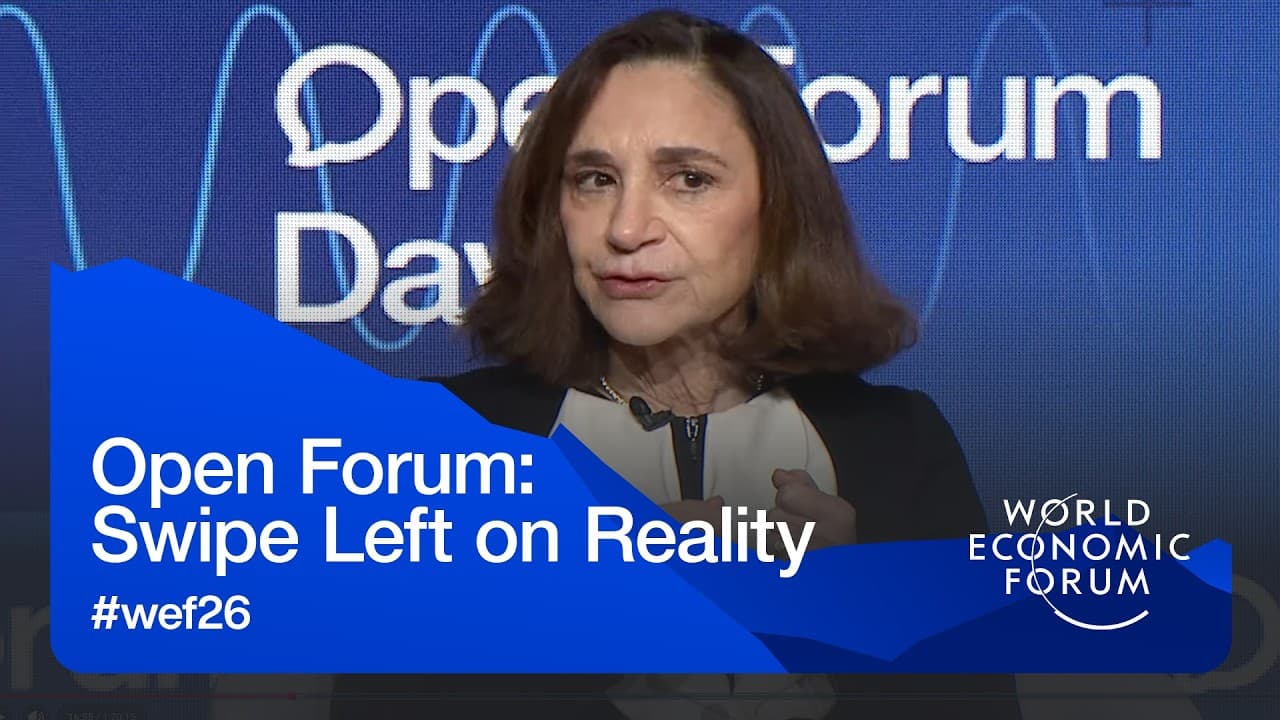
About Sherry Turkle
What do we lose when we spend more time talking to machines than to each other? Sherry Turkle has been answering that question since before most organizations knew to ask it. She was among the first scientists to examine AI as it was being created. Turkle has been profiled in The New York Times, Scientific American and WIRED, has appeared at the World Economic Forum Annual Meeting and Talks at Google and her TED Talk "Connected, but alone?" has been viewed more than 6 million times.
Her books chart the arc of our life with screens. Alone Together sounded an early warning about the human costs of too much digital communication. Reclaiming Conversation made the case for face-to-face talk as "the most human thing we do."
Sherry's Keynote Topics
As individuals become more willing to embrace generative AI and other evolving technologies, some people may wonder if humans are becoming spectators, watching their futures unfold like a movie. Sherry Turkle, a pioneering MIT professor and the first to identify the profound emotional effects of technology, urges humanity to reclaim its narrative. Turkle champions a radical rethink: how can we ensure technology aligns with genuine human purposes? What does it mean to truly listen and empathize in a world where AI doesn’t value truth? Drawing from her extensive research and deep understanding of the socio-technical landscape, Turkle invites businesses, educators and individuals to “step up” and co-construct a positive, purpose-driven future. By reimagining the intersection of tech and humanity, she illuminates the path toward a society where innovation and empathy coexist, and where technology truly serves human aspirations.
The rise of generative AI has granted us smart machines that remember, respond and seemingly understand. But what cost does this pose to authentic human connection? Bestselling author and MIT sociologist Sherry Turkle explores this intriguing landscape, challenging leaders with thought-provoking questions that encourage them to carefully think about AI’s effects. Do machines truly grasp empathy or are we merely being “remembered” without being genuinely “heard”? As children grow amidst digital dialogues and as adults grapple with the changing fabric of trust, there’s an underlying peril – the potential erosion of genuine, earned relationships, where pushback and resistance fortify understanding and growth. With insights stemming from her cutting-edge research, Turkle empowers business leaders to strike a balance, ensuring technology augments, rather than replaces, deep human connections.
Can artificial intelligence truly grasp the nuances of human emotion? Leading businesses are turning to AI to gauge employee empathy, from job interviews to performance evaluations in call centers. The rush to technology is part of our current landscape, but there is a risk that we begin to define human potential and human achievement in technology’s terms. MIT professor Sherry Turkle reveals how businesses may inadvertently prioritize machine-consistent behaviors over genuine human connection, leading to actions that are out of alignment with an organization’s goals. Turkle’s insights reveal that the path toward reclaiming leadership is the reaffirmation of core human values and intentions, preserving a culture of trust. As businesses face the transformative power of AI, Turkle helps leaders hold true to their core values amid rapid technological change.
For decades, MIT professor Sherry Turkle has been warning us about the dangers of allowing digital exchanges to overshadow face-to-face conversations. Her research shows that communicating through devices inhibits a person’s ability to develop empathy and, without empathy, everything suffers – from our homelife to our workplaces. So, in an era dominated by digital communications, conversation must be cultivated. In this presentation, in which she draws on her book “The Empathy Diaries,” Turkle discusses how we are at a point where we have the tools to be deliberate in our use of technology as we honor the importance of non-digital conversations in building a culture of empathy. In her discussion of workplace dynamics, she helps bridge the divide between senior management and younger members of the organization who are often reluctant to converse outside the digital realm. Beyond the organization, Turkle explains why empathy needs to be part of a new definition of citizenship in our time of unprecedented political and social division. She explores a way of seeing empathy that is not passive but an active and civically engaged endeavor.
We are living in a time where empathy – the ability to understand and share the feelings of others – is under assault. The empathy “gap” is widening in many societies around the world. Among college age students, studies conducted over a 30-year period have shown a 40% decline, with most of the drop coming after 2000. A generation has grown up believing it is possible to share our attention during almost everything we do and feeling that we “would rather text than talk.” What are the costs of a “flight from conversation” in personal life, among one’s family and friends? What are the costs in the business world? And most importantly, what can we do about it? Sherry Turkle believes technology has offered the illusion of companionship without the demands of friendship and then – as it got really good – the illusion of friendship without the demands of intimacy. While we have always known that only people can be empathic, we only really get good at it with our full attention to each other.
According to a Forbes article that went viral in 2021, empathy is a critical tool for business leadership and a key ingredient for keeping workers engaged and creative. Yet so many current-day forces undermine empathy. Our economic system and its pressures are dehumanizing and overwhelming. Capitalism is a machine that wants people in it to be interchangeable machine parts. Beyond all this, the algorithms that underlie social media are built to engage us by keeping us angry and in silos where we speak only to people with whom we agree. “Social media is an anti-empathy machine,” laments renowned MIT sociologist and New York Times bestselling author Sherry Turkle, a globally recognized authority on building empathy and improving relationships offscreen in an era dominated by technology. “The current assault on empathy puts us in danger, individually and in our communal life.”
In this timely and urgent talk, Turkle explains why an erosion of empathy – mainly due to the impact of technology on how we communicate – has caused people and societies to lose their way. She discusses how, even before the pandemic, our tech-saturated culture was negatively affecting our work and social lives, causing divisions, and making people feel alienated, isolated and depressed. Drawing on her extensive research, as well as lessons she’s learned from personal experiences, she teaches her “4-Es” framework for reclaiming empathy, to help us understand how empathy works, why it’s so important, and how we can nurture and protect it. Her simple yet powerful approach provides an avenue for consciously practicing empathy within our workplaces, communities and families so we can strengthen our relationships offscreen, and eventually restore what’s been lost to technology – more importantly, to help our children do the same so they become more empathetic, conscious adults.
Since the dawn of science fiction, there has been a fascination with conversing with machines. While this inclination isn’t new, some wonder, why is the desire to communicate with artificial intelligence so persistent – and what does that imply for human connection? MIT sociologist Sherry Turkle unravels the layers behind the human penchant for machine interaction, from the allure of perceived privacy to the skepticism surrounding AI in professional work. As generative AI becomes more sophisticated and surveillance technologies more pervasive, Turkle prompts individuals to look within themselves to understand their motivations before jumping in feet-first. Posing new questions that provoke deep thought, she encourages leaders to ask whether their eagerness to chat with AI genuinely serves our humanistic objectives as it puts us onto uncharted emotional terrain. The key to her talk on machine confidants is the lure of what she calls “artificial intimacy,” our new human vulnerability to AI. We seek digital companionship because we have come to fear the stress of human conversation. Turkle has been studying this for decades; she is a thought leader on why we want to talk to machines, how to assess the costs, and how to make more balanced plans in our work and private lives.
A surge of data underscores empathy as a pivotal tool for business leadership, driving engagement and sparking creativity. But this is not an easy task – employees at every level have grown up in an environment shaped by the divisive algorithms of social media, which MIT sociologist Sherry Turkle has described as an “anti-empathy machine.” Social media (and now generative AI) have provided an assault on empathy just as business discovered it as a key element in successful management. She elaborates, “First we talked to each other face to face; then, we talked to each other through machines. Now, we talk directly to machines.” Turkle is both incisive and encouraging as she dissects the forces behind our dwindling empathy and what to do for it. Through her “4-Es” framework, she offers a lifeline, guiding us to consciously reclaim and nurture empathy in our workplaces, communities, schools, and homes. With Turkle’s insights, leaders can not only bridge the digital empathy gap but also ensure that future generations are equipped with the emotional tools to thrive in a technologically advanced world.
In an age where technology not only supports but often supersedes human interaction, how can leaders ensure genuine connection and inspire meaningful action? MIT sociologist Sherry Turkle, a visionary who was among the first to recognize the emotional impact of technology, is redefining the landscape of leadership as conversations with machines are becoming as common as those with humans. Through extensive research, she presents a compelling narrative to a time that boasts the most advanced communication tools yet is witnessing a decline in genuine human agency. What does it mean when daily interactions are with entities that don’t value truth? How has our elite educational system inadvertently fostered a climate of passivity? More importantly, how can leaders foster environments that promote genuine dialogue, critical thinking and decisive action? Drawing from her groundbreaking work on the intersection of technology, psychology, and leadership, Turkle offers actionable insights that empower leaders to build organizations where people act with intention, embrace uncertainty and, most crucially, feel truly heard and understood.
One of the realities of corporate life is that office technology leads us to make a Faustian bargain with everyday office technology: What we gain from efficiency and responsiveness is compromised by what we lose because of the isolation, disengagement and distraction that comes with digital life. Sherry Turkle calls our work dilemma that of “pilots in the cockpit.” Often, we are too busy communicating online to have the conversations that count – on the phone or face-to-face. At every level, people craft ways to move phone or in-person conversations to screens on which they feel less vulnerable and more in control.
Turkle makes an impassioned case for companies to pivot back to conversation-based interactions that spur fully formed relationships. Ultimately, the aim is to become an organization that values empathy, authenticity and engagement. When employees recognize the difference between relational and transactional encounters, they can place a higher value on the former and build better relationships with clients and co-workers. The empathic organization understands that the capacity for solitude, and for relationship and conversation go together. With these underpinnings, employees will be more effective at establishing and maintaining relationships as they develop a competence for attention and focus. They will thrive – and so will your business.
Books by Sherry Turkle

Artificial Intimacy: Who We Become When We Talk to Machines
Little, Brown and Company, September 2026
The Empathy Diaries: A Memoir
Penguin Press, 2021
Reclaiming Conversation: The Power of Talk in a Digital Age
Penguin Press, 2015
Alone Together: Why We Expect More from Technology and Less from Each Other
Basic Books, 2011
Simulation and Its Discontents
The MIT Press, 2009
The Inner History of Devices
The MIT Press, 2008
Evocative Objects: Things We Think With
The MIT Press, 2007Sherry in the Media

Artificial Intimacy — Sherry Turkle’s stark warning against AI ‘companionship’

How to Maintain the ‘Heartbeat of Work’ in the Age of Ai

The Risks of Artificial Relationships

The Original Sin of Artificial Intimacy: A Conversation with Sherry Turkle on Chatbots, Empathy and Why We Have Abandoned Each Other

Want to Fight Back Against Chatbots? Start With Your Friends.

Who we become when we talk to machines

Renowned psychologist Sherry Turkle has been studying tech’s effect on the human psyche for decades. With AI, she says, we’ve entered ‘a state of emergency.’

Alexa, I Need Some Space

The slippery slope of artificial intimacy

How AI Chatbots Are 'Deskilling' Human Empathy
Artificial Intimacy Is Changing Who We Are

Can an AI chatbot replace human connection?
How Sherry Works with Organizations
Each engagement is built around your goals and audience.
01 · WORKSHOPBridging the “Leadership Gap”
As technology quickly evolves, the business of leadership faces new challenges. Despite having powerful tools at their disposal, many leaders report a discernible gap between what they’d like to do and what they feel they are able to do. MIT professor and sociologist Sherry Turkle, with her insightful analysis of modern behaviors, identifies how today’s environments impact leadership capacities and suppress organic initiative-taking.In full and half day sessions, Turkle guides participants through: The Anatomy of Leadership: Learn the intrinsic and extrinsic factors that define authentic leadership. Discover why some are natural leaders while others, even those who have had opportunities, feel held back. Disentangling Digital Distractions: Understand how continuous interactions with technology can enhance clear thinking, empower decisive action and foster leadership development. The Uncertainty Principle in Leadership: Reimagine uncertainty as a potent tool rather than a hurdle. Harness the potential of unpredictability to drive innovation and initiative. Move Beyond the Screen to the Real World: Learn strategies to transition from passive management to active leadership, bridging the divide between the digital realm and tangible impact. Turkle’s sessions emphasize real-world applications over theoretical knowledge, ensuring that participants walk away with practical strategies to enhance their leadership skills. Customizable to suit groups of any size at all levels and industries, Turkle gives leaders effective guidance for shaping the role of leadership in tomorrow’s tech landscapes.
02 · WORKSHOPHow to Build More Positive Futures with AI
Our interactions with machines shape our behaviors and understanding of the world more than ever before and some fear this could lead to a disastrous end. What happens when our relationships with machines challenge our ability to act on our intentions? Does artificial intelligence suppress our capacity for authentic leadership?Sherry Turkle, Ph.D., a pioneering thinker on the emotional and ethical dimensions of technology, helps leaders and teams reclaim their ability to drive change and create positive futures in thought-provoking sessions designed to rekindle agency in the age of AI.During transformative half- and full day sessions, participants will: Explore the Depths of Agency: Dive into the profound psychology of what motivates some individuals to act on their dreams while others feel paralyzed, even with abundant resources and potential at their disposal Fight Passivity: Dissect why many today, despite being well-educated and informed, find themselves feeling passive or disconnected from real-world activism and change Embrace Uncertainty: Challenge conventional paradigms to embrace the power of uncertainty and recognize its pivotal role in fostering dynamic and proactive leadership Reposition Technology: Engage in critical discussions about the implications of being in constant conversation with machines and the effect of interacting daily with entities that don’t prioritize truth Envision a Constructive Future with Tech: Collaboratively brainstorm how tech can complement and elevate human aspirations, rather than confine them. Move beyond dystopian narratives and co-create a future where technology serves genuine human purposes Turkle’s methodological approach ensures participants not only grasp the theory but apply it. Interactive activities drive home the lessons, offering participants tangible strategies to integrate into their personal and professional lives.Whether confronting tech’s effects in an organization or fostering proactive leadership, Turkle’s insights offer a fresh perspective. Tailorable to various organizational levels and industries, this session is an essential step towards reclaiming agency in a digital age.
03 · WORKSHOPReclaiming Empathic Capacities in Leadership
Social media made three promises: that we would never be alone, we would always be heard and that someone would always hear us. Now, generative AI adds to these promises: there will always be an interlocuter who will agree with you and support you. MIT professor and sociologist Sherry Turkle emphasizes that people can’t promise these things, while algorithms can – but when we accept these promises, we lose our capacities for empathy and authentic leadership. Turkle’s workshop takes people through four steps to reclaim the empathic capacities for leadership. An exceptional presenter, she guides participants through steps that include seeing an organization as a community and embracing conversations as more than a place where information is delivered, but rather as a place for human connection and motivation.
The audience loved her. Lots of good tweets about her talk, and relevance to our field
Germaine SchaeferHeart Rhythm Society
‘Use concrete events to think about large ideas. Use large ideas to think about concrete events.’ Sherry Turkle follows the advice of her professor, Samuel Beer, and The Empathy Diaries is the compelling result. The stages of Turkle’s narrative unfold so gracefully, in prose of such candor and clarity, that it’s easy to overlook how many tasks this memoir performs. The Empathy Diaries is about a childhood and a coming of age. It’s about a courtship and marriage. It’s also about the progress of Turkle’s engagement in the dynamic and overlapping fields in which this professor of social sciences, science, and technology is a crucial, authoritative, and, yes, empathetic voice. In every way, this is a book about an education. Fans of Turkle’s earlier work will certainly want to read The Empathy Diaries; but so too should everyone struggling in the cyber maze in which we find ourselves. A remarkable book.
Rachel HadasPhD, Board of Governors Professor of English, Rutgers University–Newark
Bring Sherry to your next event
Tell us about your event and we will be in touch right away.


