

Watch Neil in Action
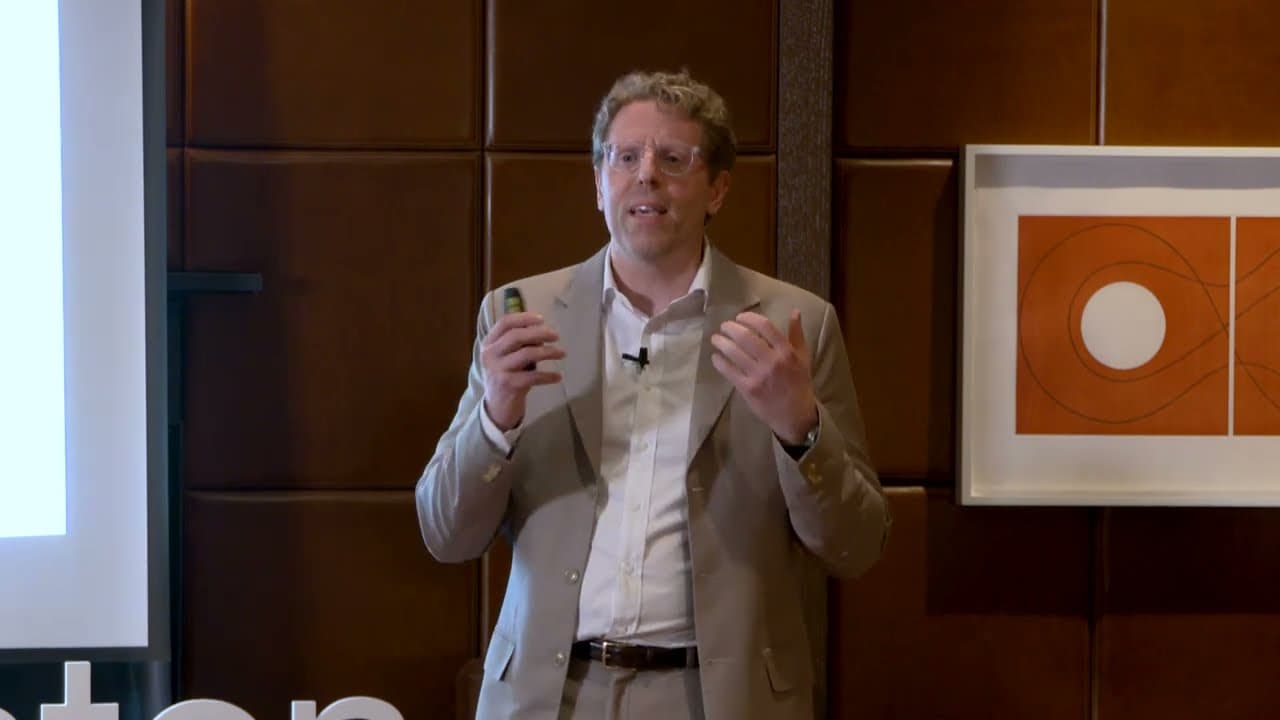
About Neil Thompson, PhD.
Does your organization find itself on the back foot as AI headlines upturn one area after another? Neil Thompson has become one of the world's leading experts on helping organizations understand generative AI, agentic AI and quantum computing so they can capture what the technology offers while avoiding expensive project failures. Thompson pairs the practical savvy of a former Bain management consultant who served companies on three continents with deep technical training in computer science, economics and statistics.
"A lot of what's going on in AI from a technical standpoint is very predictable," he explains. "Because the tech advancements are predictable, you can also gather a lot of insight into what it's going to mean for economies." His lab studies what drives AI progress, how much it costs and what risks it creates: the economics of generative and agentic AI deployments, which tasks are economically attractive to automate, research with labor economist David Autor on when automation helps or hurts workers, and the AI Risk Repository, built with insights from more than 200 experts on which sectors and risks companies should prioritize.
Neil's Keynote Topics
We’re already seeing the start of artificial intelligence’s impact across the economy. But as AI advances and diffuses, what impact will it have on business, jobs and society? From the practicality of building multimillion-dollar AI systems to what those systems will actually be able to do as the technology advances, Neil Thompson, Ph.D., Director of the FutureTech research project at MIT’s Computer Science and Artificial Intelligence Lab, offers insight into where AI is, where it’s going and why leaders should care. Through his research as a computer scientist and economist, Thompson provides a level-headed look at the business and economics of AI and how we should be thinking about it as leaders and individuals. Audiences will gain an understanding of how jobs will – and won’t – change and how businesses can leverage AI for strategic, practical and economically sound purposes.
Technological advancements over the past decade have made tasks that were traditionally only possible for human workers possible to do with artificial intelligence (AI). Such automation promises major changes in the economy, both good (productivity increases, new scientific discoveries) and bad (worker displacement, more powerful bad actors). In this talk, Neil Thompson, Ph.D., Director of MIT FutureTech, will discuss the policy implications of AI task automation. Using an interdisciplinary lens, he will discuss both what is technically possible and also — using a methodology developed in his MIT group — discuss which tasks are economically attractive to automate. Together these will paint a picture of opportunities and challenges facing policy as AI task automation occurs. Audiences will leave with a new understanding of how to boost strategic planning for optimally using AI to fine-tune policy.
The powerful technology advancements of the near future will touch virtually all aspects of life – work, business, economies and society at large. What are the key technologies leaders should familiarize themselves with as they prepare their organizations for the high-tech future? In this fascinating talk, Neil Thompson, Ph.D., director of the FutureTech research project at MIT’s Computer Science and Artificial Intelligence Lab, looks at practical applications for rapidly developing and emerging technologies – including even greater advancements in AI and nascent quantum computing and how they may (or may not) provide new avenues of prosperity and growth. In addition, he lifts the curtain on potential implications on jobs, the business world and even geopolitics. Helping audiences understand how technologies evolve and what they mean for society, Thompson’s unique multidisciplinary analysis provides a lens into how business, government and non-profit leaders can prepare now to familiarize themselves with and leverage the powerful tech of tomorrow.
As powerful artificial intelligence systems continue to improve and spread, is it possible to analyze the economics of AI the same way researchers can forecast other technological advancements? According to Neil Thompson, Ph.D., principal investigator at MIT’s Initiative on the Digital Economy, understanding the deep trends that are driving AI progress can demystify how AI’s economic impacts will play out. In this revealing presentation, Thompson explores the intersection of tech and money with timely topics ranging from the future of work – is it actually economically feasible to replace humans with AI in some instances? – to sustainability and the cost of the strain that massive computing power puts on the environment. With advanced degrees in both computer science and economics, Thompson applies his unrivaled cross-disciplinary expertise to provide audiences with practical strategies for employing tech trend insights to glean useful economic wisdom, allowing companies to forge a cost-effective, AI-enabled path ahead.
Articles by Neil Thompson, PhD.
Workforce policy for the age of AI
September 2026FutureTechCrashing Waves vs. Rising Tides: Findings on AI Automation from Thousands of Worker Evaluations of Labor Market Tasks
July 2026FortuneAnthropic engineering head says Claude Code made employees’ work a ‘lonely experience’—and it could hint at Big Tech’s bigger morale problem
June 2026MIT FutureTechPrioritization of Risks from Artificial Intelligence: A Delphi Study of 272 International Experts
June 2026arXivCrashing Waves vs. Rising Tides: Preliminary Findings on AI Automation from Thousands of Worker Evaluations of Labor Market Tasks
April 2026arXivEconomics of Human and AI Collaboration: When is Partial Automation More Attractive than Full Automation?
March 2026ElsevierThe AI risk repository: A meta-review, database, and taxonomy of risks from artificial intelligence
March 2026arXivIs there “Secret Sauce” in Large Language Model Development?
February 2026arXivHow Much Progress Has There Been in NVIDIA Datacenter GPUs?
January 2026arXivOn the Origin of Algorithmic Progress in AI
November 2025arXivQuantum Deep Learning Still Needs a Quantum Leap
November 2025arXivThe Price of Progress: Price Performance and the Future of AI
November 2025Neil in the Media

AI tech titans: Stop us before we let our products go rogue. Again.

The top five threats from AI, according to an MIT researcher
MIT's Neil Thompson On The Real Cost Of Agentic AI

Corporate America Is Embracing AI More Slowly Than the Hype Suggests, but the Pace Is Increasing

How will AI automation hit — like a crashing wave or a rising tide?

Anthropic engineering head says Claude Code made employees’ work a ‘lonely experience’—and it could hint at Big Tech’s bigger morale problem
International AI experts warn of potentially catastrophic risks from AI
How Much Will AI Impact Tomorrow’s Workforce? New Data on the Future of Work with AI
AI and Productivity: Setting Expectations for ROI
Real reasons AI gains are slow: experts
The megamanager era: AI is doubling bosses’ workloads—and the costs are just beginning to show
AI angst mutates into ‘FOBO’ as Fear of Becoming Obsolete takes over American workforces
Bring Neil to your next event
Tell us about your event and we will be in touch right away.


