

Watch Rawi in Action
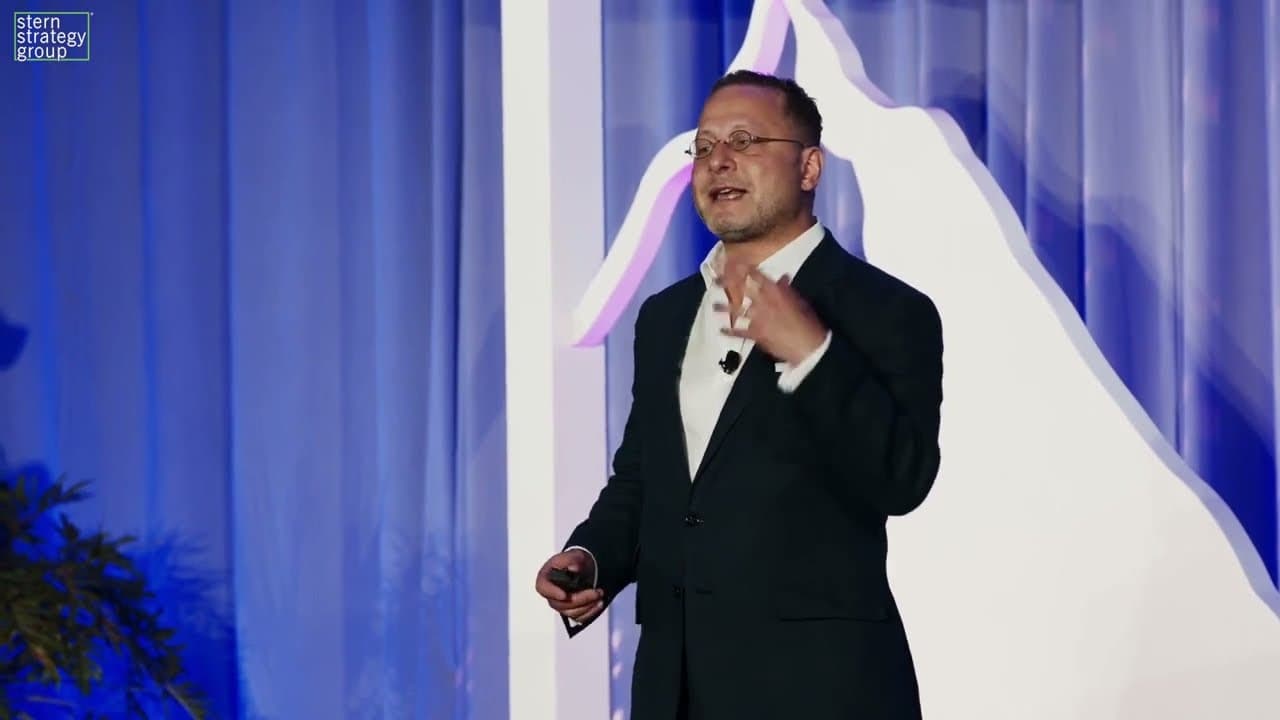
About Rawi Abdelal
Rawi Abdelal helps leaders make sense of a world where geopolitics has moved to the center of business strategy. Organizations bring him back: Intel's Executive Forum customers unanimously requested his return, Uber invited him into an executive leadership session, and investment firm Gerstein Fisher put him in front of its investors for more than a decade.
Abdelal's range runs from the natural gas trade of Eurasia, which he studied across three eras spanning nearly 40 years, to Europe's energy reinvention, American populism and the evolving social contract. Having shifted his teaching from "examining the fragile state of the world" to "imagining the next global economy," he argues that the next global economy will not resemble the last one in fundamental ways. "The frustrations people are feeling are not all about money. What people are craving is a sense of worth and dignity," he explains. "We can't wait for dysfunctional governments to fix these problems." His prescription starts inside organizations: cultures of dignity, mentorship and capability building, a theme he developed in his co-authored McKinsey article "The CFO's Role in Capability-Building."
Rawi's Keynote Topics
The European macroeconomic, political and social environment in which we do business is at an inflection point. The European Central Bank has resumed its policies of quantitative easing and much of the Continent faces negative interest rates. A rising tide of both left-wing and right-wing populist movements is transforming national governments in the West and relations between Russia and the West are greatly strained. These trends have resulted in the Brexit crisis, political and financial instability in Italy and elsewhere in southern Europe, and disagreement within the European Union about the way forward. Through keynotes, workshops and advisory roles, Harvard Business School professor Rawi Abdelal, a renowned expert on globalization and geopolitics, outlines what this all means for stakeholders conducting business outside and inside Europe so they can make more informed decisions, optimize their investments and reshape their business model accordingly.
Once upon a time our information technology revolution promised something extraordinary: the entire world would have access to the same facts and knowledge would become universal. But that dream never materialized. What we got instead was very nearly the opposite: a fragmentation of often misused, misdirected information. How can societies engage in civic and political discourse when we can no longer agree on what is true and not true? How can we avoid both domestic and foreign disinformation when we deliver to ourselves this extraordinary vulnerability? Through keynotes, workshops and advisory roles, Harvard Business School professor Rawi Abdelal, a leading authority on globalization and geopolitics, discusses our collective responsibility to resolve this fundamental challenge and shows businesses how they can do their part to mitigate the negative effects of disinformation.
Global supply chain issues. Rising political and social activism. Broken political, social, health care and infrastructure systems. These are the challenges businesses and economies in almost every country are facing. In this talk, Rawi Abdelal – award-winning professor of international management at Harvard Business School and one of the world’s foremost authorities on how globalization and geopolitics affect businesses, economies, supply chains and social structures – explains the fundamental differences between the current global economy and the one that looms on the horizon. Having shifted his teachings from “examining the fragile state of the world” to “imagining the next global economy,” he helps participants understand the macro and micro forces driving current trends, how to make sense of the world we’re living in, and what they can do to help build a more sustainable, equitable future that serves business and society.
Across the U.S. and around the world, mayors and local leaders are shouldering immense responsibility and often have fewer resources, more constraints and far greater urgency than their national counterparts. Harvard Business School professor Rawi Abdelal draws on years of firsthand collaboration with city leaders and their teams to illuminate what effective, courageous local leadership looks like and why it may hold the key to solving some of today’s most pressing social and economic challenges. Drawing from his work advising sitting mayors on issues ranging from economic revitalization to public-private partnership and workforce development, Abdelal surfaces the strategies, mindsets and institutional strengths that enable transformative action at the local level. Timely and insightful, he also highlights the unique role of local business leaders in driving progress and shows how cross-sector trust, clear communication and shared purpose can unlock innovation and resilience in even the most resource-limited environments. Equally relevant to municipal governments, business executives, academic institutions and nonprofits, this presentation offers a vivid and practical look at what’s working in real communities and how leaders across sectors can collaborate more effectively for collective impact.
The U.S. is navigating its own political upheaval, but it’s also exporting it. For global business leaders, understanding what’s happening inside American politics has never been more urgent. In clarifying and engaging sessions, Harvard Business School professor Rawi Abdelal explains how the U.S. arrived at its current moment of populism, polarization and economic cutbacks, and reveals what it means for the rest of the world. From trade wars and supply chain reconfiguration to the unraveling of globalization and questions around the dollar’s dominance, Abdelal connects the dots between domestic politics and global risk. With insight shaped by decades of political economy scholarship, Abdelal’s presentations give global leaders the context and strategic foresight they need to prepare for what’s next.
Beyond reshaping borders, Russia’s war in Ukraine has ruptured essential energy markets, forcing Europe into a high-stakes reinvention. Harvard Business School professor and global political economist Rawi Abdelal explores how the collapse of Europe’s dependence on Russian hydrocarbons has catalyzed a bold experiment: building a green, sovereign and secure energy future. Drawing on history, economics and real-time policy shifts, Abdelal unpacks the EU’s new industrial strategy, its implications for global competitiveness, and the unanswered question at the heart of the transition: can Europe lead the clean energy future without sacrificing industrial strength? Leaders walk away with a nuanced understanding of how energy is remapping investment channels, international alliances and European power.
European countries may be dependent on Russia for energy but increasingly the viewpoints and practices of Europeans are becoming divided. Russia’s invasion of Ukraine clearly seeks to leverage that division. But multinational firms can play a key role in shifting power dynamics. In this talk, renowned Harvard Business School professor Rawi Abdelal, former director of the Davis Center for Russian and Eurasian Studies, explains how multinational firms can exert influence over politics through power that is generated by both structure and process. He highlights the reciprocal relationship between multinational firms and geopolitical systems, how links between multinational firms form a distinct type of international system for the private sector – one that is simultaneously enmeshed in geopolitics and international markets even as it is also autonomous from them. He then outlines his analytical framework for understanding how relationships among multinational firms can directly impact geopolitical outcomes, based on his study of the natural gas trade of Eurasia in three eras that span nearly 40 years.
As organizations adjust to the new world of work, many are discovering that the capabilities of the workforce no longer match the needs of the marketplace. As an advisor to leaders tasked with developing new skills for the next normal, Harvard Business School professor Rawi Abdelal highlights the important role CFOs must play as companies rebuild their capabilities post-pandemic. Pointing to a 2018 McKinsey survey in which four out of ten CFOs said they created the most value for their organizations through their strategic leadership and performance management, Abdelal explains why CFOs are uniquely positioned not only to ensure that business units get the resources they need to invest in the infrastructure, technology, talent and organizational changes required to thrive in the next normal, but also to model critical cross-functional behavior and skill sets.
“The Great Resignation” and increasingly polarized political and social movements have organizations around the world looking for a better understanding of what’s happening so they can respond in ways that bring about positive change for their business, employees and customers. In this talk, renowned Harvard Business School professor Rawi Abdelal explains why the frustrations people are feeling are not all about money and have more to do with how their companies treat them, value them and invest in them. An award-winning professor of international management and one of the world’s foremost authorities on how globalization and geopolitics affect businesses, economies, supply chains and social structures, Professor Abdelal outlines specific actions organizations can take to create a dramatic turnaround.
As a rule, business leaders and policymakers base their decisions on economic forecasts and analyses driven by traditional predictors and trends. In recent years, however, that process has become more complex as globalization and multilateralism are being eclipsed by unilateral and protectionist policies around the world. Global politics are affecting free trade and the way multinational organizations choose or are forced to conduct business due to changing regulations and policies. This quickly shifting new order is influencing political and economic relationships between countries, and sometimes within industries, leaving decision makers in almost every sector grappling with questions about where and how to wisely and profitably do business. Through keynotes, workshops and advisory roles, Harvard Business School professor Rawi Abdelal, a leading authority on the global economy, shines a light on the current world economy, explains what lies ahead, and offers leaders and policymakers insights into how they can respond and adapt to the new landscape in order to sustain and drive growth.
The rules of global capitalism are being rewritten – but by whom, and to what end? In sweeping and valuable sessions grounded in his acclaimed political economy course at Harvard Business School, Rawi Abdelal examines the economic, social and ideological forces that are reshaping the business landscape. From the collapse of the political center to rising demands for economic justice, Abdelal explores how the social contract is evolving and what it means for the future of business, labor and leadership. With historical depth and global perspective, he helps audiences rethink familiar narratives about markets, democracy, and globalization. Attendees exit equipped with the tools to navigate complexity, policy instability and societal change with clarity and purpose.


Articles by Rawi Abdelal
The West Can Strengthen Zelensky’s Negotiating Position
March 2022Harvard Business School Working KnowledgeWar in Ukraine: Soaring Gas Prices and the Return of Stagflation?
March 2022Harvard Business School Working Paper, No. 22-078On the Origins of Our Discontent
2022McKinsey & CompanyThe CFO’s Role in Capability Building
April 2021Harvard Business School Working KnowledgeOf Learning and Forgetting: Centrism, Populism, and the Legitimacy Crisis of Globalization
August 2020Russia in Global AffairsThe Pandemic and the Price of Power
April 2020University of Durham and John Wiley & Sons, LtdDignity, Inequality, and the Populist Backlash: Lessons from America and Europe for a Sustainable Globalization
2020The National InterestHow Russia Found a Disinformation Haven in America
May 2019Harvard Business School PressThe Multinational Firm and Geopolitics: Europe, Russian Energy, and Power
2015Review of International Political EconomyThe Profits of Power: Commerce and Realpolitik in Eurasia
2010Harvard Business School Working KnowledgeCapital Rules: The Tensions of Global Finance
February 2007Rawi in the Media

Is Corporate America in Denial About Trump?

Harvard Prof Rawi Abdelal on the Longevity of Russia-Ukraine War, Nuclear Threat
Is Putin Planning to Start Nuclear War Against Ukraine? Harvard Prof Rawi Abdelal opines

In Conversation: The CFO’s Role in Talent Development

A More Direct Method for Helping Ukraine

The War in Ukraine

Dignity, Inequality and Populism - A Conversation with Rawi Abdelal

The Roots of Anti-Globalism
We invited Rawi to be our keynote speaker at the Intel Executive Forum and he didn’t disappoint. In fact, our customers unanimously requested that he return the following year. He has a current and deep grasp on world politics and globalization and connects well with a diverse audience. He left our group entertained, better informed, and challenged our thinking as we navigate the world’s complexities.
Daniel GutweinDirector, Intel Corporation, Internet of Things Group
Rawi is a gifted, passionate story-teller who is capable of illuminating the most complex political and economic phenomena without intimidating his audience or leaving anyone behind. You end up feeling smarter and more insightful about how the world is changing around you.
Frances FreiHarvard Business School
Bring Rawi to your next event
Tell us about your event and we will be in touch right away.


