

Watch Robert in Action
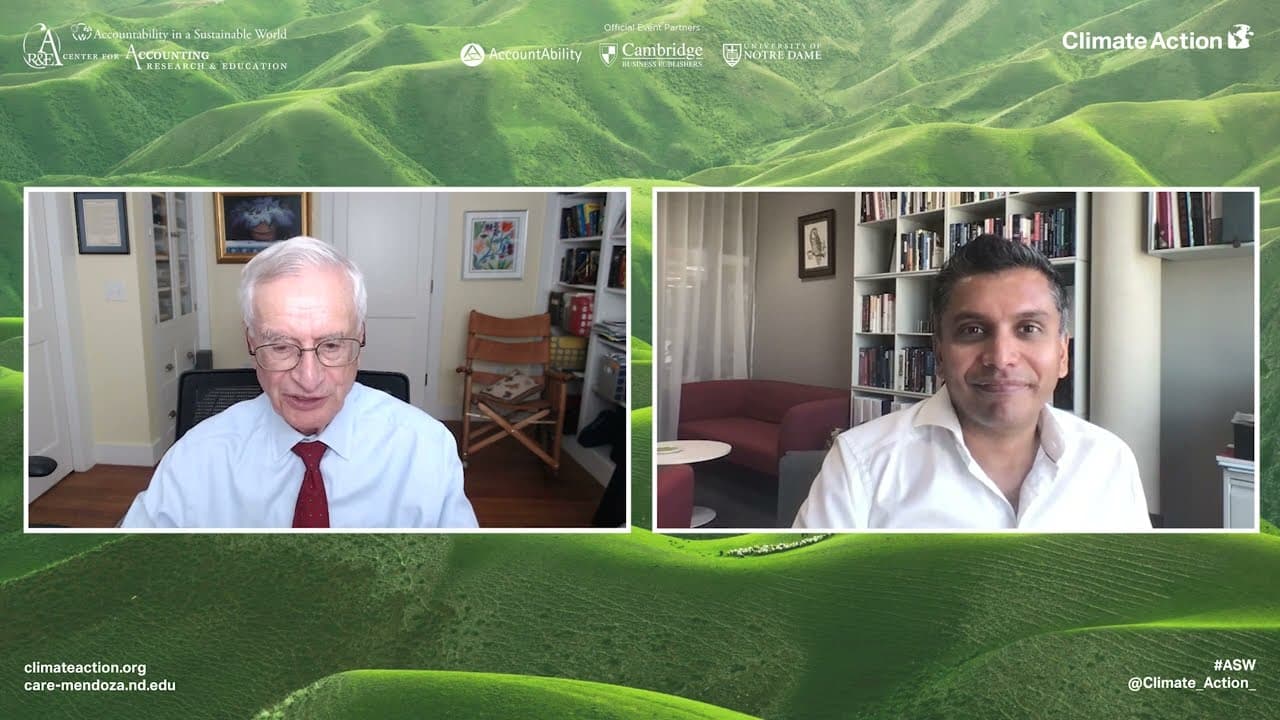
About Robert Kaplan
Can an organization pursue a strategy that delivers strong financial returns while also serving society? Robert S. Kaplan has spent his career building the measurement systems that make that question answerable. He helps companies around the world link cost and performance measurement to strategy execution.
Kaplan's current work carries those innovations into problems of business and society. In 2021 he partnered with Oxford professor Karthik Ramanna to create the E-liability carbon accounting method, the first system designed to accurately measure and report corporate greenhouse gas emissions across supply and distribution chains. He also works with global agribusiness firms on inclusive growth strategies that connect local farmers and suppliers to global supply chains while creating a responsible sourcing ecosystem.
Robert's Keynote Topics
U.S. health care costs are nearly 20% of GDP and continue to rise, while outcomes in care are among the worst in the world. Robert Kaplan’s value-based framework for measuring the performance of health care systems offers a solution. Drawing from his initiative with Harvard Business School colleague Michael Porter, Kaplan explains how helping clinicians, managers and payers focus on value-based health care delivery will drive better outcomes at much lower costs. Leveraging findings from his ongoing work with over two dozen leading health care institutions around the world, Kaplan shows how valid cost measurement builds a foundation for transformational improvements in health care delivery, including clinician-focused process improvements, enhanced capacity utilization of personnel, equipment and facilities, and innovative bundled payment reimbursements that reward high-quality and efficient providers. Kaplan offers health care leaders and policy makers a practical, actionable framework for revitalizing a system that’s been sick for far too long.
Organizations may formulate an excellent strategy, but all too often it fades from memory as employees in different departments tackle day-to-day operations. Robert Kaplan shows participants how to make strategy execution continuous by integrating processes and functions – such as finance, HR, IT, operations and innovation – into a holistic strategy management system. Co-creator of the Balanced Scorecard, the world’s leading management tool for strategy execution, Kaplan shares success stories and discusses the one common element that is necessary for implementing strategy: exceptional visionary leadership. Without it, he says, even the most comprehensive management system cannot deliver breakthrough performance.
The pandemic has dramatically highlighted how much an organization’s long-term growth is linked to the survival of its supply chains. For too long, however, firms did not measure or turned a blind eye to the ways people and natural resources were being negatively affected along the chain. Such business practices are no longer tenable as customers are increasingly holding companies accountable for practices that may harm people and the planet. In this presentation, Harvard Business School professor Robert Kaplan outlines inclusive growth strategies that drive revenues while creating an ecosystem that benefits all stakeholders. He shows how a co-created ecosystem made up of everyone along the supply chain builds relationships and trust across organizational and sectoral boundaries and allows everyone to participate in the win. To measure results, Kaplan’s strategy map and Scorecard provide a mechanism for ongoing accountability and governance within the new ecosystem. Participants will come away with a new understanding of how to drive revenues while protecting the valued people and resources that sustain their business.
Managers are often surprised to learn that the bulk of their profits comes from a small percentage of customers. Harvard Business School Professor Emeritus Robert Kaplan, co-developer of activity-based costing (ABC), teaches participants how to use this powerful costing framework to understand the economics of their products, services and customers. Through time-driven ABC, companies have the ability to assign virtually all organizational spending to individual products and customers, enabling them to see for the first time where they are truly making and losing money. With this fact-based knowledge and analysis, Kaplan discusses the multiple ways companies can transform losses into profits quickly – leading to dramatic improvements within 6-12 months – without “firing customers.”
As the pandemic and 2008 financial crisis revealed, risk management processes that are siloed, fragmented and delegated can leave organizations vulnerable to huge, unforeseen losses. Much of this is due to individual and organizational biases that inhibit candid discussions about the possible risks of enterprise strategies. Harvard Business School professor Robert Kaplan’s risk management work is grounded in measurement systems and well-researched strategies that help companies identify, measure and mitigate risk in all areas of an organization. In this presentation, he teaches managers how to identify different types of risk, how to achieve an appropriate balance between innovation and risk, and how to make cost-effective investments that protect the company from the consequences of uncertain and unexpected events. While acknowledging the importance of existing compliance and internal controls, Kaplan urges managers to focus their attention on the risks inherently created by their strategies, as well as the risks that arise from external events that are out of their control.
Books by Robert Kaplan

Management Accounting: Information for Decision-Making and Strategy Execution
Prentice Hall, 2011
The Execution Premium: Linking Strategy to Operations for Competitive Advantage
Harvard Business School Press, 2008
Time-Driven Activity-Based Costing: A Simpler and More Powerful Path to Higher Profits
Harvard Business School Press, 2007
Alignment: Using the Balanced Scorecard to Create Corporate Synergies
Harvard Business School Press, 2006
Strategy Maps: Converting Intangible Assets into Tangible Outcomes
Harvard Business School Press, 2004
The Strategy-Focused Organization: How Balanced Scorecard Companies Thrive in the New Business Environment
Harvard Business School Press, 2000
Cost & Effect: Using Integrated Cost Systems to Drive Profitability and Performance
Harvard Business School Press, 1997
The Balanced Scorecard: Translating Strategy into Action
Harvard Business School Press, 1996
Relevance Lost: The Rise and Fall of Management Accounting
Harvard Business School Press, 1987Robert in the Media

Carbon Reporting Urgently Needs Fixing — Here’s How to Do It

Getting to Net Zero: The Climate Standards and Ecosystem the World Needs Now

A Game Plan for Funding Carbon Offsets

A Smarter Way to Measure GHG Emissions? The Winners of the HBR McKinsey Award Explain

‘The Triple Bottom Line Is Better Than ESG to Measure a Company’s Financial, Environmental and Social Performance’

Addressing Climate Change Must Begin with Verifiable Carbon Accounting
HBR McKinsey Award Winner: Accounting for Climate Change

Opinion: How to Get America Working Again
Measuring Value-Based Care: A Q&A with Robert Kaplan
Measuring Healthcare Outcomes to Deliver Value and Lower Costs
Overcoming the Barriers to Implementing Value-Based Health Care
‘Integrity, Ethics & Values Are Needed More Today Than Ever’
I have been following Robert Kaplan for the last 15 years. Never have I heard him so energized before. He is among the best presenters I have heard. He has developed the BSC to a holistic framework for Enterprise Performance Management where strategy and execution are the core components. He is a unique story teller that combines research with world leading practical examples. He keeps the audience fully engaged throughout the day.
Tor Inge VasshusFounder & CEO, Corporater AS
Bring Robert to your next event
Tell us about your event and we will be in touch right away.


