

Watch Scott in Action
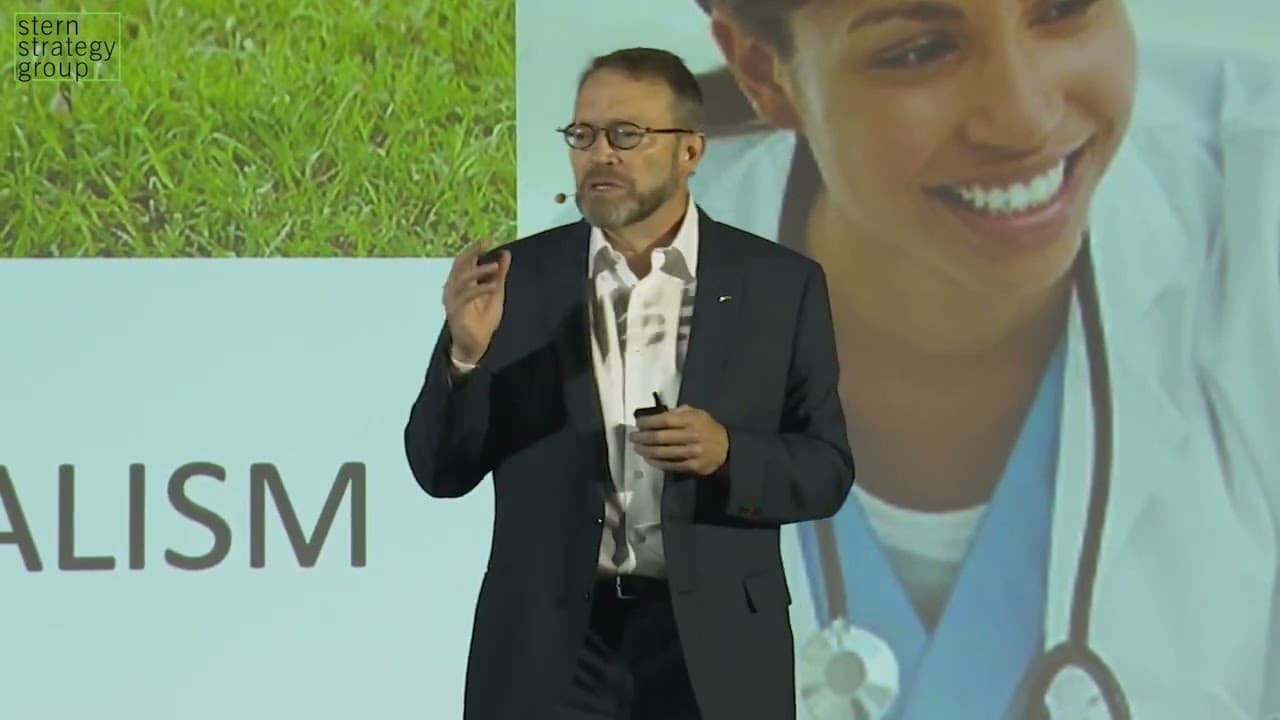
About Scott Wallace
Few subjects in America are as misunderstood and politicized as health care. Scott Wallace cuts through the bias and misinformation with practical, evidence-based solutions to health care's most pressing problems. The eight-step implementation framework he created with Elizabeth Teisberg served as the basis for UT Austin's Master of Science in Health Care Transformation program. He has presented at Mayo Clinic's Transform conference and written for the Wall Street Journal, Health Affairs and Modern Healthcare.
Wallace's approach is rooted in business. He was CEO of Eichrom Industries, a specialty chemical company that grew tenfold during his tenure, and co-founder of the Certification Commission for Healthcare Information Technology.
Scott's Keynote Topics
Health disparities plague every care delivery system on earth and they’ve been the subject of seemingly endless academic research. But disparities persist, and in many cases are worsening. In this eye-opening presentation, Scott Wallace, managing director of the Value Institute for Health and Care, illustrates why the problem can be attributed to a lack of outcome measurement, which results in providers who simply don’t know what care is effective, or for whom. Using the outcomes framework of capability, comfort, and calm, Wallace presents audiences with actionable solutions to easily, efficiently, and systematically track the health outcomes of care for each patient, thereby revealing where the results of care are disparate. “We’ve spent decades admiring this problem,” says Wallace. “Now, we need to fix it.”
Around the world, value-based care delivery is gaining momentum – and vital support. Improving value – health outcomes that matter to patients for the cost of delivering those outcomes – is now widely recognized as a critical objective of health care reform. And most health care leaders view it as an urgent priority. But how do organizations redefine care to dramatically improve value for patients? In nearly a decade implementing value-based care worldwide, Scott Wallace has observed that when leaders set the compass by establishing value for patients as the unequivocal goal, they create a powerful cultural shift, inspiring care teams and renewing the professional calling of those in health and healing.
But what happens next? Inevitably, inspirational objectives lead to the question of “How?” Wallace discusses four steps that organizations seeking to redefine care delivery must work through. Taking these “steps within your stride” transforms an organization in the direction of higher value services for patients, no heroic leaps required.
Health care is about service and experience. Although most service design starts by identifying customers’ unmet needs, health care delivery innovations often rely on clinicians’ views, overlooking patients’ needs and goals. That difference explains why many care delivery innovations produce disappointing results. To get better results, care delivery organizations need to understand the experiences of patients as they live their lives, says Scott Wallace. His Experience Group methodology provides a solution to the challenges of knowing what matters to patients and of gaining insights about unmet needs, gaps in care and obstacles that prevent people from achieving better health.
Wallace discusses the Experience Group method and how it provides deeper insight than surveys or focus groups, both of which are constrained by the presumptions of their creators and are often subject to courtesy biases. Most patient advisory panels are too heterogeneous, leaving patients to discuss only issues they have in common, which are often not specific to health (e.g., parking, waiting and food service). He also describes in detail the challenges organizations face designing new, more effective health care services and reveals some of the insights identified with the Experience Group methodology.
When evaluating a patient’s health care experience, many surveys simply ask about processes such as, “how was the check-in experience?” Most questionnaires don’t ask about the actual outcome of care. According to Scott Wallace, managing director of the Value Institute for Health and Care, “This is health care’s greatest self-inflicted wound.” In this revealing presentation, Wallace explains that questions such as, “Was the hospital food any good?” are much less important than asking patients vital questions like “Did you get better?” By showing audiences the importance of creating objective measures of outcomes, Wallace empowers health care providers to focus on improving overall patient outcomes, creating greater value by requiring less care in the long run.
The move to value-based reimbursement models will affect supply chain companies as much as it does care providers. Most pharmaceutical and device companies are seeking ways to help their care delivery partners achieve higher value with their products. The future of supply companies, Scott Wallace says, hinges on their ability to demonstrate the value of new therapies and devices in the hands of partners.
Supply chain companies often have deeper, more sophisticated resources for outcome and cost measurement; use those resources to help partners demonstrate value through better health outcomes and lower overall costs. Wallace discusses how pharmaceutical and device companies can select better partners, help build learning care delivery systems and demonstrate value.
Articles by Scott Wallace
Using Digital Health to Improve Health Outcomes and Equity
October 2021University of Texas at AustinValue Institute for Health and Care Annual Reports
2021Academic MedicineDefining and Implementing Value-Based Health Care: A Strategic Framework
2020HealthManagement.orgFour Steps Within Your Stride: Surprising Insights from Implementing Value-Based Care Delivery
February 2017Brain Injury ProfessionalValue for Patients
August 2015Health AffairsThe Quality Tower Of Babel
April 2015Becker's Hospital ReviewThe Hard Truth Behind Chronic Care (and 5 Ways to End the Pandemic)
October 2014Seminars in Thoracic and Cardiovascular SurgeryCreating a High-Value Delivery System for Health Care
2009The Aspen InstituteHealth Stewardship: The Responsible Path to a Healthier Nation
2009Commission on Systemic InteroperabilityEnding the Document Game: Connecting and Transforming Your Health Care Through Information Technology
2005Scott in the Media

Leaders Perspective: Creating Better Health Outcomes and Health Experiences

Clinical Optimization: Researchers Work Together to Help Patients See Multiple Clinicians On One Visit
Mayo Transform 2017: What Matters Most to Patients?
Replacing Maintenance of Certification Exams: Demonstrating Expertise by Measuring Outcomes that Matter Most to Patients
AHCA Takes Huge Step Back for Americans with Pre-Existing Conditions
Opinion: With AHCA, We All Pay To Treat Pre-Existing Conditions
The Journey Toward Value-Based Care Delivery

When Patients Share Stories, Health Insights Emerge

Obama’s Technology Legacy
Is Coming to Work Sick Really a Good Idea?

How Good is Your Doctor?
Patients Can Address Doctor’s Office Wait Times
Scott was an excellent addition to The Walrus Leadership Dinner on Value-based Health Care. He brought valuable insight through his prepared remarks, provoking a spirited conversation among the assembled guests, which was just what we hoped for. We also really appreciated his engagement with the group during the open conversation portion of the evening, answering questions and contributing his thoughts and experiences. I received a note from another guest saying ‘I think Scott was great. I think we need more people from outside our bubble who actually have something to share as opposed to speakers from here who are all proponents of the status quo.
Cailin CooperHead of Events, The Walrus
I thoroughly enjoyed your session at the meeting this week. It was challenging and thought-provoking. I look forward to engaging our organization in defining true measures of value and hope to give you a report of great success in the future.
Michael WigginsVice President-Operations, Children’s of Alabama
Your two presentations were the highlight of the conference for me and others from our agency who attended. We are already looking at how we might incorporate some of your ideas.
Patsy BoyleChief Operating Officer, Midwestern Colorado Mental Health Center
Scott Wallace was the keynote speaker at our annual statewide conference, invited at a time when both state and community health care delivery and payment systems are being reimagined. His presentation was cogent, rich with illustrations that brought key messages home, and had our association’s members engrossed and excited about the promise and payoff of value-focused health care delivery. Scott’s style is accessible, good-humored, and engaging – and will appeal to any audience looking for both an intellectual shot in the arm and the inspiration of a well-illuminated way forward.
Peggy HillChief Operations Officer, Colorado Behavioral Healthcare Council
Bring Scott to your next event
Tell us about your event and we will be in touch right away.


