

Watch Abigail in Action
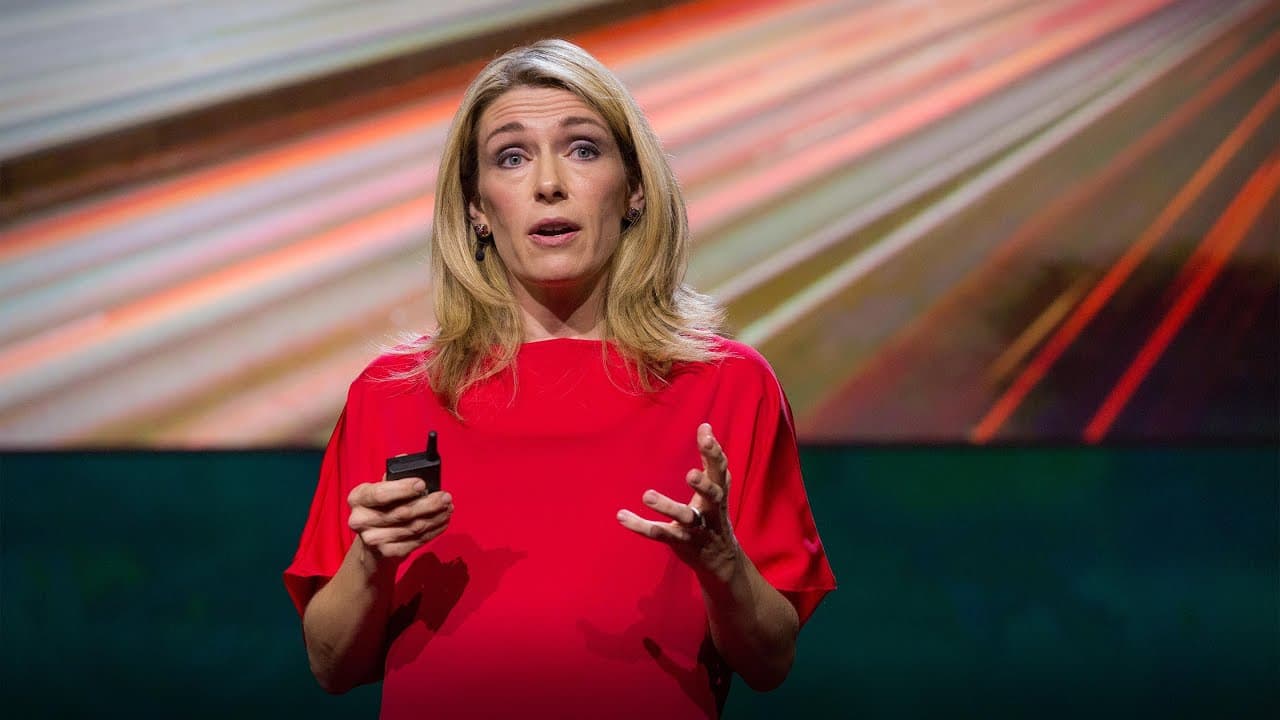
About Abigail Marsh
Abigail Marsh studies why helping other people feels irresistible to some and unthinkable to others. Rescued by a stranger after a car accident as a teenager, she turned that experience into a research career on the biology of empathy. A psychology professor at Georgetown University and director of the Laboratory on Social and Affective Neuroscience, she has mapped what she calls the "caring continuum," the spectrum that runs from extraordinary altruists who donate kidneys to strangers all the way to psychopathy. Her 2017 TED Talk, "Why some people are more altruistic than others," has been viewed more than two million times, and her research has been featured by 60 Minutes, NPR, The New York Times and The Washington Post.
In her book The Fear Factor, winner of the Society for Personality and Social Psychology's book prize, Marsh shows that heroes are not fearless. Through hundreds of interviews with heroic rescuers, organ donors and others, she found that people who act bravely feel fear like everyone else; what distinguishes them are traits such as honesty and humility, and habits that keep fear from spiraling out of control.
Abigail's Keynote Topics
It is often thought that humans are fundamentally selfish, and people are continuing to become more self-serving and horrible over time. That line of thinking is a myth, says Georgetown University psychology professor Abigail Marsh, Ph.D. The reality is, humans aren’t fundamentally selfish because, as research shows, helping others is a self-reinforcing process that brings more joy than simply investing resources in oneself. In this eye-opening talk grounded in her cutting-edge research, Marsh distinguishes myth from fact about why humans do what they do to reveal that how we behave is way deeper than nature vs. nurture. By understanding the psychological facts about people across the spectrum, leaders are better equipped to lean in on what makes us more caring and boost capacities for altruism for a healthier, more cooperative company culture. Her enlightening recommendations for finding opportunities to be generous in everyday life enable managers at every level to better resolve conflicts, build more productive teams and improve their working relationships.
What enables people to care about and help each other, and what happens when care is missing? Being caring is not simply about empathy, says Georgetown University psychology professor Abigail Marsh, Ph.D. – it’s about giving people what they need, not just what they want. As her research shows, people who feel better will also be more pro-social. In this talk designed for leaders managing teams, Marsh illuminates the important and reciprocal relationship between helping others and well-being. She offers practical applications for building a pro-social organization and incorporating care into daily management practices. Through a psychology lens, Marsh provides strategies for giving feedback in constructive ways and mindfully experiencing the uncomfortable feelings that come with critiquing someone else. She offers organizations an avenue for strengthening individual well-being so team interactions are cooperative and supportive in service of achieving individual and organizational goals.
Natural disasters, global pandemics and social worries – there’s a lot to make people feel afraid these days. The good news, according to Georgetown University psychology professor Abigail Marsh Ph.D., is that anyone can learn to manage their fear, becoming a more courageous and kinder person in the process. Author of the award-winning book The Fear Factor: How One Emotion Links Altruists, Psychopaths, and Everyone In-Between, Marsh conducted hundreds of interviews with people who performed great acts of courage to discover they shared humility and honesty as key character traits, indicating how highly they value others. In this presentation, she shares tips, gratitude exercises and main points to consider when facing fearful situations. Her heartening suggestions for deliberately practicing fearful situations give teams a solid foundation of ground rules for proceeding in the face of risk, novelty, or anything that scares them. Ultimately, her strategies to keep fear from spiraling out of control, good habits for expanding the capacity for fearlessness and recommendations for restoring interconnectedness make fear work for any organization, instead of hampering it.
Why are some people capable of acting heroically in service of others, even total strangers, while other people are not? According to Georgetown University psychology professor Abigail Marsh, Ph.D., it’s because of the way the human brain reacts to fear. As the director of the Laboratory on Social and Affective Neuroscience, Marsh performs clinical investigations into the biological processes that occur when we feel afraid. By studying people who have performed heroic deeds, she’s learned that heroes aren’t fearless at all – in fact, they feel fear more strongly than the average person. Her moving presentations show audiences techniques derived from hundreds of interviews that decrease selfish behavior, improve self-focus and increase comfort with risk-taking. By unpacking the origins of selfless behavior, Marsh delivers an uplifting reflection on the nature of courage and how anyone has the potential to be a hero.
Every company wants to create a safe and innovative culture, but it can feel intimidating to disrupt the status quo. As the foremost expert on the psychology of courage, Georgetown University professor and director of the Laboratory on Social and Affective Neuroscience Abigail Marsh, Ph.D., has found that few people understand their own capacity for fearlessness – and that existing capacity can be raised. Drawing from research described in her award-winning book The Fear Factor: How One Emotion Links Altruists, Psychopaths, and Everyone In-Between (2017), Marsh details how altruistic and heroic behavior are connected. She then suggests best practices for identifying opportunities to help others, exercises for increasing comfort with risk-taking and fear-management strategies, helping individuals become better decision-makers and feel more comfortable taking risks. Refreshingly optimistic, Marsh and her techniques for raising an organization’s global courage build a culture of fearless innovation and psychological safety.
Books by Abigail Marsh

Articles by Abigail Marsh
Reasoning and Empathy Are Not Competing but Complementary Features of Altruism
January 2026Trends in Cognitive SciencesEthical Reasoning Versus Empathetic Bias: A False Dichotomy?
2024Psychology Today4 Myths About Psychopathy That Refuse to Die
June 2023PNAS NexusNeural Responses Underlying Extraordinary Altruists’ Generosity for Socially Distant Others
June 2023Translational PsychiatryEmotion Processing in Youths with Conduct Problems: An fMRI Meta-Analysis
May 2023Nature CommunicationsUnselfish Traits and Social Decision-Making Patterns Characterize Six Populations of Real-World Extraordinary Altruists
March 2023World Happiness ReportDoing Good and Feeling Good: Relationships Between Altruism and Well-being for Altruists, Beneficiaries, and Observers
2023Scientific ReportsMoral Foundations, Values, and Judgments in Extraordinary Altruists
December 2022Journal of Research in PersonalityBeliefs about Humanity, not Higher Power, Predict Extraordinary Altruism
December 2022NatureAcute Anxiety During the COVID‑19 Pandemic Was Associated with Higher Levels of Everyday Altruism
November 2022PLOS OneCharacterizing Altruistic Motivation in Potential Volunteers For SARS-CoV-2 Challenge Trials
November 2022SAGE JournalsGetting Our Affect Together: Shared Representations as the Core of Empathy
June 2022Abigail in the Media

The Neuroscientist Who Wants Us to Be Nicer to Psychopaths

How Fear Separates Saints from Psychopaths Part 2
How Fear Separates Saints from Psychopaths Part 1

The Happy Pod: What Makes People Instinctively Kind?
The Neuroscience of Extremes: Altruism and Psychopathy

Why Some People Are Wired to Help Strangers, and What Their Brains Reveal
Life Hacks Backed by Research to Start Your 2026 Happier, More Focused and Less Anxious
I Want to Give Back! How Do I Afford It?

What Drives Us to Carry Out Acts of Kindness for Total Strangers?
World Kindness Week: Celebrating Everyday Acts That Transform Lives
Breaking New Ground: Chris Hemsworth on Living Better, Not Just Longer

Radical Kindness
How Abigail Works with Organizations
Each engagement is built around your goals and audience.
01 · WORKSHOPCommunicating with Compassionate Empathy
Can building your empathy muscles help you become more courageous person at work? Believe it or not, it can, according to top-rated Georgetown University psychology professor Abigail Marsh, Ph.D. Her research into the physical, emotional and behavioral aspects of empathy in interpersonal interactions has revealed that anyone can increase their ability to communicate more thoughtfully, creating a more empathetic work culture. In workshops for small- to medium-sized groups, Marsh brings complex neuroscience topics down to Earth, explaining the biological mechanisms behind empathy and altruism, and illustrating differences between empathy and perspective. She introduces new norms for verbal and non-verbal communication, processes for overcoming avoidance, and trust-building exercises that unlock new interconnectedness within organizations. Following the workshop, groups will find themselves fortified to persuade others, inspired to overcome ideological differences, more comfortable operating in challenging conditions and capable of making better decisions under pressure.
Bring Abigail to your next event
Tell us about your event and we will be in touch right away.


