


Watch Mark in Action
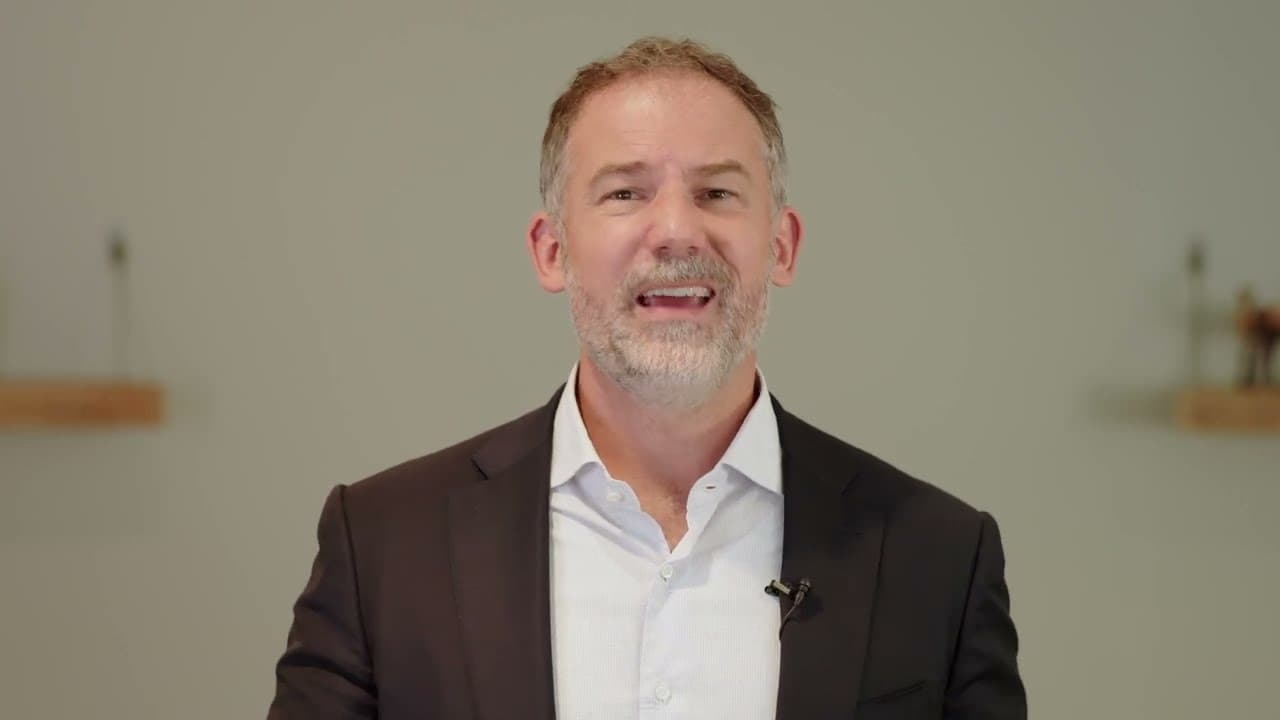
About Mark Mortensen
How do you redesign an organization so it thrives in the era of AI? Mark Mortensen, Ph.D., says the process begins with identifying and understanding the rapid changes taking place inside organizations. A pioneer of research on multiteaming and a leading expert on remote and hybrid work, organizational design and team dynamics, he has worked with companies including adidas, Deutsche Telekom, Gen Re, Goldman Sachs, Maersk Oil, Merck KGaA, SAP and Qatar Petroleum.
Mortensen's research focuses on the many ways technology has changed how we work together. Too often, he argues, leaders emphasize the technology itself rather than how it shapes human behavior: the bells and whistles of the latest platform matter far less than how it changes the way people work, act, relate and coordinate.
Mark's Keynote Topics
In recent years, three trends have made it more difficult to successfully manage and direct teams to complete projects:
- More virtuality as teams often no longer inhabit a single office, working globally and through technology
- The rise of “multi-teaming” in which people are assigned to multiple teams working on different projects at the same time
- Increased fluidity where people move on and off projects as needed – particularly the case in knowledge-intensive and highly specialized work
These factors can make it harder for managers to build camaraderie and trust, and inhibit progress toward a shared goal – and yet, they are unavoidable in an increasingly fast-paced, globalized and digitalized business landscape. In this presentation, Mark Mortensen, INSEAD Associate Dean of the Middle East Campus in Abu Dhabi, offers a framework for navigating these challenges and ensuring teams are productive, cohesive and developmental, even when operating separately or engaged in projects that compete for their attention. Though Mortensen’s recommendations require time and effort, they will benefit organizations in the long term as they increase cross-team and cross-functional collaboration.
With potential and current employees now able to choose among many options for working arrangements, growth and development opportunities, and company culture, attracting and retaining talent has become about much more than just compensation and where employees can work from. In this informative session, Mark Mortensen, INSEAD Associate Dean of the Middle East Campus in Abu Dhabi – an authority on remote work and solving the challenges of organizational design – helps leaders better recognize what their employees want from their company and understand employees’ perception of what the organization is providing.
Using the integrated employee value proposition (iEVP) model, which he co-developed with Harvard Business School professor Amy Edmondson, Mark helps organizational leaders balance elements like compensation and flexible work, growth opportunities, community, and sense of purpose. He uses the proprietary iEVP measurement tool to map employee needs and assess how well those align with what an organization is delivering. Using this data-driven, evidence-based approach helps leaders identify critical gaps and manage key tradeoffs like those between short vs. long-term and individual vs. collective benefits.
Mark will demonstrate that aligning organizations’ offers with employees’ needs is a win-win. For organizations it reduces costly absenteeism and turnover while boosting engagement and ultimately productivity. For employees, it promotes healthier work-life balance, inclusion, and wellbeing. Audiences of employees and leaders alike will be empowered to actively engage and optimize both employee experience and organizational performance.
For decades, the relationship between organizations and their employees was one of mutual security: the latter worked exclusively for one company while the former guaranteed job security and lifelong benefits. Technology has fundamentally transformed that relationship due to the advent of the “gig economy” and the subsequent shift away from lifetime employment. But while popular discourse focuses on the insecurity experienced by workers, Mark Mortensen, INSEAD Associate Dean of the Middle East Campus in Abu Dhabi, reminds business leaders that they too face heightened risk. Employees can now work for multiple companies simultaneously or leave at a moment’s notice to pursue their own endeavors. It also means that personal relationships within organizations have become less common, which could potentially corrode employees’ ability to work together in groups or with members of different teams. Consequently, organizations in the 21st century must rethink how they manage human resources, collaboration and their relationship with employees. Though companies should embrace flexibility, they must also ensure teams can effectively build bonds that enable them to work together on important projects. Relationships will become more important than ever in the future, and managers must find ways to sustain the cohesiveness of organizations in a more fluid world.
What type of company do you lead or work for? Many leaders expend time and energy predicting what kind of organization will succeed in the future, and then working to make their companies fit that description – an admirable goal, but one that assumes we are better at predicting what the future brings than we actually are. Consider that more than half of the companies in the wildly popular book “Built to Last” haven’t. In this presentation, Mark Mortensen, INSEAD Associate Dean of the Middle East Campus in Abu Dhabi, offers a different perspective for thinking about your company’s “organizational fit,” and provides a framework to align what you are (an organization), what you do (your strategy) and where you are (your environment). Mortensen’s core message, derived from his research and consulting work, is that there really is no permanent organizational fit and the key to surviving in the future is building adaptability. Mortensen shows you how to constantly revisit and reimagine the “fit framework” – as well as your organizational design, power dynamics, networks, routines and culture – to build and maintain an adaptable organization. This presentation has cross-industry applicability and can be tailored to any audience.
Books by Mark Mortensen


Articles by Mark Mortensen
Make It Safe for Employees to Speak Up — Especially in Risky Times
April 2023INSEADHow to Show Compassion Without Compromising on Performance
September 2022INSEAD KnowledgeHas Hybridity Killed Teamwork?
May 2022Harvard Business ReviewDo We Still Need Teams?
April 2022MIT Sloan Management Review2022 Beckhard Prize Winner: Are Your Team Members Lonely?
December 2020Harvard Business ReviewHow to Prepare Your Virtual Teams for the Long Haul
May 2020Harvard Business ReviewHBR's 10 Must Reads on Managing People: The Overcommitted Organization
September 2017Mark in the Media

Recalculating the Costs and Benefits of Gen AI
Should You Record That Meeting?

The Lunch Break is Broken. Here’s Why it Really Needs to Be Fixed ($)

A WFH ‘Culture War’ Has Broken Out Across Europe, With The U.K. Leading the Charge as the Most WFH-Friendly Country, While France Lags Behind
Leaders Need to Reframe the Return-to-Office Conversation

How to Combat an “Always On” Work Culture

The Banks on the Frontline of the Remote Working Battle
Stop Asking Candidates for Their Last-Drawn Salary

Is It Time To Get Back to the Office More Days a Week?
Effective Strategies for Building and Boosting Psychological Safety

Solving the Problem of Remote Work
Solving the Problem of Remote Work
Bring Mark to your next event
Tell us about your event and we will be in touch right away.


