

Watch Juliet in Action
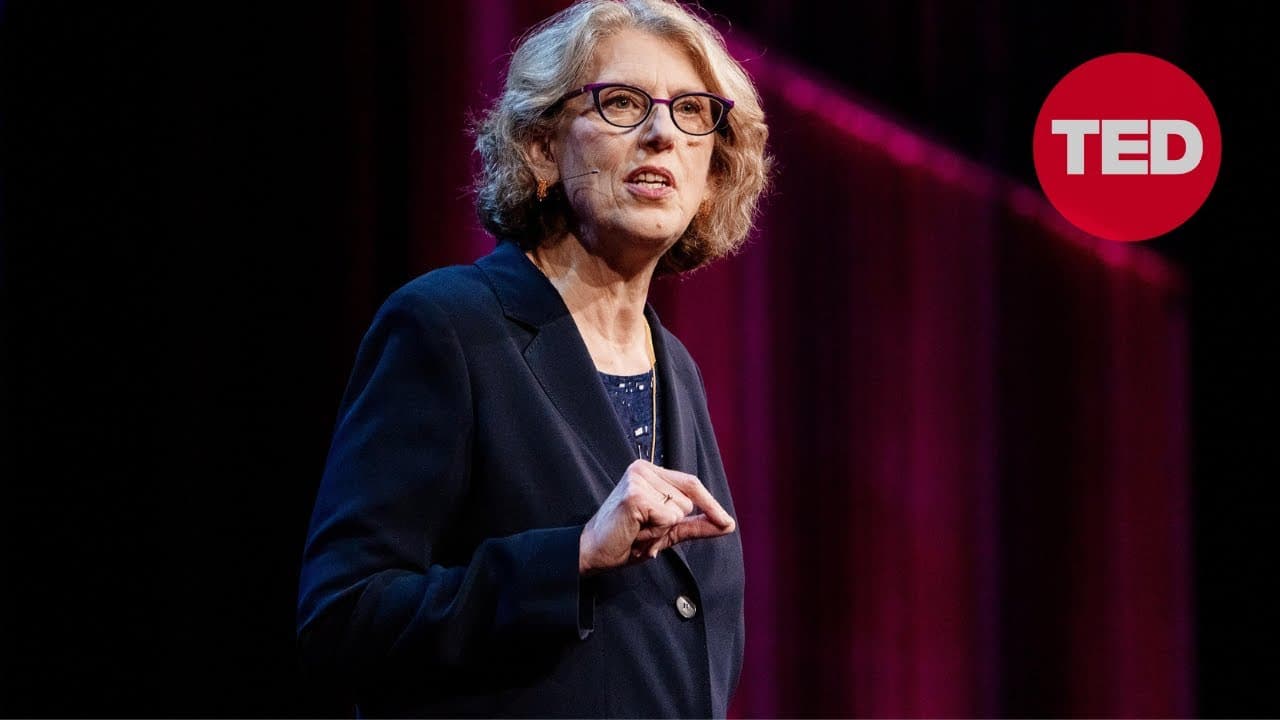

About Juliet Schor
Juliet B. Schor is an award-winning labor economist and sociologist whose research asks a plain question with expensive consequences: what if organizations could get full output in fewer days? Through global trials, she has shown that a four-day week at full pay can hold output steady while turnover drops, absenteeism declines and applications rise. Her book Four Days a Week documents how organizations across industries, including Kickstarter, Meridian Health and Praxis Marketing, achieved 100 percent of output in 80 percent of the time while maintaining full pay.
"In most cases, employees are as productive in four days as they are in five," Schor says. "And beyond maintaining productivity, people just feel so much better. They feel on top of their work and their life, and they're not stressed out."
Juliet's Keynote Topics
The rise of “agentic AI” – systems that act autonomously and make decisions on our behalf – is reshaping the workplace. Yet companies face a paradox: while executives are eager to deploy AI for efficiency and innovation, employees often resist or even sabotage adoption out of fear for their jobs. Award-winning labor economist and sociologist and Boston College professor Juliet Schor brings a fresh lens: AI succeeds in organizations where trust and security are high and employees place a high value on their employment. Building on her research into reduced workweeks and organizational well-being, Schor explores how cultures that value people see productivity gains, including with more proficient AI uptake and better outcomes. She demystifies agentic AI for leaders, maps where it complements human judgment and offers a pragmatic framework for deploying AI so that it catalyzes well-being, creativity and sustainable productivity and avoids burnout or layoffs. A highly engaging speaker, Schor deftly reveals how to redesign workflows, set clear output expectations and anchor change in transparent metrics so that employees feel open to learning. Attendees leave with a practical roadmap to improve AI adoption, including steps for lowering resistance, safeguarding psychological safety, pairing AI with time-rich work design, and tracking results that matter to both boards and teams.
Companies are finding that even after years of good-intentioned wellness perks like unlimited PTO and free office snacks, burnout, disengagement and costly turnover keep rising. Award-winning labor economist and sociologist and New York Times bestselling author of “Four Days a Week” Juliet Schor argues the problem isn’t employee willpower, but the workweek itself. Drawing on the largest multi-industry trials of reduced hours (including hundreds of companies and 10,000+ workers), she shows how the 100-80-100 model — 100% pay, 80% time and 100% output — drives higher productivity and quality while netting big gains in well-being and dramatic improvements in retention and hiring. Companies report excellent results on KPIs including revenue, absenteeism, quit rate and new-hire flow, as well as case evidence where programs were cost-neutral or even cost-saving. Applicable across sectors from professional services and healthcare to manufacturing, retail, restaurants, nonprofits and local government, attendees walk away with a research-backed playbook to pilot or progress a shorter-week strategy. This includes practical takeaways on where the four-day workweek functions best, how to reorganize and optimize the time (rather than just cutting hours), and which metrics to track to make and prove the business case.
Books by Juliet Schor

Four Days a Week: The Life-Changing Solution for Reducing Employee Stress, Improving Well-Being, and Working Smarter
Harper Business, 2025
After the Gig: How the Sharing Economy Got Hijacked and How to Win It Back
University of California Press, 2020
True Wealth: How and Why Millions of Americans Are Creating a Time-Rich, Ecologically Light, Small-Scale, High-Satisfaction Economy
Penguin Books, 2011
Born to Buy: The Commercialized Child and the New Consumer Culture
Scribner, 2005
The Overspent American: Upscaling, Downshifting and the New Consumer
Harper Perennial, 1999
The Overworked American: The Unexpected Decline of Leisure
Basic Books, 1993Articles by Juliet Schor
Game Changers: How to Build the Economy We Deserve
September 2026Contemporary EthnographyDistinction at Work: Status Practices in a Community Production Environment
2025Ecological EconomicsDo Economists Think about Climate Change and Inequality? Semantic Analysis and Topic Modeling of Top Five Economics Journals
2025Nature Human BehaviorWork Time Reduction Via a 4-Day Workweek Finds Improvements in Workers’ Well-Being
2025Juliet in the Media

Is America Ready for a Four-Day Work Week?

12 Best Productivity Books of 2025

Monday — Friday: Making the Most of the Workweek

Take a Three-Day Weekend Without Losing Any Pay

Americans Are Overworked. Could AI Change That?

3 Ways Companies Successfully Shift to a 4-Day Workweek
The Most Surprising Benefits of a 4-Day Workweek
New Study Bolsters Public Health Case for a Four-Day Work Week

Thousands of Workers Tried a 4-Day Week—the Impact on Their Health Was Clear
Juliet Schor Named AAAS Fellow
Juliet Schor Makes the Case for a Four-Day Work Week
Always On,' How Workers Are Suffering From 'Infinite' Work
Juliet's session received the conference's highest ratings.
Joan GrecoEvent Producer
Bring Juliet to your next event
Tell us about your event and we will be in touch right away.


