

Watch Nelson in Action
About Nelson Repenning
When organizations become overloaded, chaos grows and productivity falls: people work harder, work moves more slowly, priorities shift, and employees at every level become exhausted and demoralized. Nelson P. Repenning argues that getting clear on the real problem before launching change is critical. Boilerplate change initiatives built on generic case studies often layer more work onto a struggling workforce instead of addressing the issues actually causing the problem.
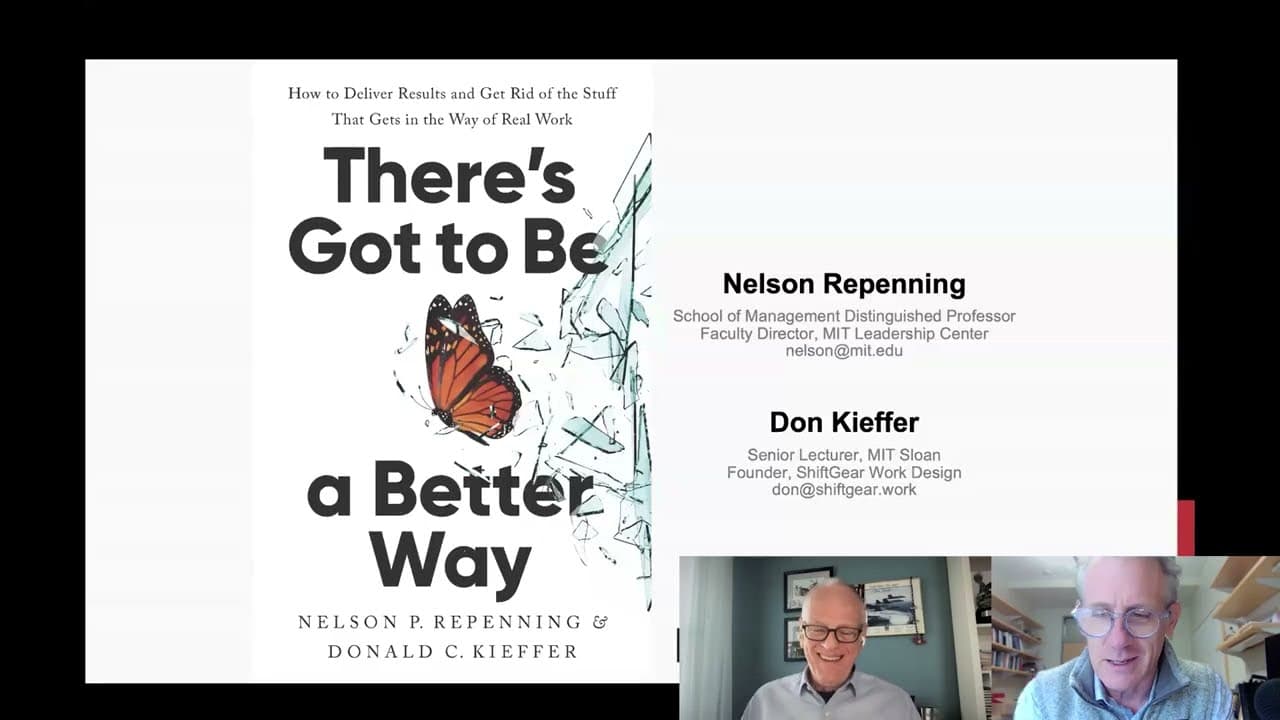
Repenning's answer is Dynamic Work Design, a principles-based approach to designing work that is both effective and engaging, paired with Dynamic Management Systems, a method for tying day-to-day work tightly to the strategic objectives of the firm. His book There's Got to Be a Better Way describes the approach in detail, and he applies it in practice at ShiftGear Work Design. His earlier research examined why organizations fail to use well-established tools and practices, working extensively with companies building new capabilities in manufacturing and new product development, and studied the lapses in safety practice behind industrial accidents, helping investigate several major incidents.
Nelson's Keynote Topics
Many times, organizational change initiatives arrive with much fanfare – t-shirts, coffee mugs and banners for all – but without much understanding of why a change was needed in the first place. According to Nelson Repenning, Ph.D., faculty director of the MIT Leadership Center, rather than rushing into a change project, it’s vital for leaders to take a bottom-up approach to understand how work actually gets done in their company. In this revealing presentation, Repenning demonstrates that it’s easier to insert new knowledge or technology where it makes sense when executives lead with discovery and learning, not with rushed roll outs of big projects. By resisting the urge to inject more work for the organization, audiences leave better prepared to enact change in a much more surgical way, better preserving company culture and being more prepared to manage future crises.
When organizations become overloaded, either because of their own success or because of external forces in the market, chaos grows and productivity falls. People must work harder to get things done and work moves more slowly through the system, prompting a greater sense of urgency, shifting priorities and slower delivery times. As results decline, employees at every level become exhausted and demoralized. According to faculty director of the MIT Leadership Center Nelson Repenning, Ph.D., getting clear on the real problem before launching change is critical. Boilerplate change initiatives involving rules, tools and rituals based on case studies and generic problems often layer more work on top of a struggling workforce rather than addressing the unique set of issues causing the problem. In this eye-opening presentation, Repenning draws on his latest book, “There’s Got to Be a Better Way,” to detail how the principles-based framework of Dynamic Work Design can reveal the real problems that are causing poor results, while providing an approach that quickly fixes the work and puts points on the board. Attendees will learn the five principles of Dynamic Work Design, and the approach to applying them. With a plain-spoken, accessible style, Repenning reveals classic, proven methods of productivity, innovation and engagement while simultaneously preserving company structures and culture.
Books by Nelson Repenning

Articles by Nelson Repenning
Important Question to Ask Before Calling Another Meeting
October 2025Fortune2 MIT Professors Offer a Case Study to Consider for AI Adoption: GM Versus Toyota in the 1980s ($)
September 2025MIT Sloan School of ManagementIntroducing a Better Way to Work
August 2025Next Big Idea ClubDitch the Fancy Workflow for These Simpler Solutions to Companywide Productivity
August 2025MIT Sloan Management ReviewBreaking Logjams in Knowledge Work
September 2018MIT Sloan Management ReviewA New Approach to Designing Work
December 2017MIT Sloan Management ReviewThe Most Underrated Skill in Management
March 2017Nelson Repenning's Research
Nelson in the Media

12 Best Productivity Books of 2025

In Leadership, You Get What You Expect

Dynamic Work Design, Explained

How to Get Your Business Into the Flow

Broken Workflows – and How to Fix Them
A Conversation With MIT EMBA Founders 15 Years Later
How Dynamic Work Design Can Prevent Overload

Improving Organizational Processes with Dynamic Work Design
The Power—and Discipline—of Clearly Articulating the Problem
Favorite Professors Of The Executive MBA Class of 2022
5 Ways to Avoid Ineffective Meetings
3 Things Great Leaders are Doing Right Now
Using five fundamental principles, Nelson Repenning and Don Kieffer show how any organization can use their insightful methods to get stuff done faster, better, and with less effort. Repenning and Kieffer bring an engineer’s perspective to business problems, giving organizations methods to diagnose and solve their own challenges in ways that uniquely work for them. At Fannie Mae, we applied these methods and improved our company immeasurably. Their teachings worked for us, and they can work for you.
Timothy J. MayopoulosCEO, Fannie Mae
Bring Nelson to your next event
Tell us about your event and we will be in touch right away.


