


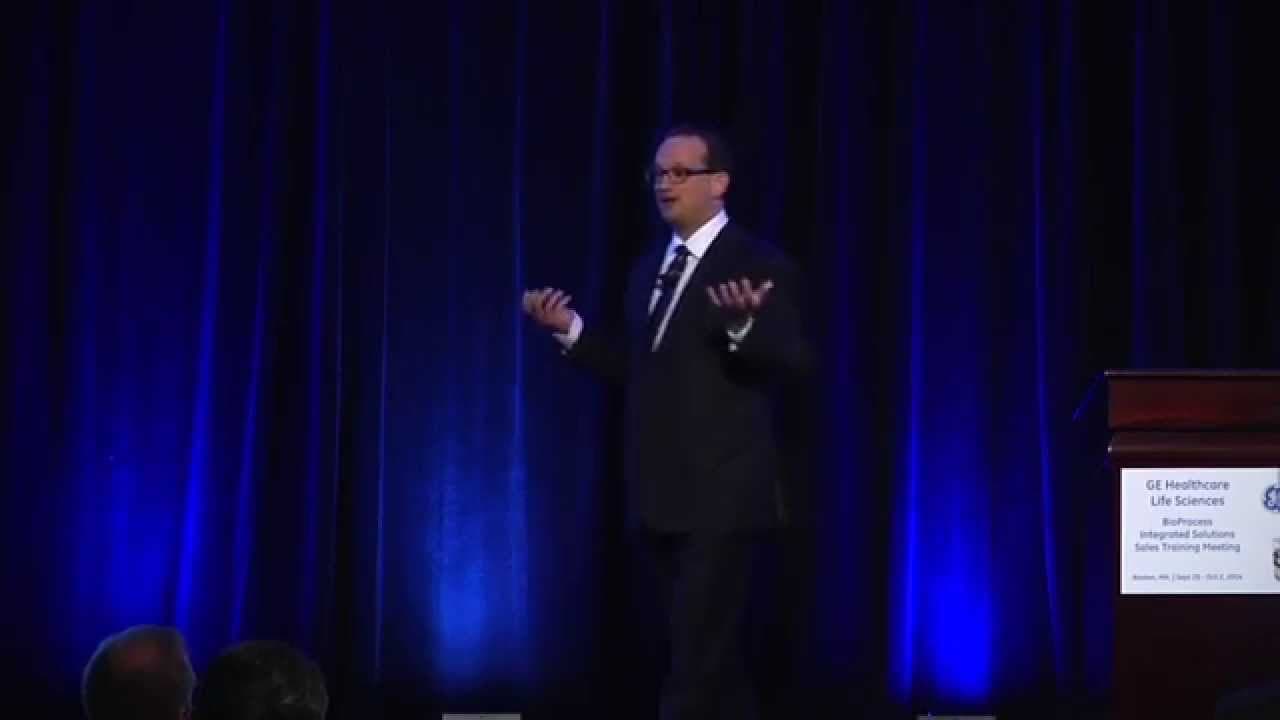
Watch Gary in Action

About Gary Pisano
Gary Pisano has spent his career studying why some companies keep innovating and growing while others stall. He advises senior executives at many of the world's largest corporations and works with a number of startups. He has authored nearly 100 articles and case studies on companies including Amazon, BMW, IBM, Merck, Pfizer and Virgin Group.
Gary's Keynote Topics
More than ever before, economic progress is guided by creative destruction. Companies innovate or die. Conventional wisdom says only small, nimble startups are true innovators. Gary Pisano challenges the widely held belief that large enterprises are doomed to be disrupted, and offers leaders of large and fast-growing companies practical advice and principles for how to leverage the benefits of scale in innovation, a process he terms “creative construction.”
Drawing from his book, “Creative Construction” (2019), Pisano addresses the challenges and opportunities big companies face in the innovation game. He also discusses how large firms can create a strategy that focuses on the future while minding the present, and how to foster a culture that allows innovation to thrive. And if they don’t succeed, Pisano contends that it likely has little to do with scale and much to do with management and leadership.
It is indeed the age of algorithms. The question is no longer will machine learning and artificial intelligence change business as we know it. Now, it’s how do corporations change their organizational models to make the most of technology.
It wasn’t long ago that machines automated tasks. Today, they’re automating learning. And that is profoundly reshaping companies’ approach to talent and organizational learning. Average is no longer good enough, says Gary Pisano. Instead, there’s an increasing demand for the exceptional. Companies need superstars to pick up where machines leave off – to manage what algorithms cannot. He discusses how business leaders must transition from the organizational learning model of the past – centered on managing people – toward one focused on managing machines.
Shareholders demand it; business media and “the street” closely watch the companies driving it; and executives seek out gurus to help engineer it. Growth is the #1 mandate for all businesses, big and small. And yet, there’s little written and known about growth – how to predict it, manage it or maintain it.
Pisano busts the myth of small company dynamism vs. big company lethargy, proving that growth rates have no correlation with size. He also introduces his growth framework – the first in the academic field of business management – and helps business leaders put it to work. And he asks – and helps answer – the questions on the minds of senior leaders: When is growth harmful or helpful? When has a company grown too large for its own good? Pisano unpacks decades of experience analyzing the decisions and paths of companies ranging from Amazon to Virgin, revealing the decisions that fostered, and are now sustaining, their growth.
Why is successful innovation so hard? It’s not because of failure to execute; the problem is lack of innovation strategy, believes Gary Pisano. Drawing from his popular Harvard Business Review article, “You Need an Innovation Strategy,” Pisano outlines the process, starting with a clear understanding and articulation of specific objectives. He characterizes the four categories of innovation and delves deep into the three pivotal questions a robust innovation strategy must answer:
- How will innovation create value for potential customers?
- How will the company capture a share of the value its innovations generate?
- What types of innovations will create and capture value, and what resources are needed?
Because innovation cuts across functions, only senior leaders can determine the right innovation recipe and set the strategy, says Pisano. And “like the process of innovation itself, an innovation strategy involves continual experimentation, learning and adaptation.”
Books by Gary Pisano

Creative Construction: The DNA of Sustained Innovation
PublicAffairs, 2019
Long-Term Firm Growth: An Empirical Analysis of US Manufacturers 1959-2015
Laboratory of Economics and Management, 2019
Producing Prosperity: Why America Needs a Manufacturing Renaissance
Harvard Business Review Press, 2012Science Business: The Promise, the Reality and the Future of Biotech
Harvard Business School Press, 2006
Operations, Strategy and Technology: Pursuing the Competitive Edge
Wiley, 2004
Strategic Operations: Competing Through Capabilities
Free Press, 1996
The Development Factory: Unlocking the Potential of Process Innovation
Harvard Business Review Press, 1996Articles by Gary Pisano
How Fast Should Your Company Really Grow?
March 2024Harvard Business ReviewWhat Evolution Can Teach Us About Innovation
September 2021Harvard Business School Working KnowledgeCovid Killed the Traditional Workplace. What Should Companies Do Now?
March 2021Harvard Business ReviewWe Shouldn't Wait for a Breakthrough in the Covid-19 Pandemic
May 2020Harvard Business ReviewHow Hospitals Can Manage Supply Shortages as Demand Surges
April 2020Harvard Business ReviewLessons from Italy's Response to Coronavirus
March 2020Harvard Business ReviewThe Hard Truth About Innovative Cultures - 2020 HBR McKinsey Award Winner
January 2019Harvard Business ReviewNeurodiversity as a Competitive Advantage
May 2017MIT Sloan Management ReviewLessons From Hollywood: A New Approach to Funding R&D
December 2015Harvard Business ReviewYou Need an Innovation Strategy
June 2015The Wall Street JournalBig Pharma Needs to Get Busy in the Lab
March 2015Harvard Business ReviewRestoring American Competitiveness – McKinsey Award-winner
July 2009Gary in the Media

Rethinking Growth at All Costs

Building Innovative Cultures
Innovation Culture Has a Dark Side You Need to Embrace
Harvard Business Review Announces First Recipient of Clayton M. Christensen Prize

Why Are Innovative Cultures So Hard to Get Right? The New Winner of the HBR McKinsey Award Explains

Solving the Riddle of How Companies Grow Over Time

Best Business Books 2019: Strategy

Gary Pisano, Harvard Business School – “Creative Construction”
Biotech Startups And The Hard Truth Of Innovation
Can Big Companies Really Be Innovative?
Innovation Culture And Creative Construction – Interview With Gary Pisano
Large Businesses Don't Have to be Lousy Innovators
Gary is a passionate, knowledgeable, humorous and persuasive speaker. His preparation for the talk was excellent, as evidenced by his ability to make high-level concepts deeply relevant to my audience’s industry niche. He engaged the group in a way that led them to think differently about manufacturing strategy and competitiveness – which perfectly set the stage for the rest of the event. I would highly recommend Professor Pisano for groups of any size or focus.
Tom IsettGeneral Manager – BioProcess, GE Healthcare – Life Sciences
Bring Gary to your next event
Tell us about your event and we will be in touch right away.


