

Watch Don in Action
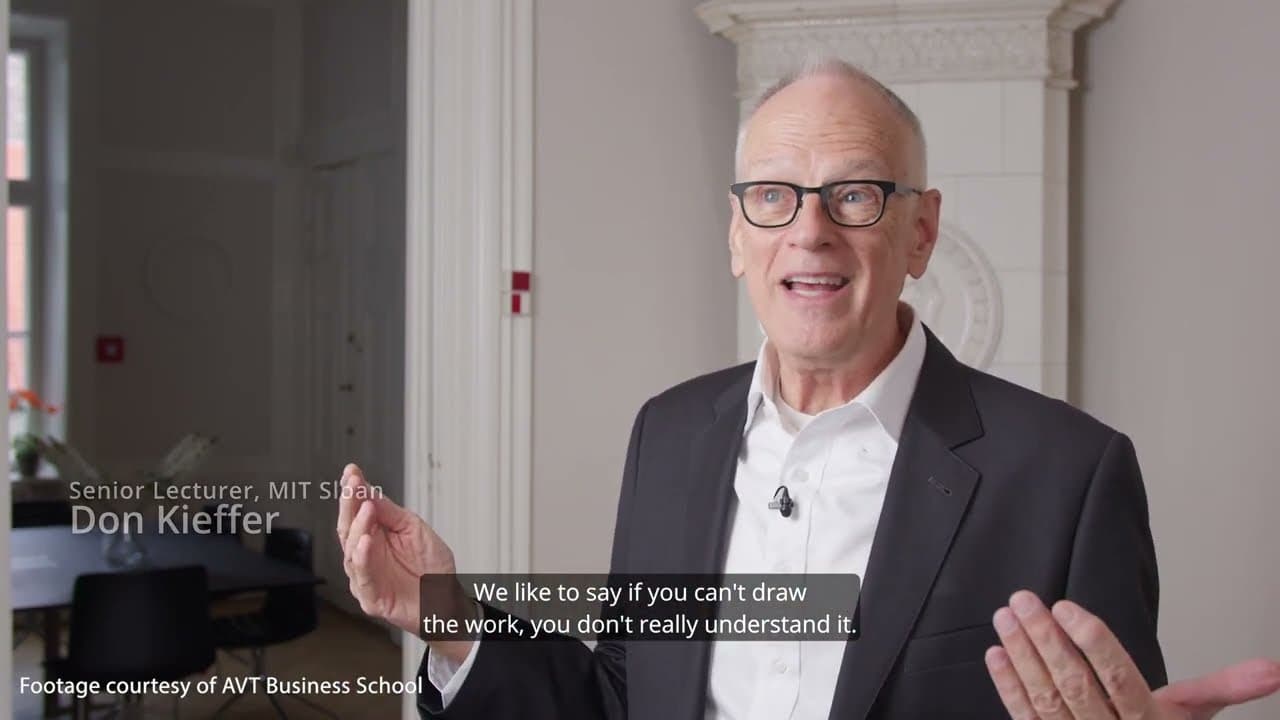
About Don Kieffer
Donald Kieffer is co-creator of Dynamic Work Design, a principles-based framework for improving how work actually gets done. His career in operations runs from front-line work to executive leadership.
With Nelson Repenning, his long-time collaborator at MIT Sloan, Kieffer wrote There's Got to Be a Better Way. The book describes what happens when organizations become overloaded: work slows even as people work harder, priorities shift constantly and adrenaline replaces good work design. "It's vital to be able to quickly figure out exactly where the problem is in a complex situation before launching any change effort, much less a huge and expensive one," Kieffer says.
Don's Keynote Topics
When organizations get overloaded, either because of their own success or because of external forces in the market, chaos grows. People must work harder to get things done even as work moves more slowly through the system. The increasing number of urgent issues, shifting priorities and slowing delivery times tell the story that adrenaline has replaced good work design. This situation not only degrades productivity and results, it also exhausts and demoralizes employees at every level.
According to MIT Sloan School of Management senior lecturer Donald Kieffer, getting super clear on the real problem before launching change is critical. Boilerplate change initiatives involving rules, tools and rituals based on case studies and generic problems often layer more work on top of a struggling workforce rather than addressing the unique set of issues causing the problem. In this eye-opening presentation, Kieffer draws on his book There’s Got to Be a Better Way to detail how the principles-based framework of Dynamic Work Design can reveal the real problems that are causing poor results, while providing an approach that quickly fixes the work and puts points on the board. Attendees will learn the five principles of Dynamic Work Design, and the approach to applying them. “Usually, the road to higher productivity and innovation is right in front of us, we just don’t know how to see it”, explains Kieffer. “Dynamic Work Design gives us the framework to see it and the approach to get to it quickly.” His straightforward and practical style cuts through buzzwords and flavors-of-the-day schemes to get to classic, proven methods of productivity, innovation and engagement while simultaneously preserving company structures and culture.
Often, when organizations set out to solve problems, they look to large change programs and initiatives with the expectation of fast, major improvement. But, according to MIT Sloan School of Management senior lecturer Donald Kieffer, those big expectations seldom lead to sustainable results, burdening an already struggling organization with more work and damaged morale. “’Another f-f-fine program’, as we called them at Harley,” Kieffer says with a smile. In this enlightening presentation, he reveals why the principles-based framework of Dynamic Work Design and the approach of targeting a 30% improvement in 60-90 days lead to powerful institutional learning, allowing success to feed success – driven by demonstrated results and supported by a newly engaged workforce. Kieffer uses real-world examples from his own experience, as well as those of his clients and students, rather that sterilized case studies, to show how his methods produce better outcomes, more innovation, higher performance and genuine engagement.
Books by Don Kieffer

Articles by Don Kieffer
Important Question to Ask Before Calling Another Meeting
October 2025Fortune2 MIT Professors Offer a Case Study to Consider for AI Adoption: GM Versus Toyota in the 1980s ($)
September 2025MIT Sloan School of ManagementIntroducing a Better Way to Work
August 2025Next Big Idea ClubDitch the Fancy Workflow for These Simpler Solutions to Companywide Productivity
August 2025MIT Sloan Management ReviewBreaking Logjams in Knowledge Work
September 2018MIT Sloan Management ReviewA New Approach to Designing Work
December 2017MIT Sloan Management ReviewThe Most Underrated Skill in Management
March 2017Don in the Media

12 Best Productivity Books of 2025

Dynamic Work Design, Explained

Why Big Management Fads Fail—and What Works Instead with Don Kieffer

How to Get Your Business Into the Flow

Broken Workflows – and How to Fix Them

Dynamic Work Design: How And Why To Make It Work For You

Blueprint for the Future: Rethinking Work Design
An 8-Step Guide for Improving Workplace Processes
The 4 Principles of Dynamic Work Design

There’s One Question You Must Ask Before Solving Any Problem (It’s Also the Most Underrated Management Skill)
How Don Works with Organizations
Each engagement is built around your goals and audience.
01 · WORKSHOPHands On with Dynamic Work Design
As companies set out to tackle big problems with big programs and initiatives, they often fall behind in their day-today work. Organizations unnecessarily layer new methods and language on a system that is struggling, without fixing the real underlying issue. The key, says MIT Sloan School of Management senior lecturer Donald Kieffer, is to diagnose the right problem and start working on it the right way. In this highly interactive series of workshops, Kieffer helps define the critical issues at hand and uses the five principles of Dynamic Work Design to identify opportunities and plan the first round of improvement activities, targeted at 30% or more improvement. Never promoting new software or expensive structural changes, Kieffer’s methods use the existing structure, culture and people of the organization, tweaking it only at the source of the problem. His experience is that most organizations, even those with difficulties, are built on a huge base of success that can be leveraged for further success.
Using five fundamental principles, Nelson Repenning and Don Kieffer show how any organization can use their insightful methods to get stuff done faster, better, and with less effort. Repenning and Kieffer bring an engineer’s perspective to business problems, giving organizations methods to diagnose and solve their own challenges in ways that uniquely work for them. At Fannie Mae, we applied these methods and improved our company immeasurably. Their teachings worked for us, and they can work for you.
Timothy J. MayopoulosCEO, Fannie Mae
Bring Don to your next event
Tell us about your event and we will be in touch right away.


