


Watch Susan in Action
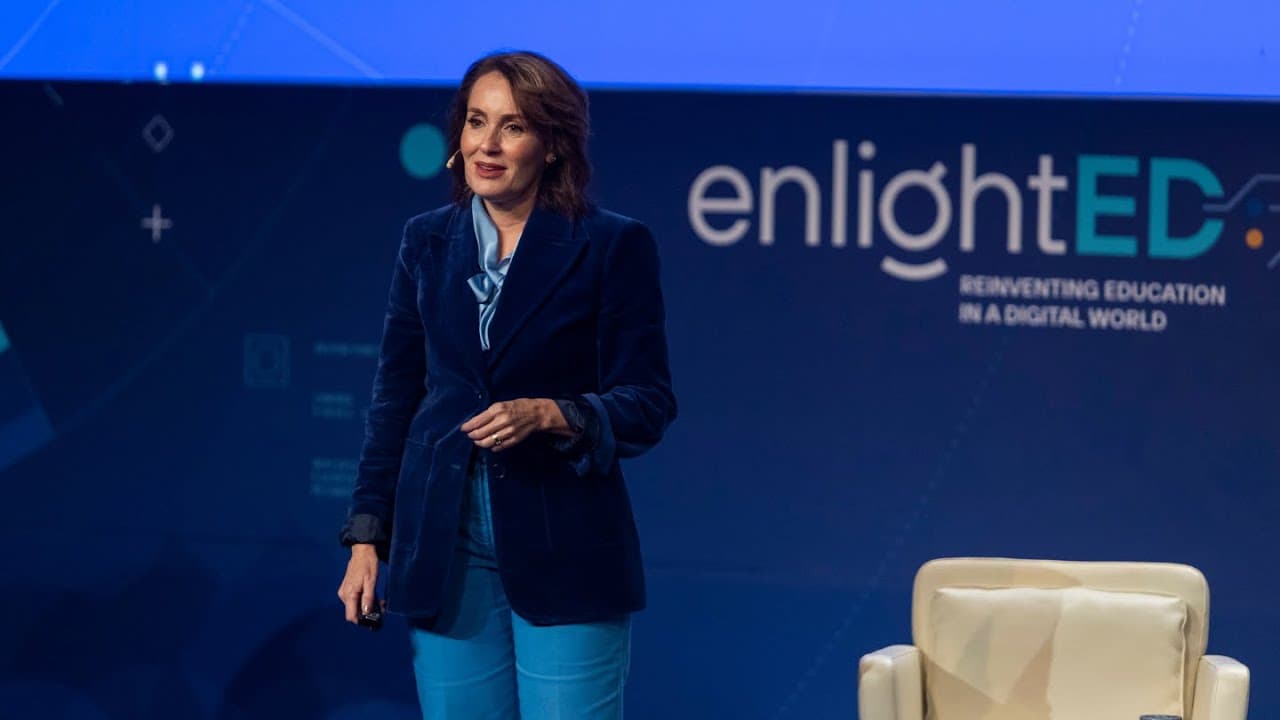

About Susan David
Most workplaces still hand their people the same advice: stay positive, push through. Susan David has spent her career showing why that fails and what works instead. A psychologist at Harvard Medical School, she is the creator of Emotional Agility, the framework introduced in her #1 Wall Street Journal bestseller of the same name, and her TED Talk on emotional courage has been seen by more than 12 million people. Thinkers50 has named her one of the world's most influential management thinkers.
Susan's Keynote Topics
Rapid technological change, globalization and hybrid work have fundamentally disrupted the way we live. We are increasingly caught between organizational demands and environmental realities. Organizations need flexibility, teaming, customer-centricity, innovation and inclusion. Yet at the same time, accelerated complexity conspires against positive change, leading to rigidity, strained relationships and lower wellbeing. The demand for people and organizations to be agile has never been greater.
Developed by Susan David, Ph.D., Emotional Agility is a practical, science-based roadmap. It’s a set of essential psychological skills for our fast-changing, complex world: skills that allow us to remain engaged, open and values-connected, and to reincorporate our most challenging feelings as sources of energy, creativity and insight.
Emotional Agility is at the heart of mental health, leadership, culture, collaboration and innovation—everything that matters to healthy people, organizations and communities. Now more than ever, it is crucial. Thinkers50 recognized the Emotional Agility framework with its coveted Breakthrough Idea Award, noting, “Emotional Agility is the new currency for leading effectively” and The World Economic Forum calls Emotional Agility a “key skill for the future.”
Emotional agility is a tool for everyone. Because our thoughts, emotions and behavior drive everything; every aspect of how we love, live, parent and lead.
Culture might be born in the off-site, the all-hands or the values slide. But it doesn’t live there.
Culture is shaped in the moments no one writes down—each one charged with risk, emotion and choice. The moment before the room shifts because someone chooses to speak. The breath before they shut down or step in.
That’s where Emotional Agility makes the difference. That’s when culture becomes real.
- A leader senses tension thickening in the room, feels the urge to avoid, but leans in instead. Clarity follows discomfort.
- Someone hears feedback that stings, notices the instinct to shut down, yet stays open and responds with courage.
- A group holds silence a beat too long. A voice breaks it, naming what everyone’s avoiding. The moment doesn’t break the team. It makes them one.
If you want to transform your workplace culture, start with a moment. Repeated actions become who we are together. These are the moments where culture holds or breaks. And Emotional Agility is what turns that pressure into possibility.
Emotional Agility is a learnable, actionable and science-based skillset created by Harvard psychologist Dr. Susan David, TED speaker and author of the #1 Wall Street Journal bestseller “Emotional Agility.” It helps people meet complexity, tension and emotion with clarity, care and courage. Named a Management Idea of the Year by Harvard Business Review and recognized by Thinkers50 with a Breakthrough Idea Award, it’s helping organizations around the world build sustainable cultures.
You don’t build culture when the calendar says it’s time. You build it in the midst of uncertainty: when the script disappears and the moment asks for more. You can’t control those moments. But you can prepare for them.
And when your people do, you won’t have to chase culture. You’ll have it.
Lead With Clarity, Courage and Emotional Agility
The future doesn’t care about yesterday’s leadership. Control is an illusion. Expertise is everywhere. And “just being positive” is not a strategy.
In a world of relentless disruption—burnout, AI acceleration, broken trust—today’s leaders face the urgent call to build something better: purposeful workplaces, resilient teams and a worthy tomorrow.
While AI dominates the headlines, it only underscores the shift that matters most: the Human Skills Revolution. The skills we need for future organizational success may appear in job descriptions, but won’t be realized there. They come from somewhere deeper. More human. More real: Emotional Agility.
Emotional Agility is the essential, science-based skillset that enables individuals to face hard truths with courage, stay grounded in what matters and adapt before circumstances demand it.
A leader hears the voice in their head—“Say something decisive.” But instead, they pause. Breathe. Then say, “I don’t know. But I’m listening.” And everything shifts.
It equips leaders at every level:
- Better Me: Lead yourself with emotional steadiness, even as the map disappears.
- Better We: Build trust through empathy and integrity. Choose what’s right over being right—especially when the stakes are high.
- Better Us: Translate clarity of purpose into collective action. Galvanize people for change. Build cultures of openness, where values aren’t rhetoric but reality. Because agile people make agile organizations.
Thinkers50 calls Emotional Agility “the new currency of successful leadership.” It’s the manifesto for the modern leader—the missing human capability beneath every strategic ambition: innovation, engagement, adaptability. These are the very things we claim to value, but so often struggle to activate.
These are not traits. They are learnable skills. And they are urgently needed.
Build Irreplaceable Human Skills in the Age of AI
AI will out-compute us. But it will never out-human us.
It can’t look someone in the eye during a hard conversation. Or sit in a room gone quiet, sense what no one is saying and say it. It can’t choose courage when tension rises. It can’t move a culture forward.
Organizations are racing to scale systems but neglecting the human skills those systems rely on: clarity amidst complexity, adaptability through ambiguity and steady leadership under pressure. While technology upgrades overnight, people are still expected to keep pace by instinct. They can’t. Not without skills. The cost is clear: burnout, leadership gaps, trust erosion and change that stalls.
Agile organizations need agile people.
Emotional Agility is a research-backed, learnable skillset that creates connection, deepens collaboration and builds adaptability. It equips people to respond with steadiness, navigate competing demands without losing focus and act with purpose. The result: stronger trust, sharper decisions and teams that outperform by staying unmistakably human.
Thinkers50 honored Emotional Agility with the Breakthrough Idea Award—recognizing its potential to transform how we think about work and leadership. The World Economic Forum calls it “essential to the future of work.”
So while everyone’s talking about the AI revolution, here’s the real headline: knowledge is now commoditized. And in every role, at every level, ability will be outshone by agility.
Strategy doesn’t create the future. People do.
The revolution isn’t artificial—it’s human.
We talk about well-being as if it’s something we must fix—checklists, resilience initiatives, self-care routines. And for good reason. In an uncertain world, mental health and well-being define our time. They aren’t just personal. They shape everything: how we lead, how we collaborate, how organizations thrive.
We’ve been told to stay positive, push through and just take another deep breath. But burnout is rising. Disengagement is deepening. In workplaces everywhere, people get through the meeting, the deadline, the week. Getting through becomes the goal.
If our efforts amount to just surviving the day, the bar is too low.
True well-being isn’t about bouncing back—it’s about having the capacity to step forward. To meet life with openness, presence and steadiness, in moments big and small. That capacity comes from Emotional Agility.
- Fear, meet Psychological Safety.
- Judgment, meet Curiosity.
- Avoidance, meet Courage.
- Loneliness, meet Belonging.
- Burnout, meet Wholeheartedness.
At the heart of every one of these transformations is Emotional Agility. It’s the essential, learnable skillset created by Harvard psychologist Dr. Susan David—named one of the world’s most influential management thinkers by Thinkers50 and author of the #1 Wall Street Journal bestseller “Emotional Agility.”
Emotional Agility is what makes sustainable well-being possible. It empowers people to engage with emotions wisely, adapt to complexity and take values-aligned action. It enables them to respond rather than react, flourish rather than function, and build modern workplaces where purpose, trust and agility are reality—rather than rhetoric.
Well-being isn’t a perk. It’s not a checklist. It’s the foundation of thriving people and organizations.
Well-being is everyone’s business. Meet Emotional Agility.
Technologies advance. Environments shift. Yet we still navigate the future using yesterday’s playbook—rewarded for productivity, seldom taught adaptability; told to be resilient, rarely shown how.
The result? Burnout is endemic. Disengagement is everywhere. Behind every organizational transformation plan sits a team quietly wondering: Can we really do this again?
Here’s the truth: You can’t build an agile organization on rigid teams, responding with predictable moves. Agility isn’t achieved by writing it into a strategy or a role description.
Strategy doesn’t fail because people are inherently resistant. It fails because transformation is too often treated as a rollout—not the human experience it is. People are asked to buy in without the skills to move forward when the map disappears or to lead others while still finding their own footing.
Emotional Agility is essential and learnable. Emotionally agile people can meet today and hold the possibility of tomorrow with wisdom and clarity. They can stay with fear, alongside hope. They recognize that even when the path is unknowable, they can still take the first step. Courage. Compassion. Curiosity. Values.
These human capacities equip people at every level to navigate complexity with clarity, lead through tension without losing connection and collaborate effectively. They create the psychological safety that sparks innovation, the trust that anchors teams and the adaptability that turns strategy into reality.
Most change management treats people like pieces, always reacting. With Emotional Agility, people see the whole board: acting with intention, adapting with perspective and shaping what comes next, together. They lead themselves and others, because they know how.
Emotional Agility won the Thinkers50 Breakthrough Award and was named a Harvard Business Review Management Idea of the Year. It’s a proven roadmap to thriving in a complex, evolving workplace.
Books by Susan David

HBR's 10 Must Reads on Emotional Intelligence, Updated and Expanded
Harvard Business Review, September 2025
HBR Emotional Intelligence Boxed Set
Harvard Business Review, 2018
Beyond Goals: Effective Strategies for Coaching and Mentoring
Routledge, 2016
Emotional Agility: Get Unstuck, Embrace Change, and Thrive in Work and Life
Avery, 2016
Oxford Handbook of Happiness
OUP Oxford, 2012Articles by Susan David
HBR's 10 Must Reads on Emotional Intelligence, Updated and Expanded
2025Harvard Business ReviewAuthenticity, Identity, and Being Yourself at Work
2024Lyra HealthCultivating Emotional Agility for a Healthy Workplace
November 2023Harvard Business ReviewHow to Be a Supportive Manager When Times Are Tough
March 2022Harvard Business ReviewSelf-Awareness
2018Harvard Business ReviewWhat to Do When You’re Feeling Distracted at Work
December 2017Harvard Business ReviewShould You Share Your Feelings During a Work Conflict?
December 2017Harvard Business ReviewMindfulness
2017Harvard Business ReviewHow to Manage Your Emotions Without Fighting Them
November 2016Harvard Business Review3 Ways to Better Understand Your Emotions
November 2016Harvard Business ReviewManaging the Hidden Stress of Emotional Labor
September 2016Harvard Business ReviewRecovering from an Emotional Outburst at Work
May 2015Susan in the Media

Why We Should Say No to Positivity — and Yes to Our Negative Emotions

A Psychologist Talks Layoffs, Emotional Agility, & Safety In The AI Workplace
We have not developed a healthy relationship with uncertainty, expert says

3 Characteristics of Adaptive Leaders That Drive Results
Emotional Agility Is Key to Psychological Safety at AceUp
Emotional Skills Are Not Soft on ReThinking with Adam Grant on ReThinking
How Values Protect Against Burnout at Culture Amp
Let People Feel to Build Psychological Safety with Brené Brown on Dare to Lead
5 Workplace Trends to Look Out for in 2025

Susan David on Why Work Feels Harder Than Ever and How Understanding Emotional Agility Will Help
How to Master Emotions, Manage Stress and Anxiety, and Get Unstuck
Overcoming Toxic Positivity with Susan David
I have never actually experienced a session like this with someone who is able to be so authentic and talk so beautifully about compassion, courage, and connectedness during these complex times.
Audience MemberGoldman Sachs
The session with Dr. Susan David was remarkable. Thank you for bringing that to me. It was incredibly powerful and practical.
Audience MemberGoogle
Hands down the most inspiring, dynamic, and powerful keynote of the entire conference.
Audience MemberHarvard Coaching Conference
This is exactly what I needed to hear right now. Amazing keynote!
Audience MemberMicrosoft
Susan was fantastic! She showed great empathy for the audience and guided our leaders on how to become more agile in the face of our daily challenges. Her talk was the perfect blend of inspiring and practical, and the audience loved it!
Guilherme SoarezCEO, HSM
Susan David is a leading authority on how our thoughts, emotions, and motives can empower or derail us. Her work combines compelling research, an engaging style, and practical wisdom to show people how to create meaningful change in their lives in order to thrive.
Peter SaloveyPresident, Yale University
Bring Susan to your next event
Tell us about your event and we will be in touch right away.


