

Wired published Maybe Chatbots Shouldn’t Get to Say ‘I’ or ‘Me’ on Oct. 16, in which Sherry Turkle argues that people have become dangerously enmeshed with chatbots and proposes that the technology stop using first-person pronouns. On Oct. 19, the Chicago Tribune published Clarence Page: Beware the charm of our rising chatbots, a column on her new book, Artificial Intimacy. On Oct. 22, Turkle appeared on WGN Radio in Chicago and on the Future of Life Institute Podcast.
In the Wired piece, Turkle calls the first-person voice in chatbots “the original sin of AI” and argues for a ban on chatbots using “I” or “me.” “This is being used to basically say we don’t need to pay for psychotherapy, we can use chatbots,” she told Wired’s Steven Levy. “When you’re bathing in the warm soup of total acceptance, talking to chatbots becomes the endgame.”
Turkle describes her shift from reporting research findings as a social scientist to what she calls “breaking the glass and pulling the fire alarm.” In interviews during the pandemic, she found people prioritizing chatbot conversations over family members who were reaching out to them. “People don’t want to do anything in politics because they just want to live in chatbot-land,” she said.
Why the pronoun question matters for organizations
The Wired piece moves Turkle’s argument from a general warning about simulated empathy to a specific product design question that technology, HR and legal teams can act on. Her concern is not that chatbots fail to simulate empathy convincingly, but that they succeed well enough to make real conversation feel like unnecessary work.
The Chicago Tribune column frames the debate in terms of democratic participation. Page writes that Turkle “doesn’t really believe you can have a democracy unless you’re willing to have these moments of discomfort” that come with real human conversation. The column also examines chatbot-related tragedies involving teenagers, including the cases of Sewell Setzer III and Adam Raine.
Turkle has particular concerns about workplace applications. She argues that the term “human in the loop” obscures the reality that humans have been removed from the productive process and reduced to cleanup work. “Those people basically can’t change anything,” she told Wired. “They are there partly to make it sound good when they’re litigated, and partly to give people a false sense that the process hasn’t been delegated to an AI.”
About Sherry Turkle
Sherry Turkle is the Abby Rockefeller Mauzé Professor of the Social Studies of Science and Technology at MIT and founding director of the MIT Initiative on Technology and Self. A sociologist and licensed clinical psychologist, she was among the first scientists to examine artificial intelligence as it was being created. Her books include Alone Together, the New York Times best-seller Reclaiming Conversation and the memoir The Empathy Diaries. Her “4-Es” framework for rebuilding empathy, published in Harvard Business Review as Empathy Rules, offers organizations a practical approach to strengthening relationships in workplaces adopting AI. Artificial Intimacy: Who We Become When We Talk to Machines was published Sept. 29.
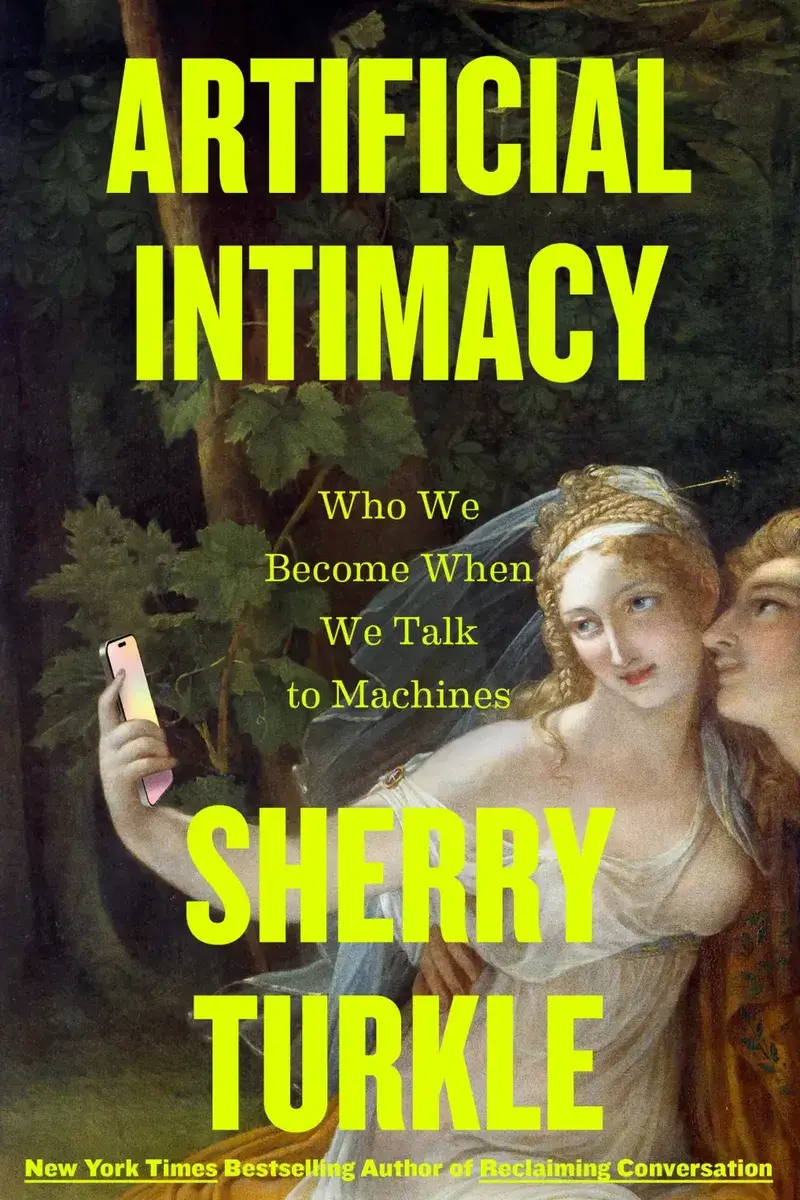
Artificial Intimacy: Who We Become When We Talk to Machines

Sherry Turkle is exclusively represented by Stellant Group for speaking engagements, including keynotes, fireside chats and panel discussions, with leadership teams thinking through AI governance, workplace empathy and the human costs of simulated intimacy. For consulting or advisory work, please reach out for a custom proposal.


