

Watch Daniela in Action
About Daniela Rus
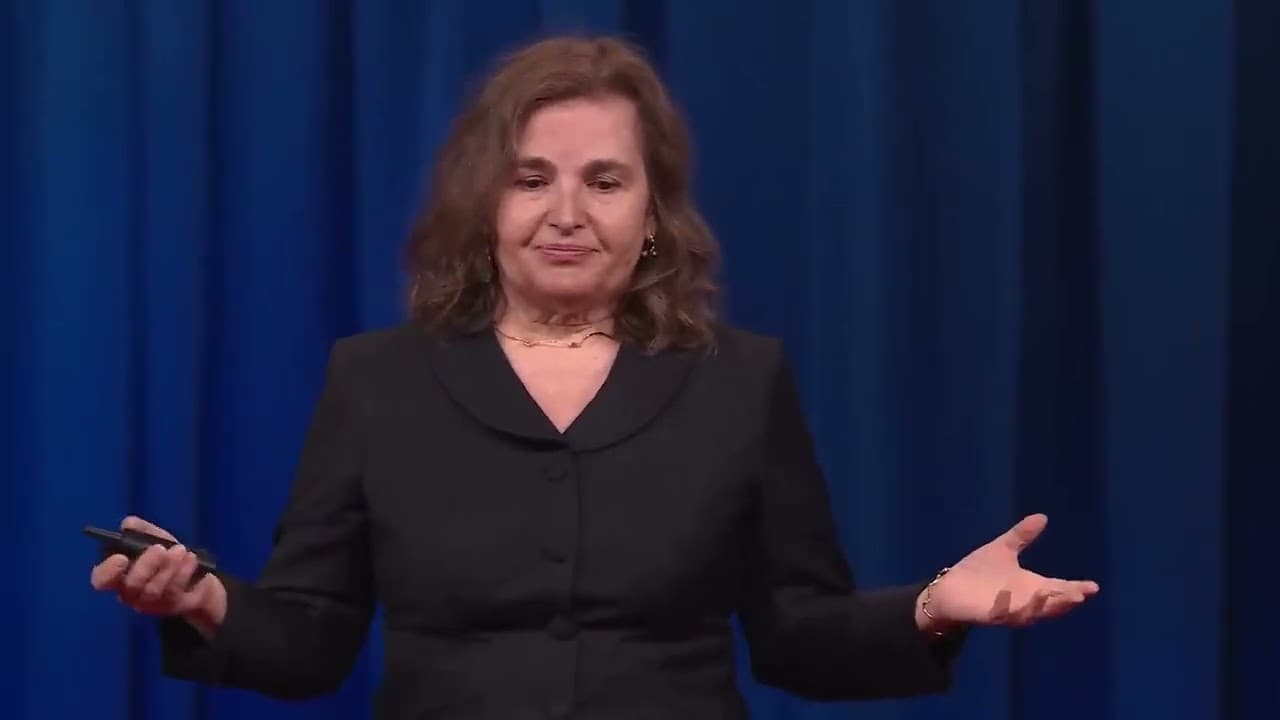
“Business leaders are beginning to understand that AI will transform everything, but they don’t actually know how yet,” says Daniela Rus, director of the MIT Computer Science and Artificial Intelligence Laboratory (CSAIL), regarded as one of the world’s most influential AI and robotics labs, and of the MIT AI Accelerator. The first woman to lead CSAIL, MIT’s largest interdisciplinary laboratory with over 1,800 researchers, Rus helps leaders separate AI hype from actionable decisions, with a clear blueprint for adopting the technology in ways that align with an organization’s values and raise the bottom line.
Rus has a proven history of turning academic research into results. She is director of the Toyota-CSAIL Joint Research Center on AI and intelligent vehicles, a MITRE senior visiting fellow, and has served as a U.S. expert member of the Global Partnership on Artificial Intelligence (GPAI) and a member of the Defense Innovation Board. Her books The Mind’s Mirror and The Heart and the Chip explain the complex world of AI in accessible terms, including the costs, resources and potential value at stake.
Daniela's Keynote Topics
Leaders are often bombarded with complex theories and predictions about artificial intelligence that can seem disconnected from day-to-day operations. Daniela Rus, one of the world’s top experts on AI, robotics and emerging technology, cuts through the noise to offer a straightforward guide to understanding and applying AI effectively. Using a step-by-step guidebook for AI decision-making that can be customized for any industry, her interactive session transforms complex AI concepts into clear, actionable strategies that leaders can implement to enhance productivity and innovation. Attendees leave with the knowledge to identify beneficial AI applications and integrate them thoughtfully into their business models.
The financial implications of adopting AI can be daunting, especially when it isn’t clear which of the latest emerging technologies will benefit an organization or just become a money sink. Daniela Rus, director of the MIT Computer Science and Artificial Intelligence Laboratory and the MIT AI Accelerator, brings leaders and executives a critical look at the economic considerations crucial to making informed AI investments. The co-founder of multiple technology startups, including Liquid AI, Themis AI and Venti Technologies, Rus’ accessible and clear presentations provide a critical analysis of AI investments and guide leaders on choosing technologies that offer true value for money. She also explores how not all AI solutions are worth the cost, providing a framework for assessing the economic viability of AI projects. Audiences walk away with practical tools and insights for avoiding costly pitfalls, enabling them to focus on AI applications that promise real financial benefits and enhance their competitive edge.
Imagine a future where intelligent machines elevate our work, life and environment. A globally renowned researcher studying how to integrate tech into the fabric of our lives, Daniela Rus reveals the expansive possibilities of AI, robotics and computing in shaping a more inclusive and efficient future. In this inspiring session, she explores how forward-thinking organizations can use AI not just for economic gain but as a catalyst for broad societal benefits. She provides a visionary outlook on creating sustainable, innovative solutions that extend beyond profit and focus on the global good. Attendees will leave inspired to drive change within their industries, equipped with the knowledge to leverage AI for sustainable growth and innovation, ensuring their actions today help forge a better tomorrow.
Sustainability is increasingly becoming a critical goal for all sectors, making the environmental impact of AI more important than ever to organizations. Daniela Rus, one of the world’s top AI researchers and director of the MIT Computer Science and Artificial Intelligence Laboratory, uncovers the often-overlooked aspect of AI’s energy consumption, its implications for climate change and strategies for creating sustainable solutions. Highlighting innovative approaches for reducing the ecological footprint of AI tools – including how to design energy-efficient AI systems that can run reliably on robots, sensors and other edge devices – Rus reveals how to integrate environmentally friendly practices with technological advancements such as physical intelligence. The co-founder of Liquid AI, Rus uses vivid examples drawn from her experience building energy-efficient AI to deftly demonstrates how to develop products that balance innovation and environmental responsibility. With new strategies to harmonize technological advancement with environmental stewardship, attendees leave with a better understanding of the energy challenges of foundational AI models. Leaders and teams return to their organizations equipped to ensure AI initiatives support achievable sustainability objectives.
Artificial intelligence is leaving the cloud and entering the world, not as abstract code but as a property of physical systems themselves. According to Daniela Rus, director of the MIT Computer Science and Artificial Intelligence Laboratory, this is the promise of “physical AI” – intelligence that is compact, adaptive, embodied and inspired by the dynamics of living systems. In this fascinating presentation, she explains that such AI could make our technologies more efficient, trustworthy and human-centered, while also forcing us to confront profound questions. Rus explores several of these questions, including what it means when intelligence no longer sits apart from the world but is woven into its fabric, and whether physical AI will become a foundation for resilience and care or bind us to technologies we cannot escape or control. Learning how AI’s power to understand text, images, signals and other information makes physical machines like robots intelligent, attendees leave with a firm grasp of the true paradigm-shifting potential physical intelligence can offer.
Books by Daniela Rus


Articles by Daniela Rus
Self-reconfiguring modular robotic boats
July 2026World Economic ForumAI is interacting with the real world. What does this mean for cybersecurity?
April 2026The Digitalist PapersPrivate Physical AI for the Edge: Small, Energy-Efficient, and Everywhere
December 2025The Washington PostTo Compete With China on AI, We Need a Lot More Power
September 2024The Boston GlobeThe Future of AI Innovation and the Role of Academics in Shaping It
July 2023MIT CSAILComputing the Future: A Decade of Innovation at MIT CSAIL
2023The HillOne Supply-Chain Solution: Automate the Jobs We Can't Fill
October 2022Daniela Rus' Google Scholar Page
Daniela in the Media

Physical AI security threats and how to mitigate them

TIME100 AI 2026

Daniela Rus receives Bavarian Minister-President's High-Tech Prize

Tiny robot boats build floating structures
Exploring the societal impacts of AI

The turning point for real-world robotics

Meet the CEOs, founders, and other leaders on the Globe’s annual Tech Power Players list

How AI Changes Science… And How It Doesn’t

The AI Question Every Job Candidate on Interview Should Be Prepared to Answer

Are Humanoid Robots on the Verge of Remaking the Economy, or ‘Doomed to Fail’?
How This MIT Scientist Is Rewiring Robots to Keep the Humanity in Tech
MIT Roboticists Debate the Future of Robotics, Data and Computing
Bring Daniela to your next event
Tell us about your event and we will be in touch right away.


