

Watch Hod in Action

About Hod Lipson, PhD
Organizations everywhere are evaluating artificial intelligence, but what goes into creating AI systems remains opaque to most leaders. Hod Lipson has made it his mission to open that black box. "You can think of AI like nuclear power; we don't fully understand it, so we have trepidation about it, but the benefits far outweigh the risks," he explains. "Part of the solution to this trepidation is for everybody to see how these systems work and for all of us to proceed together."
Hod's Keynote Topics
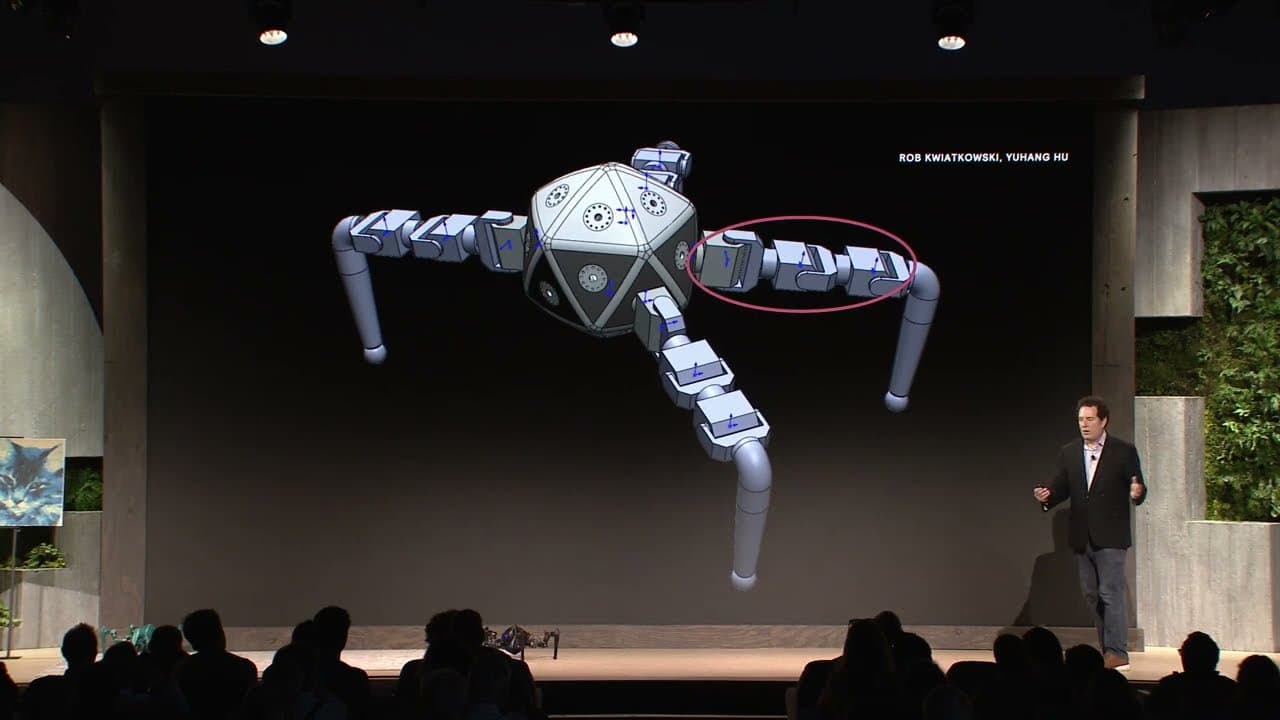
Most human activity takes place in the physical world. Yet despite its meteoric rise, artificial intelligence has remained largely confined to the virtual realm. AI can make decisions, generate ideas, analyze data, and operate complex systems. When it comes to acting in the physical world, however, robots continue to lag behind and have yet to make a substantial real-world impact.
In this talk, Hod Lipson explores the next stage of AI: embodied intelligence, where artificial intelligence moves beyond the digital domain and engages directly with the real world. He examines why physical environments have proved so difficult for AI to master, from the uncertainty and variability of real-world conditions and the greater consequences of errors to demanding energy requirements and the scarcity of useful training data. Lipson also considers the strategies the robotics industry is adopting to overcome these barriers.
He then looks ahead to how robotics and other forms of physical AI may develop throughout the 2030s. He considers the opportunities that could emerge, as well as the new technical, social, and practical challenges that may arise as AI reaches more deeply into the physical world and extends beyond its current boundaries.
Ultimately, Lipson argues, AI will not fully integrate into society until it can understand, navigate, and operate within the physical world. The talk concludes with a practical set of actions for preparing for this transition: how individuals can equip themselves for the changes ahead, how organizations can adapt and respond effectively, and how national policymakers can develop thoughtful strategies for guiding and managing the broader transformation of physical AI.
Artificial Intelligence and its physical counterpart, Robotics, are steadily becoming part of everything people do, consider, and aspire to achieve. AI has learned to surpass human performance in tasks once believed impossible to automate. Machines can now analyze video and interpret language with levels of reliability never before achieved. Cars can operate autonomously, while intelligent systems can outperform doctors in certain medical diagnostic tasks. AI can also produce original artwork, detailed engineering designs, and promising new medicines. Yet where will this technology move next, and what limits, if any, will define its reach?
In the first part of this talk, Hod Lipson takes a close look at the forces truly propelling AI forward and the new forms of AI likely to emerge next. He examines the less familiar factors behind AI's rapid ascent, moving beyond the usual emphasis on computing power and data to consider the influence of expanding network scale, along with the growing ecosystem of intelligent agents that increasingly cooperate with other agents.
In the second part of the talk, Lipson explores both the current generation of AI and the future generations that have yet to arrive. He considers the full impact of generative AI on engineering innovation and discovery, and then looks further ahead to emerging forms of AI, including Physical AI in 2030 and Self-aware AI in 2040.
The talk concludes with a set of practical action items focused on preparation: how individuals can get ready for the coming transition, how organizations can adapt and respond effectively, and how national policymakers can develop thoughtful strategies for managing the broader changes ahead.
Books by Hod Lipson, PhD


Articles by Hod Lipson, PhD
Hod in the Media

Can we make robots that eat other robots?

#4 Hod Lipson - Automated Physics Discovery, ChatGPT, Future of AI
AI and Creative Machines w/ Hod Lipson

‘The Future Is Going To Be Nothing But Amazement’

‘Consciousness’ in Robots Was Once Taboo. Now It’s the Last Word
Hod Lipson, Columbia University prof. of eng., data science — Fix Network Conference 2022
AI Is Discovering Its Own Physics And Scientists Are Baffled

Self-Modeling of Robot Morphologies
Roboticists Discover Alternative Physics
A Robot Taught Itself About Its Body
Powerful 'Machine Scientists’ Distill the Laws of Physics

The Future of Artificial Intelligence
Audience Feedback from Hod Lipson's Presentations "Best talk on technology that I have ever heard!" "I've been in a lot of AI presentations and for the first time I understand what it's truly about" "Frightening and awe inspiring at the same time" "Fascinating... impressive... and practical" "Raw and amazing" "I have been resisting AI for so long until I saw your presentation" "Opened my mind to limitless possibilities" "Was so good!! Illustrative examples and insight into the future" "Mind bending in so many ways
’Driverless’ is a great read for anybody interested in technological, societal, and ethical implications of self-driving cars. The book reaches across fields and issues thoughtfully and presents a comprehensive view of the state of the art
Daniela RusDirector, CSAIL, MIT
As we anticipate the implausible once again becoming inevitable -- when in the near future autonomous vehicles take over our roads, ‘Driverless’ presents an excellent and comprehensive assessment of this disruptive new technology and the issues and implications relating to its adoption. It's a great roadmap to help us achieve the smoothest possible transition.
Steven BerkenfeldManaging Director in Investment Banking, Barclays
Bring Hod to your next event
Tell us about your event and we will be in touch right away.


