

Watch Guy in Action
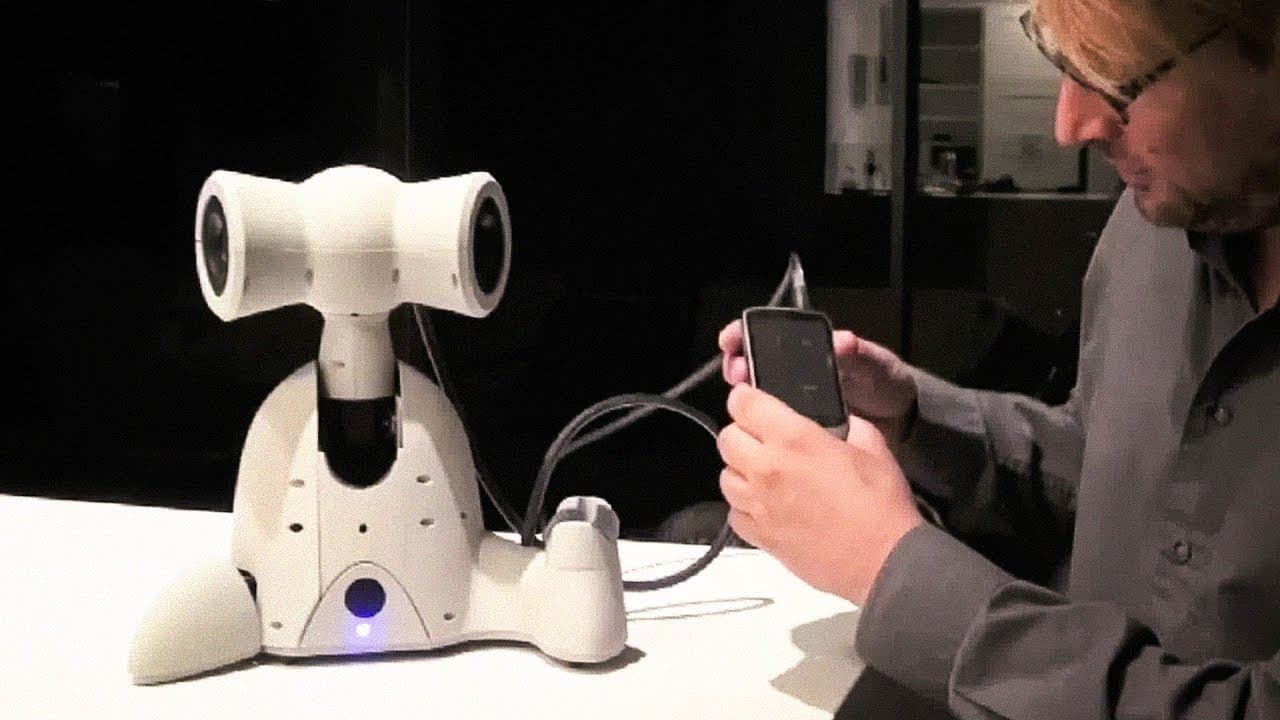
About Guy Hoffman
Guy Hoffman designs robots meant to share our homes, hospitals and workplaces, and he argues that how a machine moves matters as much as what it computes. His research explores the social intelligence of robots, how they think, feel and move as they interact with people, and his user-centered design approach applies wherever machines must read human social and emotional cues, from health care to services and education.
His robotic desk lamp, AUR, won the 2007 IEEE International Robot Design Competition, and he was animation and software lead on the World Expo Digital Water Pavilion, recognized with a TIME magazine best inventions of the year award. Twice chosen as one of Israel's most promising scientists under 40, he has advised top consumer companies on the design of domestic robotics products, and his work has been covered by The New York Times and Comedy Central.
Guy's Keynote Topics
A new generation of roboticists is creating a future where robots and AI operate not just behind factory doors or on faraway planets, but with humans on a daily basis. Professor Guy Hoffman, who has been working in the field of human-robot interaction for more than 15 years, foresees the integration of AI and robotics into all aspects of our lives, from our homes to our offices, schools and hospitals. As machine learning allows robots to develop new skills, and as they become our co-workers, medical staff, companions and educators, we must consider the core values that go into designing them and their software. In this presentation, Hoffman discusses state-of-the-art robotics and AI, how it is starting to affect every industry, and his work on designing robots with human values in mind. In the near future, robots will be all around us; we should ensure they reflect the best of our humanity, not the worst.
With technology shifting at an ever-rising pace, it is increasingly hard to design products and services that will stand the test of time – or even be relevant when their development cycle is over. Throughout his career, Guy Hoffman has been designing for a future that was still years away. For more than ten years, since graduating from the MIT Media Lab, he has been predicting our technological future. In 2008, he developed location-based mobile podcasts; in 2009, he developed one of the first Android Apps which climbed to the #1 spot in its category; in 2011, he built a prototype for an Augmented Reality game; and he has designed Social Robots for smart-homes and other applications ever since. In this presentation, he discusses the lessons learned and the methods and techniques used to predict the future and to design for it.
Traditional robots analyze their environment, then plan and execute a response. This results in behaviors that are predictable and calculated, but also difficult to understand, inflexible – and robotic. That’s a problem Guy Hoffman is solving. As robots are poised to become a major part of our lives, engineers are already designing robotic assistants for offices, nursing homes, hospitals and classrooms – all places where they need to get close and personal with humans. Hoffman explains why we prefer robots that are less robotic and more improvisational, and what we can learn from the arts to advance AI. He also discusses how animation, acting lessons and jazz led to a new approach to AI, involving robots that “think with their bodies,” plan less, improvise more and take chances – even at the risk of making mistakes. He delves deeper into robotic body language and how it will shape the future of robotics, helping them communicate more effectively with humans and giving us a better user experience in our offices, hospitals, homes and schools.
Some of the biggest questions related to artificial intelligence and robotics are not just about technology, but about how they affect our lives, our society and our culture. Therefore, it’s time for society at large to get involved in the AI discussion, says Guy Hoffman. How much control are we willing to give up? How much decision-making should a robot or an AI algorithm be allowed to do? Hoffman delves into these questions and explains why the issue of control between man and machine is not a binary one, but a gradient between having full control and none at all. This presentation helps AI developers, organizations and consumers alike better understand this crucial question, and what framework they should employ to decide how much independence they should cede to their robotic partners.
According to Guy Hoffman, robots are being developed to serve in hospitals. They can provide medical services, such as drug delivery or taking patients’ blood pressure and temperature, and can act as nursing assistants, transporting supplies behind the scenes. With the spiraling cost of medical care and the aging of populations, a dwindling number of caregivers is guaranteed in years to come, and robots can be employed to mitigate these problems. Although robots can provide a great deal of efficiency gains and cost savings, we must ponder the impact they will ultimately have on patients. In this presentation, Hoffman explains both the potential of robots in the health care industry and the ethical and emotional considerations we must take into account when designing them for such purposes. What aspects of care are best given to robots, and where is a human touch still necessary? Focusing on the importance of user-centered design, Hoffman takes the issue beyond utility and efficiency to the heart of what patients need emotionally from their caregivers and explores whether machines are capable of providing it.
Books by Guy Hoffman

Articles by Guy Hoffman
The Social Uncanniness of Robotic Companions
2021Association for Computing MachineryWhat Robots Need From Clothing
2021IEEE SpectrumAnki, Jibo, and Kuri: What We Can Learn from Social Robots That Didn't Make It
May 2019CornellThe Future of Human-Robot Interaction
September 2017Guy HoffmanSharing Our Lives With Robots: Will We Remain in Control?
March 2015Guy in the Media

Humanizing the Machines: Companies Design Robots to Look Friendlier

Do Robots Need Clothes? Yes, For Form and Function

Visible Touch: How Cameras Can Help Robots Feel
Robots 'Capture' Shadows to Sense Touch
Soft, Social Robot Brings Coziness to Home and Classrooms
Soft, Social Robot Brings Coziness to Home Robotics

With Robotics, Manufacturers Have an Opportunity to Boost Workplace Morale

Here's What Robots Destroy When They Compete with Humans
How Do We Feel About Working Next To Robots?

Your New Most Annoying Overachieving Coworker is a Robot
In Competition, People Get Discouraged by Competent Robots
Robot Prototype Will Let You Know How It's 'Feeling'
Bring Guy to your next event
Tell us about your event and we will be in touch right away.


