

Watch Henny in Action
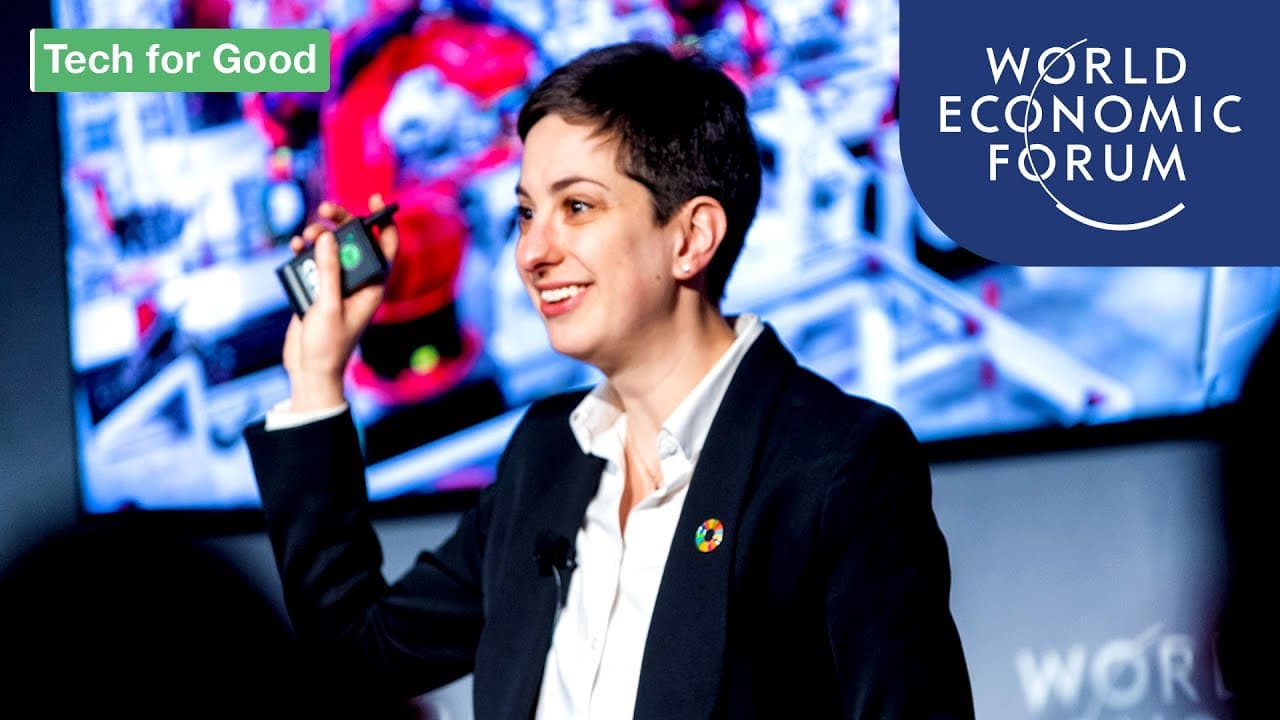
About Henny Admoni
Henny Admoni builds robots by first studying people. She sees a future of socially and physically assistive robots and AI systems that aid older adults as they communicate with caregivers, help people with severe speech impairments regain their agency in conversation, and improve efficiency in industries from auto manufacturing to health care and insurance. She spoke at the World Economic Forum in Davos in 2020.
"I'm very, very interested in how we can build robots and AI systems that are useful for people," Admoni explains. "I take my training in cognitive science and my training in computer science to look at what we actually know about human beings and the way we perceive information, make decisions and learn things." That evidence shapes her counsel to organizational leaders, particularly chief technology officers in health care, logistics and manufacturing, on matching humans with AI, robots and machines. Her central requirement is predictability: "People need to be able to understand what it did, why it did what it did, and what it's going to do next." Without that transparency, she warns, workers either over-trust the technology, under-trust it or assume it can do more than it can.
Henny's Keynote Topics
Robots and AI systems are increasingly being used for a variety of tasks that help humans live easier, more fulfilling lives. But concerns remain about humans putting their trust in machines. In this presentation, Carnegie Mellon robotics researcher Henny Admoni explains why it’s important to design robots and AI systems with human-centered thinking and a sense of ethics to ensure humans trust the systems. Audiences will gain new insight into current research that takes human behavior into consideration when building robots and AI systems to make them more trustworthy.
In 2018, 12.7% of the U.S. population was Black or African American, but only 4.2% of bachelor’s degrees, 4.8% of master’s degrees and 4.2% of PhD degrees were awarded to Black engineers. In this talk, Carnegie Mellon professor Henny Admoni shares urgent steps organizations can take to increase diversity, equity and inclusion in the technology sector. She explains why a lack of diversity is a problem and outlines ways STEM education can be used to recruit, retain and mentor diverse talent, build community, remove systemic obstacles, enforce equitable policy and advocate for change.
Workplaces are changing quickly with the increasing adoption of robot and AI systems. But Carnegie Mellon robotics professor Henny Admoni says the future of work will be one where people aren’t replaced but are working collaboratively with robots and AI systems. In this encouraging presentation, she draws on real world examples of humans and machines working in concert to enhance and streamline processes. Audiences will gain a new appreciation for a bright future ahead where humans and machines work with each other, not against each other.
According to Carnegie Mellon robotics researcher Henny Admoni, the key to successfully integrating artificial intelligence systems into an organization is to understand the system, how it works and why it does what it does. In this eye-opening presentation, Admoni outlines her research which shows that for AI systems to truly be effective, they have to be explainable, understandable and predictable. Audiences will learn why employees must be trained to understand what the technology is capable of to be able to adapt AI systems to humans as opposed to forcing AI on humans. Leaders will gain new insight into how to maximize the effectiveness of AI systems through true human-machine understanding.
While machines drive efficiencies in most industries, health care in particular continues to be revolutionized by new technologies that have applications in a variety of areas including elder care, internal medicine, mental health and mobility assistance. In this talk, Carnegie Mellon University professor Henny Admoni discusses current and emerging innovations that are changing the face of health care. From helping people with motor impairments and other disabilities to helping doctors in the operating room, she shows how assistive robots and machines go beyond improving the quality of life for patients to enhancing how health care is delivered.
“AI systems are not magic,” says Carnegie Mellon’s Human and Robot Partners (HARP) Lab director Henny Admoni. In this informative presentation, she’ll explain why it’s important for executives to make sure they have AI systems that are first and foremost transparent and explainable. Audiences will also learn why leaders must understand the potential shortcomings of AI systems. Leaders will gain insight into the limitations of specially trained systems, why they might not meet the use case for their organization and how to make sure they’re using the right system for the task at hand, ensuring the results meet an organization’s needs and expectations.
There has been much talk over the last decade about a future with cars that drive themselves. But, according to robotics researcher Henny Admoni, we’re not there yet – and probably never will be. In this fascinating discussion, she’ll make the case for why she thinks the idea of totally removing people from the driving process is misguided. Using real world examples and research into human behavior, Admoni explains why the question of autonomous cars should be reframed as one of human-machine collaboration, not one where humans are removed entirely. Attendees will expand their understanding of both technological limitations and human behavior roadblocks that will likely result in truly driverless cars being something that remains relegated to our imagination.
Articles by Henny Admoni
Helping People Through Space and Time: Assistance as a Perspective on Human-Robot Interaction
2022ACMMetrics for Robot Proficiency Self-assessment and Communication of Proficiency in Human-Robot Teams
2022Topics in Cognitive ScienceThe Role of Adaptation in Collective Human–AI Teaming
2022International Journal of Robotics ResearchHARMONIC: A Multimodal Data Set of Assistive Human-Robot Collaboration
2021IEEE SpectrumSupporting Black Scholars in Robotics
September 2020Henny in the Media

Enhancing Human-Robot Collaboration: Meet Scholar in Residence Henny Admoni
Our Robot Partners: Inside A Research Lab Exploring the Future of Human-Machine Collaboration
‘We’ve Literally Run Out of Human Beings’: Robots Rise in Wake of Pandemic and Labor Shortages

UofT Robotics Seminar: Henny Admoni from CMU on Leveraging Human Behavior in Assistive Robotics
Henny Admoni, Fei Fang Honored With Endowed Professorships
Shaping the Future of Human-Robot Interaction at Davos
Using Eye Gaze to Teach a Robot
Eye Gaze and Intent: How Robots Are Learning to Help People
CMU Team Uses AI to Help Machines Play Nice with Humans
People are sometimes unpredictable, that’s what makes this research fun!

Robotic head and arms let two people share one body

Dead robots raise questions on how far home technology has come
Bring Henny to your next event
Tell us about your event and we will be in touch right away.


