


Watch Iyad in Action
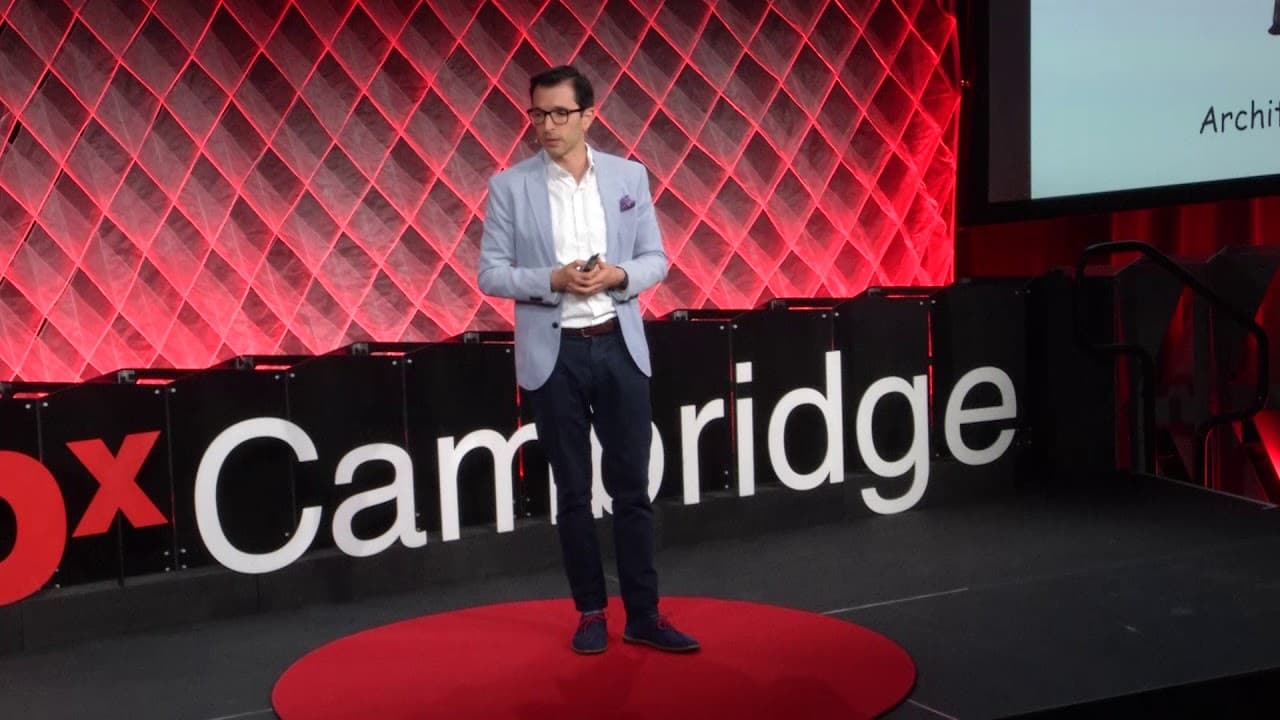
About Iyad Rahwan
What will a new technology do to the people who use it? Most organizations find out after they have invested. Iyad Rahwan has built a scientific instrument for answering the question in advance. He leads more than 20 computer scientists, physicists, psychologists, economists and political scientists who run behavioral-science experiments on emerging technologies, producing data organizations can use before they build, buy or deploy.
Rahwan came to prominence at the MIT Media Lab. His paper “Machine Behaviour,” published in Nature in 2019, argued that intelligent machines should be studied the way social scientists study people, and helped earn him the label “the anthropologist of artificial intelligence” from Quanta Magazine. His research spans the ethics of autonomous vehicles, surveillance, deep fakes, automation and human-AI creativity, and has appeared in The New York Times, The Economist and The Wall Street Journal.
Iyad's Keynote Topics
AI is revolutionizing our ability to innovate in science, engineering, design, business and entertainment. Accelerating both the discovery of new ideas and the exchange and recombination of those ideas, AI can now represent very high-dimensional relationships that are difficult for humans to describe in words. As director of the Center for Humans & Machines at the Max Planck Institute for Human Development, Iyad Rahwan understands how AI will advance human learning. An engaging and interactive speaker, he unveils the latest developments in AI (e.g., deep learning, text generation models, image generation algorithms, recommendation engines) and describes how they impact the creative process. After developing an appreciation of the emerging ethical, social and economic risks and challenges that accompany these new technological capabilities, audiences will discover from this talk how AI can be used as a tool, assistant, collaborator, and inventor.
The way humans engage with the world is increasingly driven by technology. The good news is, organizations can now make more informed, strategic decisions around technologies they build and use before they invest. In this talk, acclaimed futurist, computer scientist and AI scholar Iyad Rahwan, director of the Center for Humans & Machines at the Max Planck Institute for Human Development, discusses his team’s ongoing research, which shows how rapidly emerging technologies driven by AI, including virtual reality (VR), augmented reality (AR) and the metaverse, will shape the way people think, learn, work, play, cooperate and govern. His careful experimental and data-driven insights give participants the information they need to strategically invest in and plan for the future with a higher level of certainty about likely outcomes.
How can companies best prepare for a future workplace where AI and automation will require a different set of human skills? Computer scientist Iyad Rahwan teaches organizations how to create strategic maps outlining occupations and skillsets that will – or will likely not – become automated. He also shares strategies for addressing these issues defensively so leaders can future-proof their organization and workforce.
Articles by Iyad Rahwan
Large language models as human proxies
September 2026NaturePropagation and preservation of AI-discovered problem-solving strategies in human culture
August 2026United Nations Development ProgrammeThe Next Great Divergence: Why AI May Widen Inequality Between Countries
2025Annual Review of Psychology (Review in AdvanceThe Moral Psychology of Artificial Intelligence
January 2024TechnovationToward Human-Centered AI Management: Methodological Challenges and Future Directions
2024PsyArXiv PreprintsA Psychological Model Predicts Fears about Artificial Intelligence across 20 Countries and 6 Domains of Application
2023arXivArtificial Intelligence Can Facilitate Selfish Decisions by Altering the Appearance of Interaction Partners
2023Journal of the Royal Society InterfaceExpanding the Measurement of Culture With a Sample of Two Billion Humans
2022MDM Policy & PracticePolarized Citizen Preferences for the Ethical Allocation of Scarce Medical Resources in 20 Countries
2022Nature Machine Intelligence MayThe Promise and Perils of Using Artificial Intelligence To Fight Corruption
2022Journal of Computational Social ScienceAutomation Impacts On China’s Polarized Job Market
2021Nature Human BehaviourBad Machines Corrupt Good Morals
2021Iyad in the Media

Powers of persuasion: AI chatbots are becoming experts at changing people’s minds. What gives them an edge?

The Next Great Divergence: Why AI May Widen Inequality Between Countries
The 2025 Lagrange–Fondazione CRT Prize Awarded to Scientist Iyad Rahwan for His Studies on Human–Machine Social Interaction

Why Cybersecurity’s Future Depends on People, Not Just Technology
Scientists Are Secretly Testing Unthinkable Technologies ... Years Before They Exist
AI Can Change the World, But Humans Must Remain ‘in Charge,’ Says Expert

How AI Shapes Human Morality

The Rise of Machine Culture
Humans Are Already Repeating Words Learned From ChatGPT, Such as ‘Delve’ and ‘Meticulous’
The Face Game: A Citizen Science Project To Learn How Artificial Intelligence Will Choose To Appear to Humans
The Moral Machine: Who Lives, Who Dies, You Decide!
AI Is Creating Its Own Culture – And Passing It Down To Humans
Bring Iyad to your next event
Tell us about your event and we will be in touch right away.


