

Watch Renee in Action
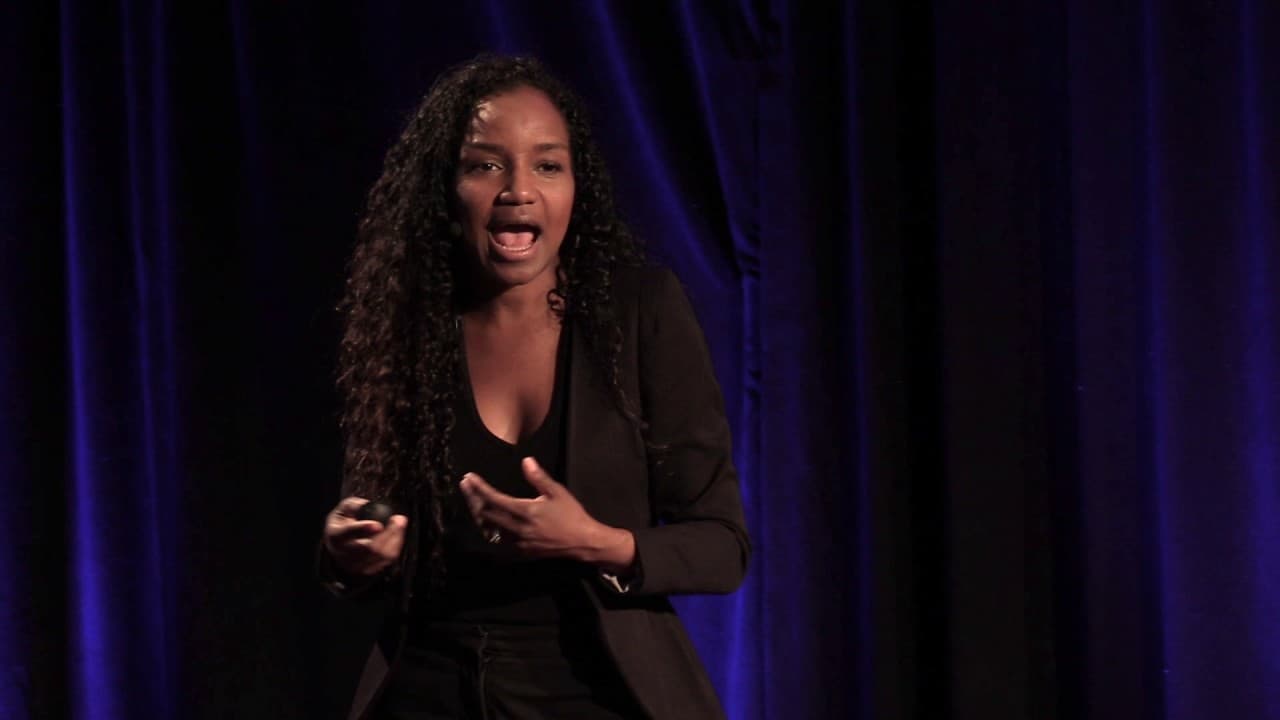
About Renee Richardson Gosline
Dr. Renee Richardson Gosline is a research scientist and senior lecturer at the MIT Sloan School of Management and head of the Human-First AI group at MIT's Initiative on the Digital Economy. She is an expert on the intersection between behavioral science and technology, and the implications of AI for human decision-making and performance. Her forthcoming book, In Praise of Friction, examines how AI shapes our experiences and why organizations must audit their decision-making processes to minimize "bad friction" and leverage "beneficial friction"—a framework she presented to the White House Office of Science and Technology Policy.
Gosline specializes in AI customer experience strategy, creating cultures of experimentation and applying a behavioral science lens to create value exchange with clients. She has advised Fortune 500 leaders at IBM, P&G, Johnson & Johnson, Salesforce and BMW, drawing on earlier practitioner years at LVMH Moët Hennessy and Leo Burnett. Her experiments have tested the persuasiveness of generative AI and human co-authorship, when people exhibit algorithmic aversion or appreciation, how cognitive style predicts preference for AI versus human input, and how technology affects performance through placebo effects. Her study on how people perceive content produced by generative AI, human experts and human-AI collaboration appeared in Judgment and Decision Making in 2023, and her Harvard Business Review article "Why AI Customer Journeys Need More Friction" made the case for deliberately designed friction in AI-mediated customer experiences.
Renee's Keynote Topics
With the advent of large language models (LLMs) and widespread access to generative “AI,” many firms are exploring human-AI collaborations and their potential to make content creation more efficient. These “human in the loop” (HITL) systems could also help address concerns about the potential unmitigated proliferation of inaccuracy and bias in frictionless applications of AI. Many are asking how we can leverage the efficiency benefits of generative AI while creating safeguards for human use. In this talk, Renée Richardson Gosline, Ph.D., head of Human-First AI research group at MIT’s Initiative on the Digital Economy, will discuss some of her latest experiments. Participants will explore emergent insights and a framework for approaching friction in HITL systems – identifying when it is harmful and when it is beneficial – to increase efficiency and mitigate inaccuracy.
Digital technology has revolutionized the way humans behave and make decisions. What do these shifts mean for customer experience (CX) and competitive strategy? The average person makes tens of thousands of choices per day. In light of such an overwhelming decision-making burden, how can we create a customer journey that improves purchasing outcomes and the customer experience?
Renée Richardson Gosline, Ph.D., uniquely applies both behavioral science "nudges" and a data analytical lens to help you develop breakthrough digital CX. In this highly interactive session, MIT senior lecturer Gosline shows participants how to remove obstacles from a shopper's path while preserving agency, especially when their cognitive load is at an all-time high, such as during a pandemic. Taking a human-centered approach to CX, Gosline teaches executives how to deconstruct the customer journey – a chain of behavioral choices influenced by psychological factors – and re-construct it through "nudges," targeted experiments, data activation, and team culture shifts.
She simplifies complex, new and still-emerging topics and tools in ways that are immediately relevant and actionable for CEOs, CXOs, CIOs, CMOs, Data Scientists, and their teams. In situations where clear product benefits don't convert into action, she explains how to reduce complexity and guide users toward overlooked product and brand value. Grounded in scientific research and practical experience that bridges the gaps between classic approaches and modern marketing CX strategies, Gosline shows participants how to:
- Create an organizational culture that embraces digital transformation and field experiments
- Increase adoption of new ideas among leadership and teams
- Design a customer experience strategy that is the best of both worlds—data driven but also keenly aware of the human element
According to Gosline, better CX can be accomplished by creating a "best-of-both-worlds" approach that is at once heavily data-driven and keenly aware of human emotions. With equal weight given to behavioral economics theory, experience-mapping and discussions of strategy, Gosline helps companies architect customer experiences that are not only meaningful, but delightful. Whether you are part of new company leveraging the latest technologies, or a legacy organization feeling the pressures of digital transformation, this session will leave you with a varied set of actionable tools to help you and your team enhance the digital customer experience your company provides.
In today’s highly competitive business environment, organizations must continually generate new ideas that disrupt their industries. In this presentation, MIT senior lecturer Renée Richardson Gosline, Ph.D., teaches leaders and teams how to design a culture of innovation by leveraging AI and behavioral science principles. Pointing to the value of digital transformation and field experiments, Gosline reveals how to bridge the knowledge gap and apply data to what you already know using strategic experiments. With an arsenal of proven methods, such as human-centered AI, psychological safety and viewing the customer as a co-creator of value, Gosline shows participants how they can successfully develop innovations that lead to big rewards.
Renee in the Media

To Help Improve the Accuracy of Generative AI, Add Speed Bumps

Nudge Users to Catch Generative AI Errors
Study Gauges How People Perceive AI-Created Content
3 Ways to Center Humans in Your Company’s Artificial Intelligence Efforts

Why AI Customer Journeys Need More Friction
How Can Human-centered AI Fight Bias in Machines and People?
How Business Schools Can Help Corporate America Fight Racism

Technology and the Road to Self-Improvement
In Kaepernick Ads, Nike Further Develops Its Brand Point of View

Artificial Intelligence Will Soon Shop For You - But Is That a Good Thing?

The Power of Behavioral Science for Emerging Economies: MIT Explores Cuba and Trinidad & Tobago
Solving Diversity's Branding Problem
Bring Renee to your next event
Tell us about your event and we will be in touch right away.


