


Watch Megan in Action
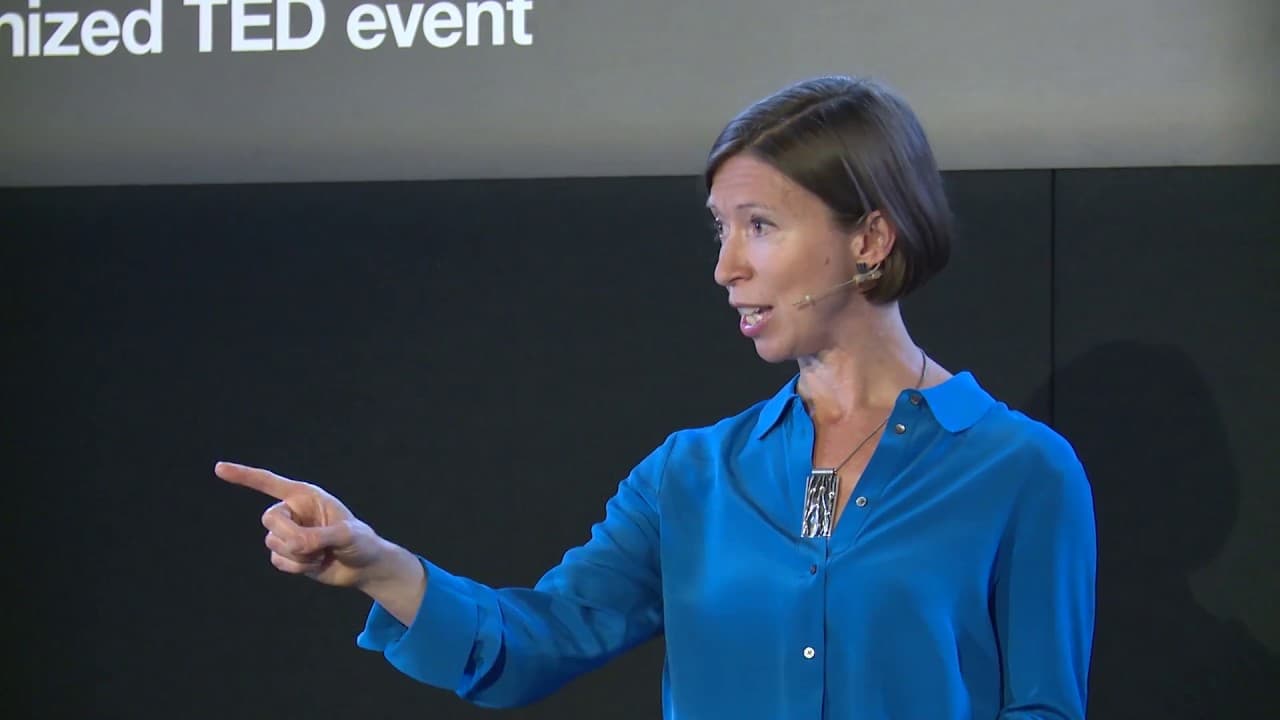

About Megan Reitz
How do leaders find out what is really happening in their organizations? According to Megan Reitz, the answer lies in our "conversational habits": what we speak up about and what we do not, whose voices we listen to and whose we discount. Ranked among HR Magazine's Most Influential Thinkers since 2017, Reitz helps leaders see how power dynamics shape what they hear, and how often they silence others without meaning to.
Megan's Keynote Topics
As artificial intelligence becomes increasingly integrated into workplace dynamics, how can leaders ensure these tools enhance rather than hinder psychological safety? “AI has the potential to reshape organizational communication and decision-making and organizations must ensure these new tools have positive effects on their workforce,” says Megan Reitz, Ph.D., an associate fellow at Saïd Business School at Oxford University. In this presentation, she highlights the dual potential of AI to either disrupt or enhance psychological safety depending on its application within existing power structures. Reitz shares a framework for leaders to deploy AI tools responsibly, ensuring they complement human interactions and contribute positively to organizational culture. Attendees will gain insights into creating an AI-enhanced workplace where technology supports inclusive, honest and productive conversations, leading to a more resilient and innovative organization.
How can leaders foster a culture where employees feel free to speak up about workplace concerns without fear of retribution? How can employees be encouraged to challenge conventional thinking and offer new ideas so teams can remain agile and innovative? And how can organizations both avoid scandal and facilitate overall healthy corporate cultures? A renowned expert on leadership and dialogue, Hult International Business School professor Megan Reitz, Ph.D., teaches leaders that having a psychologically safe culture requires them to notice their own habits and be mindful of the signals they’re sending which may be deliberately or inadvertently silencing others. In this presentation, Reitz shares evidence-based communication tools leaders can use to encourage employees to speak up and ensure all voices are heard so vital knowledge and innovative ideas can be regularly exchanged.
Many employees feel they are in a state of constant ‘busyness’ where attention is given increasingly to short-term tangible tasks to the detriment of creativity, relationships and learning. This results in high stress and, over time, lower productivity. Pausing in order to make wiser choices in what we do and how we show up with one another is vital – it doesn’t slow things down, in fact, it is quite the opposite. How do we know when it’s time to pause, both individually and collectively? According to leadership expert Megan Reitz, Ph.D., it’s vital to find a balance between attending to short-term tasks and to less tangible longer term, relational tasks. She explores why we get caught in cycles of busyness, shares her AIM framework (allowing, inquiry, meta-awareness), and provides practical experiences of pausing, attending and ‘AIMing’ both individually and in teams. Attendees will be empowered to create the space in their minds to notice the patterns they are in and choose different, thoughtful responses.
We need all sorts of conversations in order to thrive individually and organizationally. While conversations about tasks and short-term targets are vital, if they take over, we can find ourselves with less and less time to have conversations that focus on relationships, creativity, reflection and purpose. These latter conversations are less tangible, and their benefits are longer term – however without them organizations cannot survive. Megan Reitz, Ph.D., has been researching conversations at work for more than a decade. In this talk, she will share the importance of ‘conversational habits’ and how leaders can become stuck in a ‘busyness’ cycle that, over time, can lead to employees feeling less connected, less able to challenge, give feedback and learn. Audiences will be guided to consider what conversations they prioritize, they’ll understand that leaders are likely to be unaware of ‘missing’ conversations and they will learn practical ways they can ensure their teams are having conversations that matter at work.
Increasingly, employees are starting challenging conversations with management: “So, what’s our policy on Black Lives Matter, gender equity, climate change, human rights in our supply chain?” Some leaders respond by saying their organization is apolitical, or they hand off hard-to-avoid issues to diversity, equity, and inclusion (DEI) managers. Worse, they don’t respond at all. Silencing employees works against organizations in a number of ways. Two big drawbacks: employees may not reveal hidden problems which can grow, or they may end up leaving if the values of the organization do not align with their own, explains Megan Reitz, Ph.D., professor of leadership and dialogue at Hult International Business School, and co-author of the acclaimed book “Speak Up: Say What Needs to be Said and Hear What Needs to be Heard.” In this talk, she shares her research-backed framework which helps leaders become aware of their responses to employee activism and serves as a playbook for proactively and thoughtfully engaging with employees. Leaders come away with a stronger ability to navigate power differences and transform their workplace cultures. As a result, employees are more likely to openly communicate, and leaders are able to find out what’s really going on in their organization and harness much-needed ideas for tackling the ‘wicked’ business, social and environmental challenges that now face us.
Advancements in tech are causing businesses to move faster than ever before, and avoiding disruption is no longer an option for organizations. “Experimentation is vital – but learning from those experiments is even more important,” says leadership expert and associate fellow at Saïd Business School at Oxford University Megan Reitz, Ph.D. Her provocative approach to management showcases learning from ‘intelligent’ failures (as Amy Edmondson would term them) as essential stepping stones toward innovation. Many of us don’t like to dwell on failures, let alone talk about them thoroughly and openly, but this capacity is critical in teams and organizations. By explaining why we avoid discussing setbacks and then detailing how to successfully reframe them as opportunities for growth, Reitz empowers managers to transform their organizational culture. Attendees will learn how to foster an environment where experimentation (in actions and behaviors) is celebrated and ‘intelligent’ failures are viewed as valuable insights. Energetic and funny, Reitz provides practical tools for leaders to encourage a culture of boldness and creativity, ensuring their teams thrive in the face of change. Leaders will leave with a clear strategy to invite and hold conversations that drives continuous improvement and sustained competitive advantage.
Failure is not a subject that is spoken about frequently in organizational settings even though it is inevitable and can be a vital and constructive means of moving innovation forward and improving performance. So how can leaders make it safe to talk about failure in the right way? According to psychological safety expert Megan Reitz, Ph.D., the right kinds of failure can be powerful learning opportunities. In this presentation, she investigates the conditions that prevent discussions about failure – both speaking up about it and listening to others’ experiences. Audiences will leave with actionable strategies for encouraging reflective and thoughtful conversations about failure, turning it into an important learning asset.
How can leaders combat the overwhelming busyness that stifles creativity and innovation in the workplace? Megan Reitz, Ph.D., an associate fellow at Saïd Business School at Oxford University, explores the concept of “spaciousness”– the essential breathing room that allows ideas to flourish and employees to grow. Drawing on her latest research, Reitz demonstrates how creating physical and mental space in the workplace can lead to significant improvements in productivity, creativity and employee satisfaction. Attendees will discover actionable strategies to balance task-oriented focus with opportunities for reflection and development, transforming their workplaces into environments where employees feel valued, and visions become realities. Ultimately, Reitz equips leaders with the insights needed to foster a culture that prioritizes meaningful work and deep engagement.
Many employees have a burning desire to voice their opinions regarding important organizational changes, yet companies may not have a culture that encourages them to do so. When leaders become aware of the link between leadership and mindfulness, says Hult International Business School professor Megan Reitz, Ph.D., space for speaking truth to power is born. In this presentation based on her engaging TEDxHultAshridge talk, Reitz teaches leaders how to navigate power differences and transform their workplace cultures so employees feel free to openly communicate.
What role does mindfulness play in leadership? Hult International Business School professor Megan Reitz’s research shows that mindfulness opens doors for leaders to become more “present,” enabling them to respond rather than react to circumstances, which in turn builds resilience, improves focus, and allows them to become better listeners and decision makers. Based on her book Mind Time, Reitz teaches participants tools for becoming more present, mindful, less stressed, and more effective leaders who are viewed as more approachable and relatable.


Articles by Megan Reitz
The Best Leaders Encourage “Spacious Thinking”
July 2025MIT Sloan Management ReviewCreate Mental Space to Be a Wiser Leader
June 2025Harvard Business ReviewHow to Give Yourself More Space to Think
February 2025Reitz and HigginsPermission to Pause: Rediscovering 'Spaciousness' at Work
2025Harvard Business ReviewWhen a Team Member Speaks Up — and It Doesn’t Go Well
July 2024Harvard Business ReviewHow AI Features Can Change Team Dynamics
April 2024Harvard Business ReviewA Leader’s Guide to Navigating Employee Activism
February 2024Radical ODTwo Faces of Belonging…Possession and Affiliation At Work
August 2022CalmHow Mentally Healthy Workplaces Start with Mindful Leaders
July 2022People ManagementLeaders Need to Stop Silencing Their People
February 2022MIT Sloan Management ReviewLeading in an Age of Employee Activism
January 2022CoEmployee Activism Is Here to Stay How Should Managers Adapt Their Approach?
January 2022Megan in the Media

Spaciousness, Fear and Leadership Presence – With Megan Reitz

The Megan Reitz One – Spacious Work

Find Space for Conversations That Matter

The Rise and Rise of Workplace Activism and the Power of Speak-Up Cultures

Organizational Growth Through Fostering Speaking Out and Listening Up With Megan Reitz

It’s Okay if You Didn’t Achieve Your January Goals
A Pause Is Not Just for Christmas

Megan Reitz on Open Dialogue, Spaciousness and the Conversations We Need to Have

Leading the Conversation: Enabling Mental Health Discussions

Leaders Speak Up: Unlocking Mental Health in the Workplace

Google’s Worker Firings Show That the Office Actually Isn’t a Place To Be Yourself

Let’s Make Our Work More ‘Spacious’
Megan, transformational changes in our leadership culture were catalysed by you and your approach to open our leaders’ thinking, and challenging their perspectives helped us to elevate their self-awareness and reinforce their commitment to make things better. For this, we will always be grateful to you. On a personal note, I wish to tell you that I learned much from you and I am continually inspired by your work and example.
Berns BernardoSr. Director for Globe University and Talent CoE, Globe Telecom
Bring Megan to your next event
Tell us about your event and we will be in touch right away.


