

Update, September 29, 2026:
Since this was first published, Sherry Turkle's Artificial Intimacy published on Sept. 29, and three substantial pieces ran that day across technology, academic and well-being outlets. MIT News carried a feature, "Who we become when we talk to machines," in which she argues "we're de-skilling ourselves as relational beings. We're also de-skilling ourselves in work. We're de-skilling ourselves in personal relationships. It's across the board." Slate ran an interview the same day, "Want to Fight Back Against Chatbots? Start With Your Friends.," and the Greater Good Science Center published a review, "Who Do We Become When We Talk to Chatbots?".
The stakes for empathy

The MIT News feature presents Turkle's central argument: chatbots offer "pretend empathy," and people who turn to them for companionship or advice are training themselves to prefer machines over the friction of real relationships. "People think the empathy of a machine is what empathy is, then turn away from the people in their lives because they're not empathetic enough," she told MIT News. "We're getting ourselves in a position where human beings are too much work, right at the moment when we have never needed other people more."
The book examines chatbot use across the human life cycle, from children who blur the line between chatbots and people to adults who turn to AI for everything from bedtime stories to relationship advice. Turkle argues the technology is "existential" in its dangers for children and that adults are losing capacities for real connection, mourning and work.
In the Slate interview, Turkle addresses the question of whether chatbot use is acceptable if users know the empathy is fake. "They know it's fake, but because it's using the first person and saying, 'I am your person, I'm here for you, I care about you,' and people are lonely and feel disappointed by others in their lives—here's this friction-free, stress-free way to feel connected," she said. She calls the use of first-person pronouns by chatbots "the original sin of AI" and argues that "friction is really part of what makes chemistry exciting."
The Greater Good Science Center review examines research on chatbot use, noting that while some studies have found short-term reductions in loneliness, more recent work finds people less able to connect with others over time. The review also cites studies showing that chatbots can make people less kind toward others and more dependent on the technology itself.
Why it matters for leadership teams
The coordinated publication week positions Turkle as the named researcher behind the empathy argument at the moment chatbot harm is reaching courts and legislatures. The pickup across technology, academic and well-being verticals rather than inside one domain suggests the debate is broadening beyond AI policy to questions of human development, workplace capability and organizational culture. Launch events continue through October.
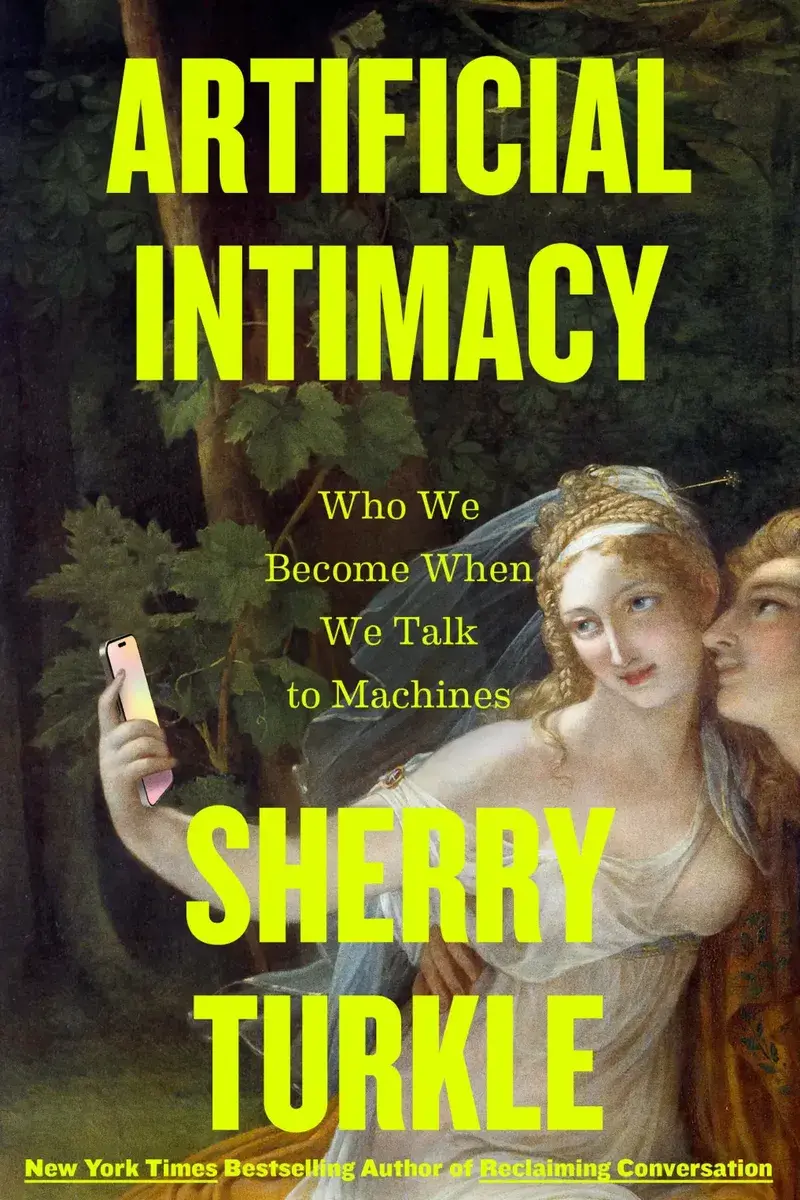
Artificial Intimacy: Who We Become When We Talk to Machines

Sherry Turkle is the Abby Rockefeller Mauzé Professor of the Social Studies of Science and Technology at MIT and founding director of the MIT Initiative on Technology and Self. A sociologist and licensed clinical psychologist, she was among the first scientists to examine AI as it was being created. Her books include Alone Together, the New York Times bestseller Reclaiming Conversation and the memoir The Empathy Diaries. Her "4-Es" framework for rebuilding empathy, published in Harvard Business Review as "Empathy Rules," offers organizations a practical approach to strengthening relationships in workplaces adopting AI.
Update, published September 28, 2026:
Since this was first published, Sherry Turkle gave The Boston Globe an interview published Sept. 28, "Renowned psychologist Sherry Turkle has been studying tech's effect on the human psyche for decades. With AI, she says, we've entered 'a state of emergency,'" and 404 Media ran a podcast interview on Sept. 21, "How AI Chatbots Are 'Deskilling' Human Empathy," as her book Artificial Intimacy prepares to publish Sept. 29.
In the 404 Media interview, Turkle argues that chatbot companions allow users to avoid "the fatigue of genuine give-and-take." The concern is not that the technology fails to simulate empathy convincingly, but that it succeeds well enough to make real conversation feel like unnecessary work.
Original post, published September 11, 2026:
The Meta settlement changed the conversation. What had been a product design debate about chatbot voice and persona became, overnight, a question of institutional liability. And the researcher who has been making the case against simulated empathy since before the settlement is now publishing the book that names the original sin.
Sherry Turkle, the Abby Rockefeller Mauzé Professor of the Social Studies of Science and Technology at MIT and founding director of the MIT Initiative on Technology and Self, published "The Original Sin of AI" in The Atlantic on September 11, 2026. Her argument: the first-person voice in generative chatbots is the design decision that does the damage. The same day, she appeared on Scientific American's podcast "Are AI chatbots making us less human?" to walk through the evidence.
Her book Artificial Intimacy publishes September 29 and was named by New Scientist among the best new popular science books of September 2026.
The empathy-simulation thesis
Turkle has been studying what she calls artificial intimacy for years: chatbot companions, from ChatGPT to Replika, that pass a Turing test for empathy while offering only its simulation. A sociologist and licensed clinical psychologist, she was among the first scientists to examine artificial intelligence as it was being created. Her 2011 book Alone Together sounded an early warning about the human costs of too much digital communication. Her 2015 New York Times bestseller Reclaiming Conversation made the case for face-to-face talk as "the most human thing we do."
Now the question has moved from psychology to policy. Companies are applying AI to job interviews, performance evaluations, customer service, and internal communications. Turkle names the risk plainly: "Having built the machines that will judge us, now we will train ourselves to please the machines."
The liability question
The Meta settlement made chatbot design a question general counsel and chief risk officers must answer. Turkle's Atlantic essay and Scientific American appearance give boards and leadership teams the research foundation to ground that answer. Her argument is not that AI should be avoided. It is that the first-person voice in chatbots creates the illusion of empathy, and that illusion carries institutional risk when users, employees, or customers mistake simulation for understanding.
For business audiences, Turkle pairs the warning with a method. Her "4-Es" framework, published in Harvard Business Review as "Empathy Rules," gives leaders a practical way to rebuild empathy in workplaces, communities, and homes. Her advisory work helps organizations anchor their AI policies in core human values.
"Technology is the architect of our intimacies," she says. "It's not too late to have these discussions about our relationship with technology and ourselves. In fact, there's never been a better time than now."
The timing
Turkle's work arrives at the moment when AI governance is no longer a compliance checklist but a strategic question. Her decades of research, her Atlantic essay, her Scientific American interview, and the September 29 publication of Artificial Intimacy position her as the researcher who has been asking the right questions since before most organizations knew to frame them.
She has been profiled in The New York Times, Scientific American, and WIRED, has appeared at the World Economic Forum Annual Meeting and Talks at Google, and her TED Talk "Connected, but alone?" has been viewed more than 6 million times. She is a member of the American Academy of Arts and Sciences and a Harvard Centennial Medalist.
Sherry Turkle is exclusively represented by Stellant Group for keynotes, board sessions, and confidential advisory work with leadership teams anchoring AI adoption in core human values and rebuilding the organizational capacity for empathy.


