


Watch Nicholas in Action
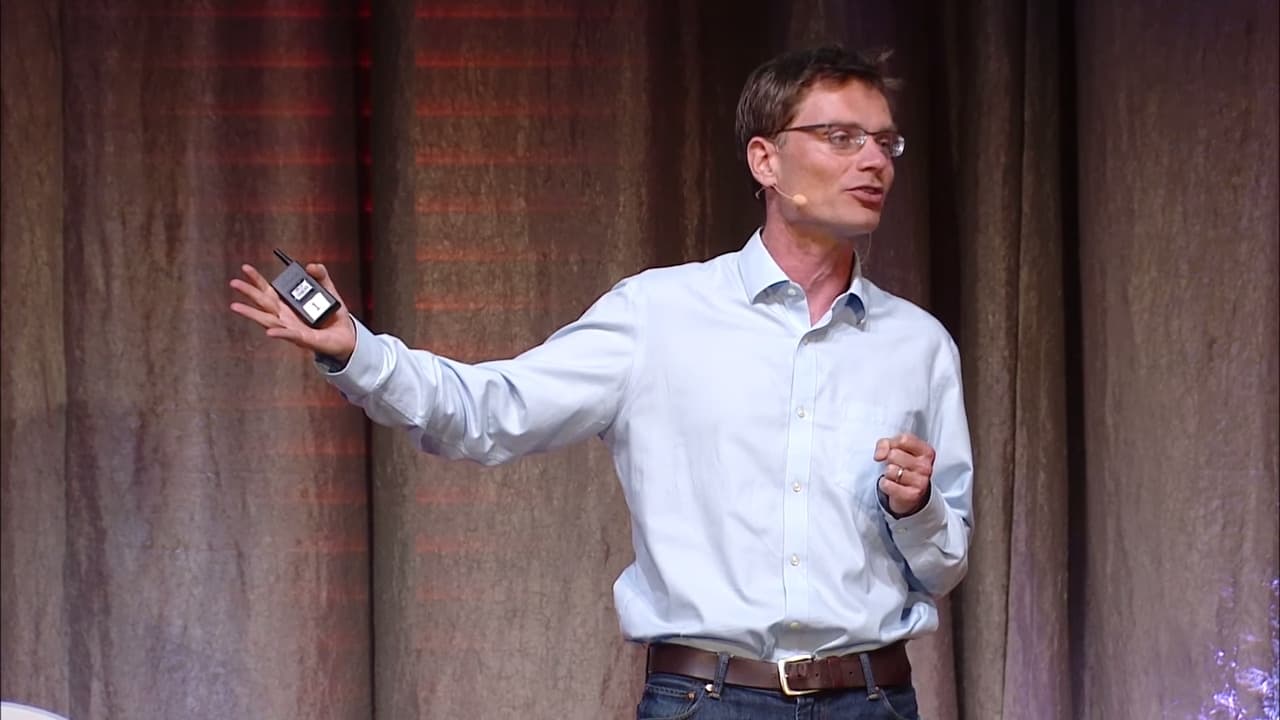
About Nicholas Bloom
Nicholas Bloom is a global authority on remote and hybrid work. For organizations weighing a new workplace model, he brings something rare to the debate: data. After surveying thousands of firms, he helps leaders move beyond what employees are thinking and feeling to the economic impact of distributed work on businesses, industries and society. With more than 70 percent of businesses moving toward some form of hybrid model, including multinationals such as Google, Citi and HSBC, his research informs decisions on fair metrics, collaboration, innovation and retention.
Bloom's evidence long predates the pandemic. His 2014 study of Ctrip, a NASDAQ-listed Chinese travel agency, showed that work-from-home policies can cut attrition by 50 percent, lift productivity by nearly 22 percent, lower real estate costs and add roughly $2,000 in profit per employee. In a 2017 TEDxStanford talk he told audiences, "Go Ahead, Tell Your Boss You're Working From Home." After collecting pandemic-era data on the downside of letting employees pick their own days, he now recommends that leaders do the choosing, with some caveats.
Nicholas's Keynote Topics
In a world where constant changes are impacting every sector – from economics to society and more – uncertainty is expected. But it is possible to leverage data to help us face uncertainty with confidence. In this eye-opening presentation, Stanford professor and renowned global economist Nicholas Bloom explains how rigorous research and robust data can measure uncertainty and spot potentially impactful trends. From monitoring stock markets to gaining insights into financial executives’ forecasts, Bloom shares strategies for practical contingency planning. Audiences will learn how to put best practices in place now – such as investing in flexible capital expenses like leasing office space instead of buying – to stave off the potential worst-case scenarios of today’s uncertain business landscape.
Today’s economy looks drastically different from the one that existed before the pandemic. So where do we go from here? In this talk, renowned Stanford University economist Nicholas Bloom outlines a way forward while addressing such concerns as declining U.S. dynamism, modern task-based economics, looming inflation and a red-hot labor market that is putting financial pressure on businesses and challenging their staffing needs. He also discusses the economic impact of the “Donut Effect,” a recent pandemic-driven phenomenon resulting in urban populations declining and exurbs around them growing as workers flee highly-concentrated city centers – and what we can do about it. While identifying opportunities and risks inherent in change, Bloom explains how innovation and entrepreneurship can emerge from a crisis if we are willing to build past lessons into our future plans.
As businesses enter a new era of widespread hybrid and remote work, how do organizations preserve their company culture while also seizing the opportunity to change what wasn’t working? Emphasizing the need for quantitative measurements, renowned Stanford University economist Nicholas Bloom – a global authority on remote and hybrid work models – outlines fair practices for successfully optimizing employee productivity and engagement when a significant portion of the workforce is absent from the office. He addresses concerns about the erosion of corporate culture and shares tips for improving employee retention. As WFH reduces employee connections, Bloom explains how management can fill the void with solutions that work for everyone.
During the Covid-19 pandemic, a curious phenomenon took shape: as workers fled highly concentrated city centers, urban populations declined and the exurbs around them boomed. In this presentation, Stanford University economist Nicholas Bloom discusses how the “Donut Effect” has and will continue to reshape the U.S. economy. Drawing from data he collected after surveying thousands of firms, he delves into remote work’s effect on migration, real estate and diversity, and examines the pandemic’s impact on cities, which have lost roughly 15% of people and businesses after 40 years of expansion. He also contrasts the upsides of remote work, such as productivity and less commute time, with the downsides, such as inequities that may put mothers, disabled employees and poor workers at a disadvantage. Armed with decades of research and insights, Bloom shows audiences how to create a new working world that is at once more efficient and more empathetic.
Books by Nicholas Bloom

Articles by Nicholas Bloom
How Are Firms Using Their Tariff Refunds?
September 2026National Bureau of Economic ResearchTime Travel on Professional Profiles
July 2026AEIWhen Trust in Official Statistics Declines
June 2026National Bureau of Economic ResearchThe Value of One Office Day a Month
June 2026National Bureau of Economic ResearchFirm Data on AI
2026WFH ResearchSurvey of Working Arrangements and Attitudes Updates
2026National Bureau of Economic ResearchThe Economic Impact of Brexit
2025The Centre for Economic Policy ResearchHow and Why Work-From-Home Rates Differ Across Countries and People
2024NatureHybrid Working From Home Improves Retention Without Damaging Performance
2024The Centre for Economic Policy ResearchThe Impact of Higher Interest Rates on UK Firms
2024Stanford Institute for Economic Policy ResearchThe Evolution of Working From Home
2023Bank of EnglandFirming Up Price Inflation
2022Nicholas in the Media

Renegotiating Work: Nick Bloom on the Effect of AI on Work Arrangements

Billions lost to Brexit could make NHS waiting lists disappear, top economist says
Consulting firms want junior staff back in the office. Here's why

To cram more AI skills onto LinkedIn profiles, more job seekers are turning to ‘time travel,’ say researchers
Cancel the commute: We need new ways to measure productivity at work
Tech firms are bringing job interviews back in person to stop AI use, RTO guru says

Will AI solve the productivity puzzle?
These young workers say they fear remote work more than AI

Going back to the office may actually be better for you than working from home
A New Survey Says This Popular Type of Work Is Thriving Despite CEO Resistance

How Brexit has made Britain poorer – in charts
Remote work career risks for Gen Z are ‘subtle, but material,’ Harvard professor says: How to avoid the pitfalls
Thank you for a great session today, and thank you for sharing this great feedback. I think this was one of the sessions that our participants were most looking forward to and it scored amazingly well on the evaluation poll.
Andrew SikicAssociate Director of Programs, Executive Education, Stanford Graduate School of Business
Nick Bloom was fantastic – engaging and well-versed. Our executive-level audience was very impressed, and we’d recommend him as a speaker to anyone interested!
Jennifer CutriManager, Conference Development, American Council of Life Insurers
Bring Nicholas to your next event
Tell us about your event and we will be in touch right away.


