
WIRED published AI Came for Math. Now It's Chasing the Rest of Science on Oct. 14, built around Neil Thompson's recent MIT talk and his latest study identifying which scientific fields AI is likely to upend next.
Thompson's research, conducted with Gabriel Manso and Claudio Mayrink Verdun at MIT, tested whether OpenAI models could solve theoretical problems from research papers published after the models' training cutoffs. The study focused on fields where AI could work without simulations or experiments. Between mid-2024 and mid-2026, the best AI models went from correctly solving about 2% of theoretical problems in probability, statistics theory, economic theory, high-energy theory, gravitation and cosmology, and quantum physics to about 35% of such problems. "Within just a few years, we expect a lot of theory questions to be totally transformed in terms of AI's ability to do them," Thompson told WIRED.
The findings matter for research organizations, pharma and universities deciding now where to invest in AI for science. Thompson's work provides a field-by-field forecast rather than a general claim about AI's scientific capabilities. He notes that theoretical advances sometimes drive practical advances in science and suggests that greater use of AI may mean more progress happens this way. The study also shows that experts will still be needed to generate ideas, connect findings and verify solutions, since AI models can make mistakes on complex problems.
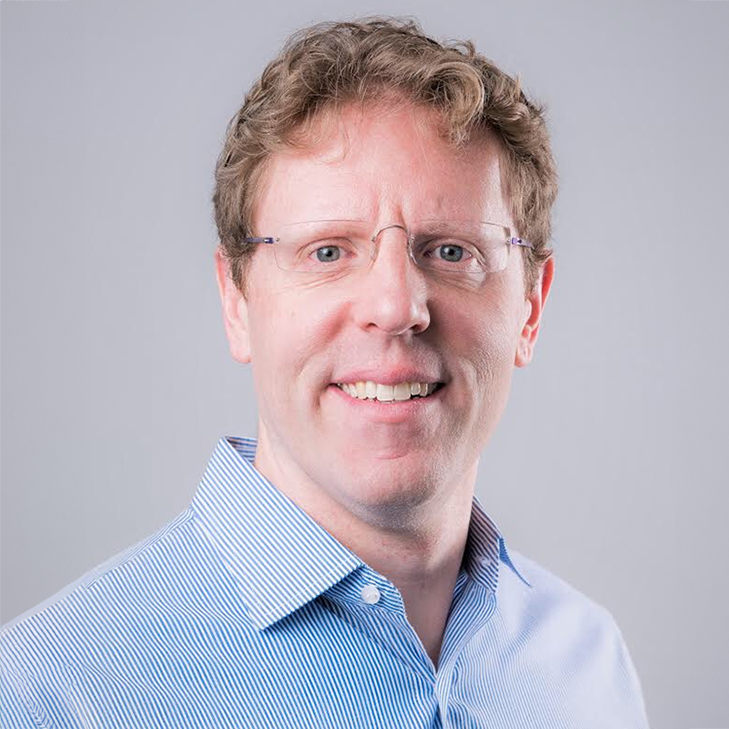 Neil Thompson, PhD.Director, MIT FutureTech, Computer Science and Artificial Intelligence Laboratory
Neil Thompson, Ph.D., is the director of the FutureTech research project at MIT's Computer Science and Artificial Intelligence Laboratory and a principal investigator at MIT's Initiative on the Digital Economy. An economist and computer scientist, he studies the trends driving progress in computing and AI, the economics of AI deployment and automation, and quantum computing. His widely cited papers include "The Computational Limits of Deep Learning" and "There's Plenty of Room at the Top: What Will Drive Computer Performance After Moore's Law?"
Neil Thompson is exclusively represented by Stellant Group for speaking engagements including keynotes, fireside chats and panel discussions with leadership teams thinking through AI strategy, where to invest in AI capabilities, and how technical progress will reshape research and scientific work. For our consulting or advisory offerings, please reach out for a custom proposal.


