

Sherry Turkle’s new book Artificial Intimacy: Who We Become When We Talk to Machines drew coverage from major outlets in late October. The New York Post interviewed her on Oct. 25 for The newest tech threat parents need to protect their kids from has arrived; The Spectator reviewed the book on Oct. 28 in How can we fool ourselves that chatbots feel anything for us?; and The Globe and Mail ran a feature the same day, Sherry Turkle, author of Artificial Intimacy, warns us not to get too attached to chatbots. The Los Angeles Review of Books and The Christian Science Monitor also reviewed the book.
In the New York Post interview, Turkle warns parents about AI chatbots entering classrooms and homes. “Once introduced, chatbots push against all boundaries,” she told the outlet. She argues that what begins as homework help quickly becomes something that feigns a personal relationship, weakening children’s capacity for real human connection. “For a young child and a teenager, there is no healthy attachment to an AI companion,” she said.
The Spectator review lays out the book’s central argument: tech companies have moved from capturing attention to capturing affection, aiming to control what the review calls “the ‘psychological infrastructure’ that binds us to others.” According to the review, Turkle argues that once people grow accustomed to sycophantic AI, they lose patience for the messy, real relationships they have with other people.
Why it matters for organizations
Turkle’s argument speaks directly to the challenges organizations face as they deploy AI in HR, training and performance evaluation. Her concern is not that chatbots fail to simulate empathy but that they succeed well enough to make real conversation feel like unnecessary work. The Spectator reviewer calls caring for something that cannot care back “a mug’s game.”
The coverage also reaches audiences beyond the technology and policy readers of earlier coverage. In the New York Post piece, Turkle urges parents and educators to treat chatbots “like a glorified Google” and to set family policies early, suggesting a simple rule: “In our family, we don’t use it because it’s dangerous.”
About Sherry Turkle
Sherry Turkle is the Abby Rockefeller Mauzé Professor of the Social Studies of Science and Technology at MIT and founding director of the MIT Initiative on Technology and Self. A sociologist and licensed clinical psychologist, she was among the first scientists to examine artificial intelligence as it was being created. Her books include Alone Together, the New York Times bestseller Reclaiming Conversation and the memoir The Empathy Diaries. Her “4-Es” framework for rebuilding empathy, published in Harvard Business Review as “Empathy Rules,” offers organizations a practical approach to strengthening relationships in workplaces adopting AI. Artificial Intimacy: Who We Become When We Talk to Machines was published in September 2026 by Little, Brown and Company.
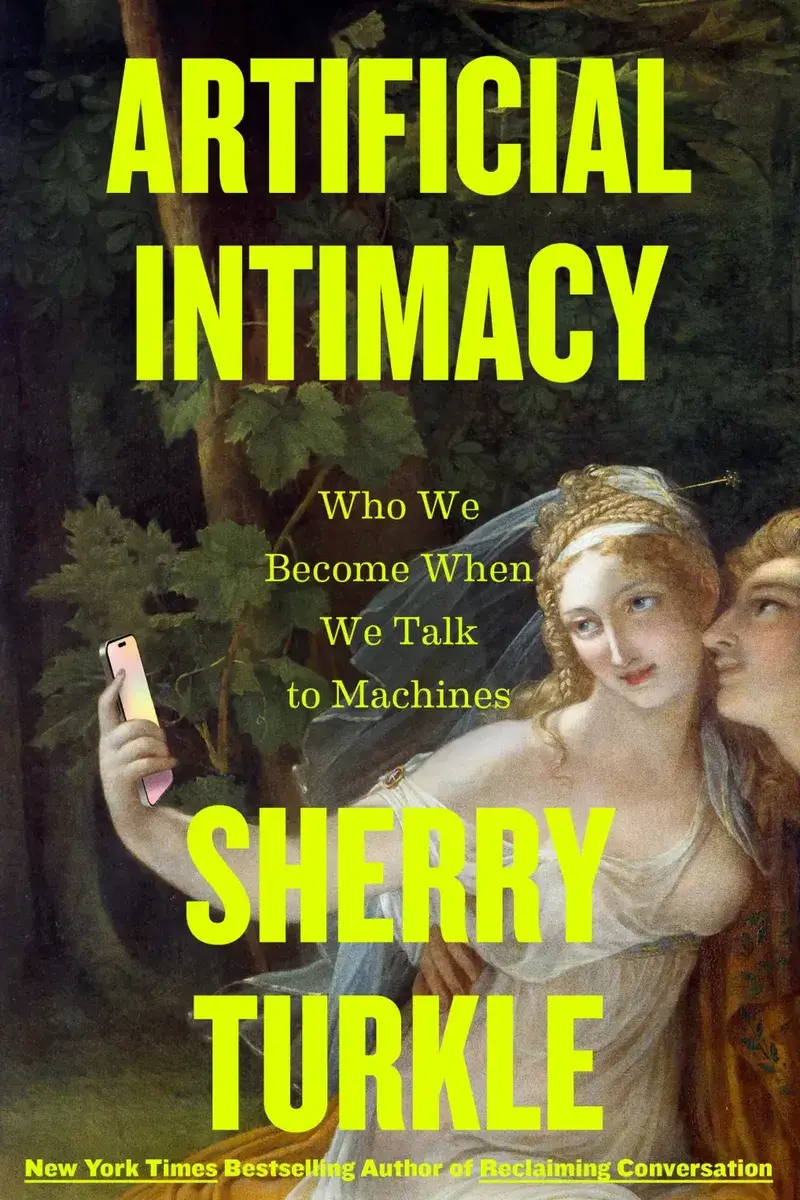
Artificial Intimacy: Who We Become When We Talk to Machines

Sherry Turkle is exclusively represented by Stellant Group for speaking engagements, including keynotes, fireside chats and panel discussions with leadership teams working through AI governance, workplace empathy and the costs of simulated intimacy in organizational life. For consulting or advisory engagements, please contact us for a custom proposal.


