

Watch Steven in Action
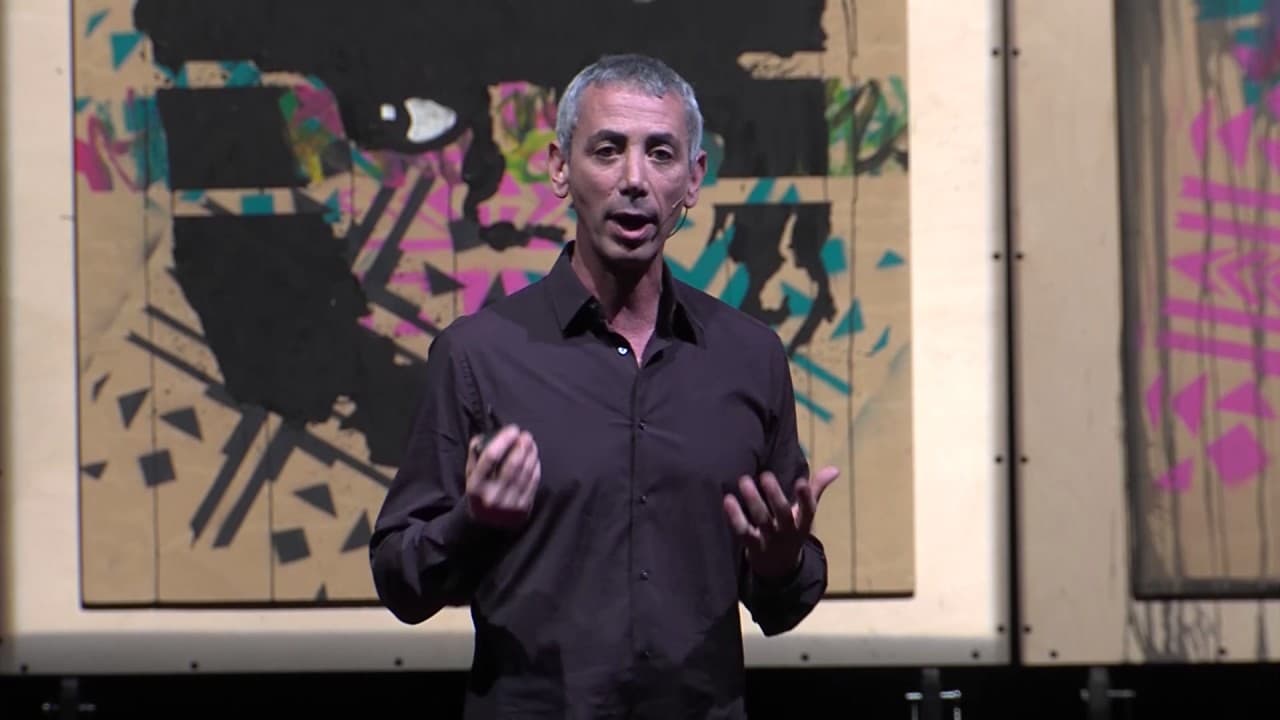
About Steven Kotler
Steven Kotler is one of the world's leading experts on human performance. He has spent decades studying the neurobiology of peak performance, focused primarily on flow, the state in which motivation, creativity and productivity climb sharply. He and his team have trained Olympians, Navy SEALs and employees at companies including Microsoft, Accenture, Audi and Facebook. "There are specific things you have to do to access flow reliably," he explains. "But when that happens, motivation, productivity, creativity, and learning go through the roof."
In The Art of Impossible, Kotler uses the tools of neurobiology to decipher the secrets of elite performers. "After flow training, we see a measurable increase in creativity and innovation ranging between 400 percent and 700 percent," he says. He works with researchers at Stanford University, Imperial College London, the University of Southern California and the University of California, Los Angeles, and publishes his findings in journals including Neuroscience and Biobehavioral Reviews.
Steven's Keynote Topics
AI is the most powerful cognitive prosthetic ever built — and that’s exactly the problem. The minute you can outsource memory, writing, planning, pattern-recognition, even taste, you start cognitive offloading by default. At first it feels like relief. Then it becomes dependency. Skills atrophy. Judgment dulls. Creativity narrows. Teams begin to “sound smart” while thinking less. The hidden threat of the AI era isn’t replacement — it’s de-skilling: leaders slowly losing the capacities that made them leaders.
Dancing with Robots teaches the opposite move: how to use AI to increase human intelligence instead of hollowing it out. The core thesis is simple: Flow + AI is the greatest advantage of the 21st century — because flow upgrades learning speed, pattern detection, decision quality, and creative output, while AI expands range, recombines possibilities, and collapses execution time. Put them together and you get a compound effect: people don’t just work faster — they become harder to compete with. This talk from Steven Kotler gives audiences a practical operating system: when to offload, when not to, how to keep your skills sharp, and how to build a human–AI workflow that produces original thinking at scale.
Every leader wants a high-performance culture. Very few know how to build one. Most “culture initiatives” fail because they focus on slogans and values statements while ignoring the performance infrastructure that actually shapes behavior under pressure. As work speeds up, teams default to urgency, politics, and broken commitments. Execution slows. Trust erodes. Culture collapses right when it’s needed most.
High Speed Teams reframes culture as a trainable system built on flow. Flow is the optimal state of human performance. At the team level, it’s the missing link between speed, productivity, innovation, and resilience. When teams know how to drop into flow, execution accelerates, decision latency drops, motivation becomes self-sustaining, and innovation compounds.
From there, we see how flow is a culture-building engine: a proven framework for translating organizational strengths into real values and sustained excellence. From this presentation by Steven Kotler, leaders learn how to identify the key flow triggers that best match their organization and then use them to create predictable, repeatable behaviors under pressure. Values stop being aspirational and start becoming operational. The result is faster execution, higher psychological safety, and teams that can sustain velocity without burning out.
“Rather than the idea that an old dog can’t learn new tricks, we need to realize that older adults are actually better at learning a whole slew of skills than younger dogs,” says Flow Research Collective Executive Director Steven Kotler. In this fascinating presentation, he uses his latest book, “Gnar Country: Growing Old, Staying Rad,” to explore the new science of peak performance aging. Kotler upends traditional myths around aging, breaking down cutting-edge research into the stunning possibilities of our later years and laying out a practical blueprint for actualizing these possibilities and filling our lives with meaning, vitality, and success. He emphasizes the incredible benefits that properly trained older employees bring to organizations, including heightened levels of intelligence, creativity, empathy and wisdom—which are all critical skills in the modern business world.
Psychological safety is everywhere in leadership conversations — and almost nowhere in execution. Most organizations treat it as a cultural aspiration: be nice, be open, don’t punish failure. But under pressure, those norms collapse. Speed increases, stakes rise, and teams revert to fear, silence, and blame. The problem isn’t intent. It’s infrastructure.
Steven Kotler makes a counterintuitive case: flow is one of the most reliable engines for creating psychological safety inside an organization. Drawing on recent discoveries in performance neuroscience, it shows why teams in flow communicate more honestly, recover from mistakes faster, challenge each other without triggering defensiveness, and maintain trust even when the work is hard and fast. Flow shifts attention away from ego and threat and toward shared goals, clear roles, and immediate feedback — exactly the conditions psychological safety requires to survive at speed.
Leaders learn how to use flow not just to improve performance, but to stabilize culture under pressure. The talk shows how clear goals, fast feedback, autonomy, and shared ownership reduce fear-based behavior and turn mistakes into signal instead of stigma. The result is a team environment where people speak up sooner, take smarter risks, and stay aligned when it matters most. Leaders book this talk because it finally makes psychological safety actionable — not as a perk, but as a repeatable outcome of how high-performing teams work.
In today’s chaotic business environment, organizations are tasked with keeping employees motivated, productive, and innovative. They need individuals and teams to reach and exceed their performance goals in the face of mounting uncertainty.
Yet, the average knowledge worker is only productive for 2.3 hours per day. Every week, they spend half a day duplicating work they did the week before. They check their email 36 times per hour. They waste 36 hours in unnecessary meetings a month. And most devastating of all: the average knowledge worker is interrupted every 11 minutes.
In 2022, according to the World Health Organization, fifty million years of productivity were lost due to mental health issues and poor working habits.
Steven Kotler, executive director of the Flow Research Collective, the global leader in neuroscience-based peak performance research and training, and the New York Times bestselling author of “The Art of Impossible: A Peak Performance Primer,” has taught more than half-a-million people how to amplify and sustain peak performance by harnessing the state of flow.
In this talk, Kotler breaks down findings gleaned from training individuals and organizations in 130 countries, ranging from tech companies such as Facebook, business consulting firms like Accenture, hard goods manufacturers such as Audi, and military operations like the U.S. Air Force.
He’ll explain the science and research behind the state of flow––and how it can increase productivity, creativity, and learning speeds by up to 500 percent. You’ll walk away with tools to reduce stress and overwhelm, decrease procrastination and distraction, and increase motivation and performance.
“We are as gods and we might as well get good at it,” wrote Stewart Brand — and he wasn’t wrong.
Thanks to exponential technologies — AI, robotics, synthetic biology, clean energy — we now possess abilities that would have been considered divine a generation ago. The blind can see. The paralyzed can walk. Knowledge, communication, creation, and coordination operate at planetary scale. By any historical or mythological standard, humans have acquired godlike powers.
Yet there’s a paradox at the heart of this moment: the more powerful we become, the less capable we feel. Anxiety is up. Burnout is endemic. Polarization is rising. Instead of awe, we experience overload. Instead of agency, we default to fear. We Are As Gods explains why. The problem isn’t technology. It’s that our brains, stories, and institutions evolved for a world of scarcity and linear change — and are now struggling to operate in a world of abundance and exponential speed.
This talk from Steven Kotler reframes the future through a clear, evidence-based lens. It shows how exponential technologies are already delivering abundance at scale — and why abundance comes with new psychological, social, and ethical risks. Audiences learn why information overload hijacks attention, why negativity and apocalyptic thinking spike during periods of rapid progress, and why meaning, purpose, and responsibility become the central leadership challenges of the age. The talk closes with a practical survival guide: how to think clearly, act wisely, and wield unprecedented power without losing our humanity.
Books by Steven Kotler

Gnar Country: Growing Old, Staying Rad
Harper Wave. February, 2023
The Devil's Dictionary
St. Martin's Press, 2022
The Art of Impossible: A Peak Performance Primer
Harper Wave, 2021
The Future Is Faster Than You Think: How Converging Technologies Are Transforming Business, Industries, and Our Lives
Simon & Schuster, 2020
Last Tango in Cyberspace: A Novel
St. Martin's Press, 2019
Stealing Fire: How Silicon Valley, the Navy SEALs, and Maverick Scientists Are Revolutionizing the Way We Live and Work
Dey Street Books, 2017
Bold: How to Go Big, Create Wealth and Impact the World
Simon & Schuster, 2015
Tomorrowland: Our Journey From Science Fiction To Science Fact
New Harvest, 2015
The Rise of Superman: Decoding the Science of Ultimate Human Performance
New Harvest, 2014
Abundance: The Future Is Better Than You Think
Free Press, 2012
A Small Furry Prayer: Dog Rescue and the Meaning of Life
Bloomsbury USA, 2010
West of Jesus: Surfing, Science and the Origins of Belief
Bloomsbury USA, 2006
The Angle Quickest for Flight
Thunder's Mouth Press, 1999Steven in the Media

Steven Kotler on the "Growing Bolder" podcast

Stay Rad and Defy Aging with These 5 Practices from Steven Kotler

How to Stay Sharp Well Into Your Golden Years, According to Steven Kotler

7 Books That Will Teach You to Live a More Joyful Life

Steven Kotler on the Men's Journal Everyday Warrior Podcast
The Key to Aging Well? Making These Mindset Shifts by Age 30, 40, and 50

How to Age Gracefully and Boost Peak Performance

Steven Kotler on Peak Performance Aging, Flow, and Being Rad
This Guy Learned to Park Ski at 53
How to Grow Old But Play Young with Steven Kotler

Gnar Country: Finding State Of Flow To Achieve Peak Performance
Steven Kotler on the 1% Podcast
Many thanks to you and Steven Kotler for a wonderful event. Steven generated a lot of conversation in our group and that extended well into the next day. Very successful!!
ARCH Ventures
In short, Kotler was a huge success! He closed out the discussion part of the conference and I heard the word “flow” the rest of the weekend! Awesome choice you suggested, greatly appreciated!
Potomac Communications Strategies
Steven was FABULOUS!
St. Mary’s University
Steven connected with our audience in an unimaginable way. His incredible breadth of neuroscience knowledge allowed him to dramatically engage our group of academics and mental health professionals. The session was high energy, innovative, humorous and at times even heart-warming. This talk was a masterful demonstration of skill and talent from a brilliant mind. An experience worth repeating!
The International Society for Neurofeedback and Research
Steven Kotler’s presentation was cutting-edge and utterly engaging. He introduced our audience to a unique set of concepts and perspectives that left participants deeply informed, richly inspired, and with a renewed sense of purpose. I recommend him highly.
The SuperheroYou Conference
Steven Kotler presents a vision for the future that not only brings optimism, but inspires all who listen. His visit left our business school buzzing, and transformed students’ visions for the roles business leaders can play in shaping the future.
University of Iowa School of Business
Bring Steven to your next event
Tell us about your event and we will be in touch right away.


